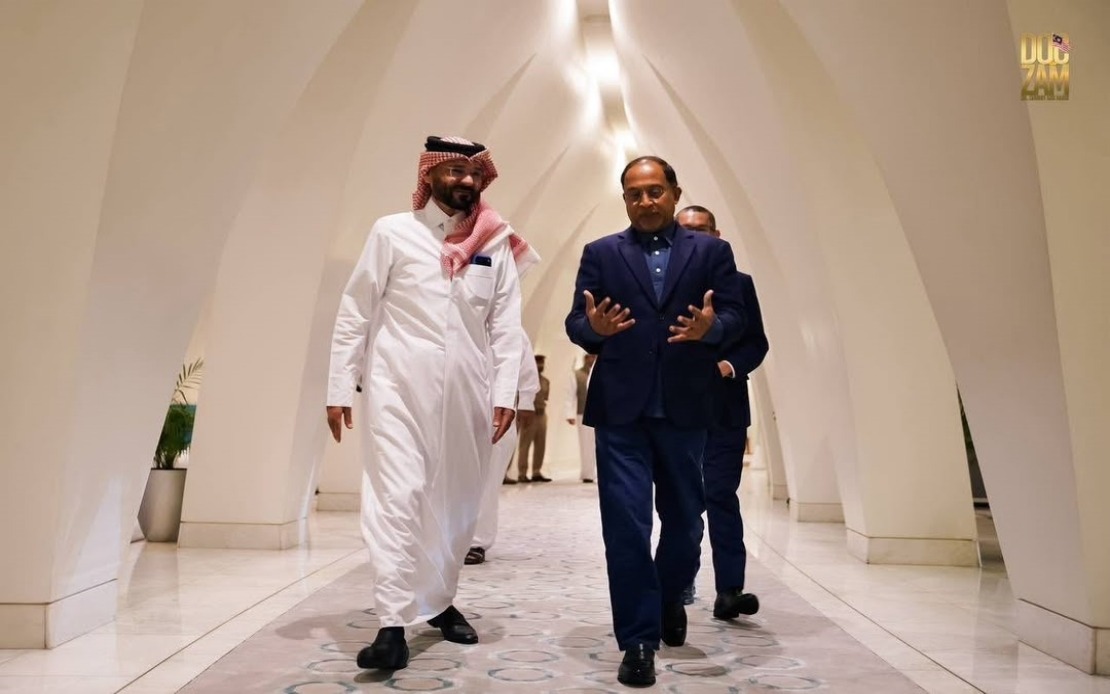
Higher Education Minister Datuk Seri Dr Zambry Abd Kadir arrived in Doha on Tuesday morning to represent the Malaysian government at ceremonies honouring the late Father Amir of Qatar, Sheikh Hamad bin Khalifa Al Thani, who died on Sunday at the age of 74. The diplomatic mission underscores the significance Malaysia places on its longstanding ties with the Gulf nation, particularly during moments of national importance for Qatar's ruling family.
Zambry announced his attendance through social media, indicating that he would be meeting with the current Amir of Qatar, Sheikh Tamim bin Hamad Al Thani, at the Lusail Palace during the formal mourning period. The visit reflects customary diplomatic protocol observed between neighbouring nations when senior state figures pass away, with ministerial representation serving as a gesture of respect and solidarity to the bereaved nation.
Quatar declared a four-day period of national mourning commencing on Sunday, July 12, in response to Sheikh Hamad's death. During this observance, all government ministries, state entities, and public institutions across the country ceased operations, demonstrating the magnitude of the loss within Qatari society. The extended closure reflected the profound impact of the former leader's passing on the nation's political and cultural landscape.
Sheikh Hamad's tenure as Amir spanned nearly two decades, from 1995 to 2013, a period during which Qatar underwent dramatic transformation. His rule witnessed extraordinary economic expansion fuelled by oil and natural gas wealth, particularly following the development of the North Field, one of the world's largest gas reserves. Under his leadership, Qatar established itself as a major regional player, investing heavily in infrastructure, education, and sports initiatives.
The former Amir's abdication in 2013 marked a significant moment in Qatar's modern history. Rather than governing until the end of his life, as was traditional in the region, Sheikh Hamad voluntarily transferred power to his son, Sheikh Tamim bin Hamad Al Thani, introducing a precedent of planned succession that distinguished Qatar's governance model from certain neighbours. This transition demonstrated strategic foresight and established expectations for generational leadership shifts within the Gulf monarchy.
Sheikh Hamad's reign left an indelible mark on Qatar's global profile. He positioned the nation as a influential voice in international affairs, brokering regional mediations and establishing Qatar as a centre for investment and cultural development. His government's decision to host the FIFA World Cup in 2022 crystallised his vision of Qatar as a major global venue, though the tournament would ultimately occur under his successor's administration.
For Malaysia, the relationship with Qatar holds particular importance within the broader context of bilateral engagement across the Gulf Cooperation Council region. The two nations maintain diplomatic, commercial, and cultural connections, with Qatari investment flowing into Malaysian real estate and infrastructure projects. The presence of Malaysian officials at significant moments in Qatar's national calendar reinforces these ties and demonstrates Malaysia's commitment to maintaining robust relationships with key Gulf partners.
Zambry's mission carries symbolic weight beyond ceremonial obligation. As the minister responsible for higher education, he represents a portfolio area where Malaysian and Qatari institutions have collaborated, including educational partnerships and student exchange programmes. Qatar's Education City has attracted Malaysian scholars and professionals, while Qatari nationals have pursued advanced studies in Malaysian universities, creating interpersonal networks that extend beyond government channels.
The timing of this diplomatic engagement occurs within a broader regional context where several nations are recalibrating their Gulf relationships following the normalisation of ties between various Arab states and Israel. Malaysia, as a Muslim-majority nation with significant Arab interests, maintains a carefully balanced approach to Gulf affairs. Official participation in Qatar's mourning ceremonies signals Malaysia's steadfast position regarding its established relationships in the region.
Regional observers note that such high-level attendance at funeral rites reflects the diplomatic importance assigned to bilateral relationships. Nations prioritise ministerial representation based on strategic value and existing ties, making Zambry's presence a statement about where Malaysia considers its relationship with Qatar in the hierarchy of international priorities. The visit also provides opportunity for bilateral discussions on matters of mutual interest, extending beyond the immediate purpose of paying respects.
For the broader Southeast Asian community, particularly Malaysians working or studying in Qatar, Sheikh Hamad's passing represents a historical moment. Many have experienced Qatar's transformation under his leadership and benefited from the economic opportunities his policies generated. His legacy extends into the lives of diaspora communities who contributed to and witnessed the nation's modernisation during his 18-year reign.

