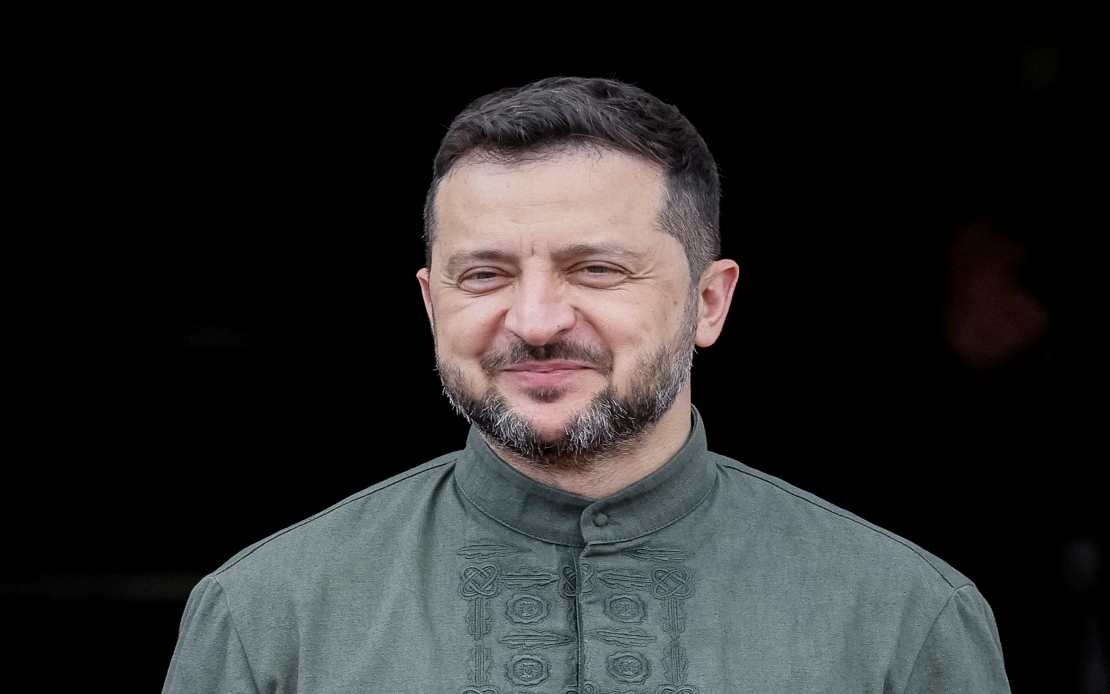
Ukrainian President Volodymyr Zelensky has formally enacted a law establishing a national heroes' memorial in Kyiv, a decision that has triggered sharp diplomatic tensions with Poland and raised questions about historical reconciliation in Eastern Europe. The move reflects Ukraine's determination to frame its own national narrative, though it comes at considerable cost to relations with Warsaw, a crucial supporter of Kyiv's defence against Russian aggression. The pantheon legislation, passed by the Ukrainian parliament in July and now signed into law, represents a significant assertion of Ukrainian sovereignty over how the nation commemorates its past—but also reveals deep wounds that continue to divide neighbouring countries nearly eighty years after World War II.
The memorial is intended to honour figures Ukraine regards as independence fighters and national heroes, including members of the Ukrainian Insurgent Army, known by its Ukrainian acronym UPA. This organisation, which operated as an underground resistance movement during the Nazi occupation, remains historically contentious because historical records document that UPA members carried out mass killings of Polish civilians and Jews, particularly in the Volyn region of what is now western Ukraine. Tens of thousands of Poles and Jews perished in these atrocities, making the UPA's legacy profoundly problematic from Poland's perspective. The establishment of a state memorial that would effectively honour such figures strikes many Poles as a form of historical revisionism that glosses over documented war crimes.
Zelensky has been unequivocal in defending the decision, declaring before war veterans on Saturday that Ukraine alone will determine who qualifies as a national hero. His statement underscores the broader principle at stake: Ukraine's right to control its own historical narrative and national commemoration without external interference. For Kyiv, the UPA represents resistance against foreign occupation and a struggle for Ukrainian independence, a framing that prioritises anti-colonial struggle over accountability for violence inflicted on civilian populations. This reflects a common pattern in post-Soviet states, where nationalist narratives have sometimes elevated figures guilty of atrocities to heroic status, creating friction with neighbours who experienced those same conflicts differently.
The pantheon will extend beyond UPA members to encompass historical figures spanning from the medieval Kyivan Rus empire through to contemporary times. The memorial will serve multiple functions: honouring historical figures deemed significant to Ukrainian national identity, reinterring controversial figures whose remains are currently elsewhere, and providing a burial site for deceased Ukrainian presidents. This multipurpose design elevates the memorial beyond a simple war monument into a national shrine intended to anchor Ukraine's historical identity and political continuity. The decision to locate it in Kyiv itself ensures it becomes a permanent fixture in Ukraine's capital, symbolically central to the nation's self-conception.
The deterioration in Polish-Ukrainian relations became acute in June when Zelensky awarded the controversial military unit an honorary title. Poland's response was swift and symbolically weighted: Warsaw withdrew the Order of the White Eagle that had previously been conferred upon Zelensky, signalling that the gesture had crossed a diplomatic red line. The withdrawal of state honours represented far more than bureaucratic procedure; it was a public statement of disapproval and a demonstration that Poland views the honouring of UPA members as fundamentally incompatible with the values of respect and reconciliation. Several politicians from both countries subsequently returned honours they had received from their neighbours, escalating what had become a symbolic contest over historical memory and national pride.
When the Ukrainian parliament advanced the pantheon legislation in July, Poland's presidential office issued a formal statement asserting that from Warsaw's perspective, glorifying individuals responsible for genocide in Volyn represented a step away from, not towards, integration with the Western world. This framing deployed the language of European values and democratic norms, suggesting that Ukraine's approach to the memorial contradicted the kind of historical reckoning and reconciliation expected within the Western community. The statement carried implicit pressure, suggesting that such actions would complicate Ukraine's path to fuller integration with Western institutions and values—a particularly sensitive point given Ukraine's historical experience of Russian domination and its current struggle for sovereignty.
The timing of Zelensky's signature compounds the diplomatic challenge. Ukraine faces an existential conflict with Russia and requires maximum unity among its Western supporters to sustain military and economic aid. Poland has been among Ukraine's most steadfast backers, providing weapons, humanitarian assistance, and political support throughout the Russian invasion. Any deterioration in this relationship risks weakening Ukraine's strategic position, even if marginally. The pantheon law thus represents a painful choice: Zelensky has prioritised national historical self-determination over short-term diplomatic convenience, betting that Poland's strategic interest in Ukraine's survival will ultimately outweigh historical grievances.
For Malaysia and Southeast Asian observers, the Ukrainian-Polish dispute offers instructive lessons about the lasting power of historical trauma and how nations navigate competing imperatives of sovereignty, reconciliation, and strategic alignment. The region's own experience with colonialism, World War II atrocities, and post-war nation-building creates parallels to Ukraine's situation. Like Ukraine, Southeast Asian nations have sometimes elevated figures involved in nationalist struggles to heroic status, even when those figures' historical records are morally ambiguous. The broader question of how emerging or recovering nations can build inclusive national narratives without denying documented suffering remains unresolved across many post-conflict societies.
The pantheon controversy also reflects tensions inherent in Ukraine's geopolitical position. Sandwiched between a resurgent Russia and an increasingly integrated Europe, Ukraine must navigate between asserting distinctive national identity and conforming to Western expectations regarding historical memory and transitional justice. Poland, conversely, occupies a bridge position within NATO and the European Union, balancing its own historical grievances against the strategic imperative of supporting Ukraine against Russian aggression. Neither country faces easy choices, and the pantheon dispute illustrates how historical memory can complicate even relationships forged by shared strategic interests.
Moving forward, the primary risk involves whether this memorial controversy will metastasise into broader estrangement at precisely the moment when Ukrainian-Polish coordination remains crucial. The Polish government has thus far avoided dramatic escalation, but further symbolic provocations or historical contests could test the limits of Warsaw's patience. Meanwhile, Zelensky's government faces pressure from Ukrainian nationalists to continue asserting historical narratives that valorise independence struggle, regardless of external criticism. Finding pathways to mutual respect that acknowledge both Polish suffering and Ukrainian aspirations for historical agency will require sustained diplomatic effort from both capitals, supported where possible by international mediators committed to reconciliation without erasure.

