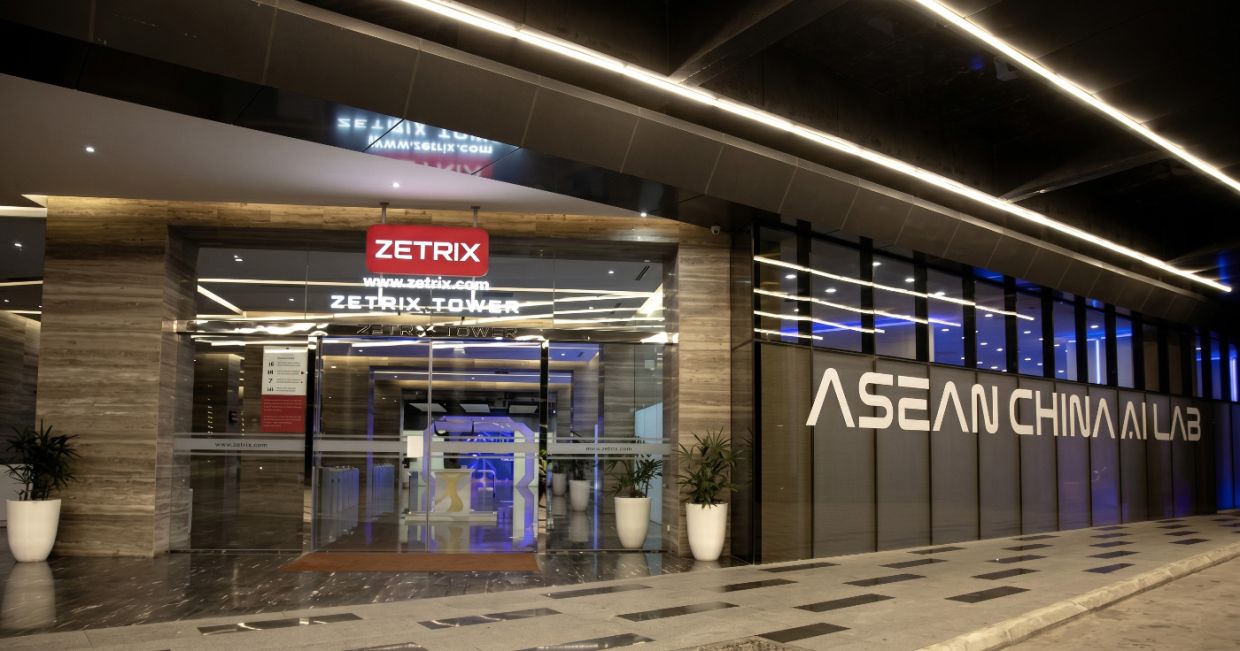
Zetrix AI Bhd moved swiftly on Friday to extinguish investor concerns about its alleged links to corruption charges involving a high-profile government official, releasing a formal statement to the exchange after its share price experienced a dramatic and sustained decline. The technology company's stock hit the circuit breaker limit down, falling 30 sen or 50.4% to close at 29.5 sen, accompanied by extraordinarily heavy turnover of approximately 1.05 billion shares that signalled severe market distress and probable panic selling among retail investors.
The sharp contraction in Zetrix AI's market value followed Bursa Malaysia's decision to issue an unusual market activity query—a regulatory mechanism deployed when exchange officials observe trading patterns that deviate markedly from normal conditions. This investigative step prompted the company to file a comprehensive response that addressed the speculative chatter circulating among market participants and sought to restore confidence among shareholders rattled by unfounded rumours. According to the company's exchange filing, the trading irregularities stemmed entirely from speculation connecting Zetrix AI to corruption allegations faced by Datuk Seri M. Saravanan, the former human resources minister.
Datuk Seri M. Saravanan faces three graft charges that were formally lodged at the Sessions Court on August 28, relating to his approval decisions concerning foreign worker quotas during his tenure in the ministry. The nature of these allegations—centring on discretionary administrative decisions affecting labour migration policy—typically represents one of the most sensitive areas of governance, given the economic and social implications for Malaysia's workforce composition. However, Zetrix AI's management has maintained that the company operates in an entirely different sphere and harbours no operational, contractual, or commercial nexus to the foreign worker quota system or the policy decisions underlying the minister's legal predicament.
In its formal response to Bursa Malaysia, Zetrix AI asserted unambiguously that it had no involvement in or association with the charges brought against the former minister. The company characterised the linking of its name to the corruption allegations as "unfounded rumours or speculation," suggesting that loose talk among traders, social media users, or other market participants had triggered substantial sell orders. This phenomenon—whereby adverse but unverified claims about corporate governance or management probity can trigger shareholder panic—represents a persistent hazard for companies listed on Malaysian exchanges, particularly when those firms operate in technology or emerging sectors with smaller institutional ownership bases.
Further substantiating its denial, Zetrix AI undertook direct consultations with its board of directors, major shareholders, and other stakeholders to confirm that no undisclosed corporate transactions or negotiations existed that might plausibly account for the trading activity. The absence of such material developments—whether at advanced discussion stages or in preliminary exploration phases—strengthens the company's contention that purely speculative sentiment rather than concrete negative information catalysed the share price collapse. This investigative approach reflects best practice in responding to exchange queries and demonstrates the company's attempt to demonstrate transparency and robust internal governance.
The market episode raises broader questions about information flows and rumour transmission within Malaysia's equity market ecosystem. The rapidity with which unverified claims can propagate through retail investor networks, amplified by messaging applications and online investment forums, creates vulnerability for listed companies insufficiently insulated by institutional shareholding or analyst coverage. Zetrix AI's relatively modest market capitalisation and apparent lack of prominent institutional investors left it exposed to cascading retail selling once negative speculation began circulating. The 50% single-day decline underscores how disproportionate the impact of unsubstantiated allegations can be on smaller-cap stocks lacking established investor protection mechanisms.
From a regulatory perspective, Bursa Malaysia's decision to probe the unusual activity demonstrates the exchange's commitment to detecting potential misconduct or material information breaches that might explain aberrant trading patterns. However, the outcome—a company's categorical denial supported by stakeholder consultation—reflects the reality that not all extreme market movements correlate with corporate malfeasance or undisclosed information. Sometimes trading surges stem from contagion effects, where negative news about unrelated entities or public figures triggers indiscriminate selling in thematically or alphabetically associated stocks, or from algorithmic selling cascades initiated by retail investor panic.
The incident also illuminates the vulnerability of mid-tier technology companies in Southeast Asia to reputational spillover effects originating from government sector upheaval. Malaysia's political and regulatory landscape has experienced substantial turbulence in recent years, with high-profile corruption investigations involving senior officials becoming increasingly common. When such investigations intersect—however tenuously or erroneously—with corporate entities, investor confidence can evaporate almost instantaneously, particularly among retail shareholders with limited capacity to independently verify claims or assess true risk.
Looking forward, Zetrix AI's experience underscores the importance of maintaining proactive investor communications strategies and building sufficient institutional ownership to stabilise share prices during periods of external shock. The company may need to engage more systematically with research analysts and major fund managers to ensure that accurate information about its business operations and management quality reaches investment decision-makers. Additionally, the incident highlights a potential gap in the Malaysian market's capacity to rapidly dispel false rumours through official channels, suggesting that both companies and regulators might benefit from accelerated procedures for issuing clarifications when material misinformation spreads.

