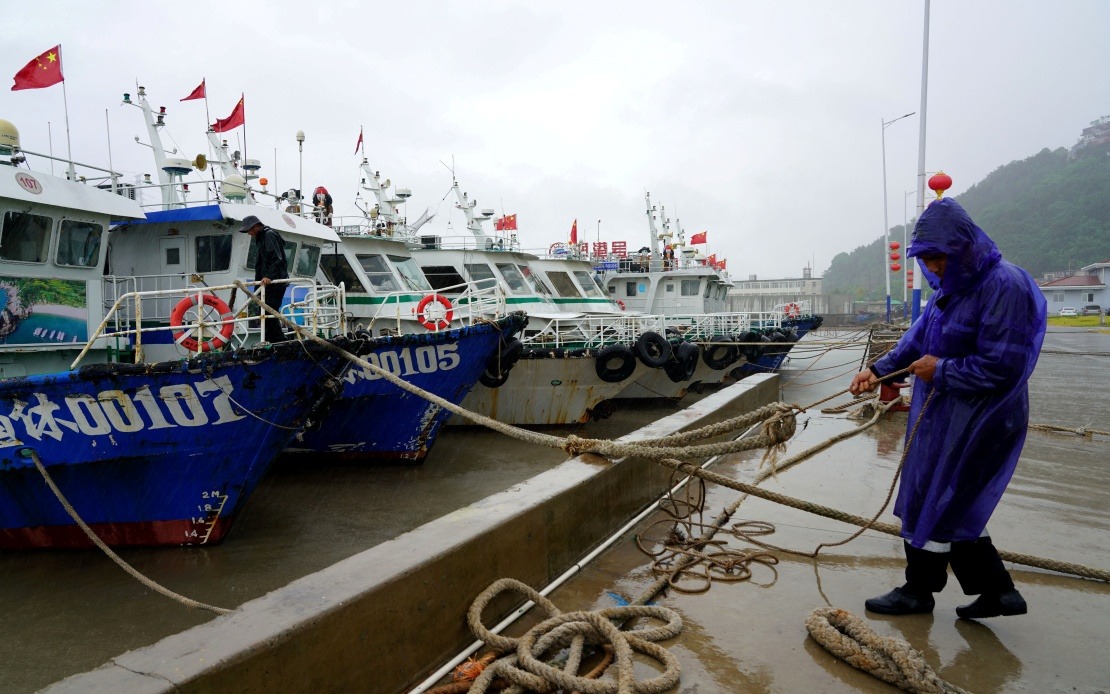
Zhejiang Province in eastern China has intensified its emergency preparations for Typhoon Dolphin, upgrading its response alert from Level IV to Level III on Friday as meteorologists track the powerful storm's approach toward the densely populated eastern seaboard. The 13th typhoon recorded in 2026, Dolphin represents a significant threat to one of China's most economically vital regions, prompting coordinated action across multiple provincial agencies and maritime authorities.
At dawn on Friday, the Zhejiang Meteorological Observatory positioned Typhoon Dolphin approximately 763 kilometres east of Wenling, advancing westward at a measured pace of 15 to 20 kilometres per hour. Weather forecasters indicated the system would maintain its current strength or potentially intensify further as it continued its trajectory toward the mainland. The measured speed of approach—though not rapid—allows for methodical evacuation and protective measures, yet the typhoon's positioning leaves a narrow window for final preparations before impact.
China's National Meteorological Centre forecast that Typhoon Dolphin will make landfall somewhere along the eastern coast between Shanghai and Fuqing in Fujian Province during the weekend or early in the following week. The centre issued a yellow-level alert on Thursday evening, signalling moderate but serious hazard conditions. Meteorologists expect the system to reach typhoon or severe typhoon intensity upon making contact with land, with the heaviest rainfall expected to strike areas situated north of the actual landfall point.
Lou Xiaofen, the chief forecaster at the Zhejiang Meteorological Observatory, emphasised that Zhejiang itself faces a substantial probability of direct impact, given its geographic position between Shanghai and Fujian Province. This positioning, while geographically advantageous for avoiding certain storm impacts, also means the province sits directly in the potential path of Dolphin's most destructive effects. Authorities have assessed the disaster risk across the region as considerable, necessitating preemptive measures well before the system arrives.
The provincial response has been comprehensive and swift. By Friday morning, Zhejiang authorities had suspended all 162 passenger ferry services operating throughout the province, effectively halting water-based public transportation. Simultaneously, work at 193 offshore industrial projects has been suspended, and maritime authorities have directed 474 construction vessels and work boats to seek shelter in protected harbours. These logistical decisions, though economically disruptive in the short term, represent standard precautionary measures designed to prevent loss of life and equipment damage during severe weather.
Zhejiang's maritime authorities have undertaken an extensive communication campaign, dispatching 86,000 early warning messages to residents and vessel operators across the affected regions. Beyond passive notification, officials have actively conducted inspections of approximately 24,000 vessels to ensure seaworthiness and proper preparation for the approaching conditions. High-powered tugboats have been positioned at strategic locations along the coast, standing ready for emergency rescue and salvage operations should vessels encounter distress during the typhoon passage.
The decision to elevate the alert to Level III carries significant operational implications. Under this response tier, provincial and local authorities are mandated to intensify monitoring of the typhoon's development and trajectory, issue updated warnings and forecasts at regular intervals, and initiate the evacuation of populations from high-risk zones to secure locations. Government agencies are also required to provide comprehensive guidance to the public, emphasising protective measures and behavioural protocols that minimise exposure to hazardous conditions during the storm's impact phase.
For Malaysia and other Southeast Asian nations, the unfolding situation in Zhejiang offers important lessons and reminders about typhoon preparedness and regional interconnection. As tropical systems routinely affect the broader region, observing how one of China's most developed provinces mobilises resources and coordinates disaster response provides valuable comparative perspective. Zhejiang's approach—combining early warning systems, maritime coordination, evacuation protocols, and public communication—represents established best practices that have been refined through decades of typhoon seasons.
The economic implications of Typhoon Dolphin extend beyond China's borders. Zhejiang Province remains a critical manufacturing and trade hub, and the suspension of ferry services, offshore projects, and construction work represents meaningful disruption to regional supply chains. Companies across Southeast Asia with manufacturing links or trade relationships connected to this province may experience shipping delays and logistical complications lasting beyond the immediate typhoon period.
From a humanitarian perspective, the aggressive preventive stance adopted by Zhejiang authorities reflects a commitment to prioritising public safety above short-term economic continuity. The suspension of 162 ferry routes and industrial projects represents substantial economic cost, yet such measures have historically proven effective in preventing casualties and minimising infrastructure damage when typhoons strike. The warning message campaign reaching 86,000 recipients demonstrates the scale of mobilisation required to adequately prepare populations in densely settled regions.
Looking ahead, the critical period will occur over the weekend and into early next week as Typhoon Dolphin makes its final approach and eventually makes landfall. Weather forecasters will continue refining predictions regarding the exact landfall location and the storm's ultimate intensity upon contact with the coast. Given the concentration of population and economic activity in Zhejiang and surrounding provinces, the accuracy of these forecasts and the effectiveness of evacuation procedures could mean the difference between manageable disruption and significant disaster.
The situation also highlights ongoing challenges in disaster management within highly developed regions where economic pressures and dense human settlement complicate protective responses. While Zhejiang possesses sophisticated meteorological technology and well-resourced emergency services, the scale of the challenge—ensuring the safety of tens of millions of residents and protecting infrastructure worth hundreds of billions of dollars—remains formidable. The coming days will test the robustness of these systems and the effectiveness of coordination among multiple agencies and jurisdictions.

