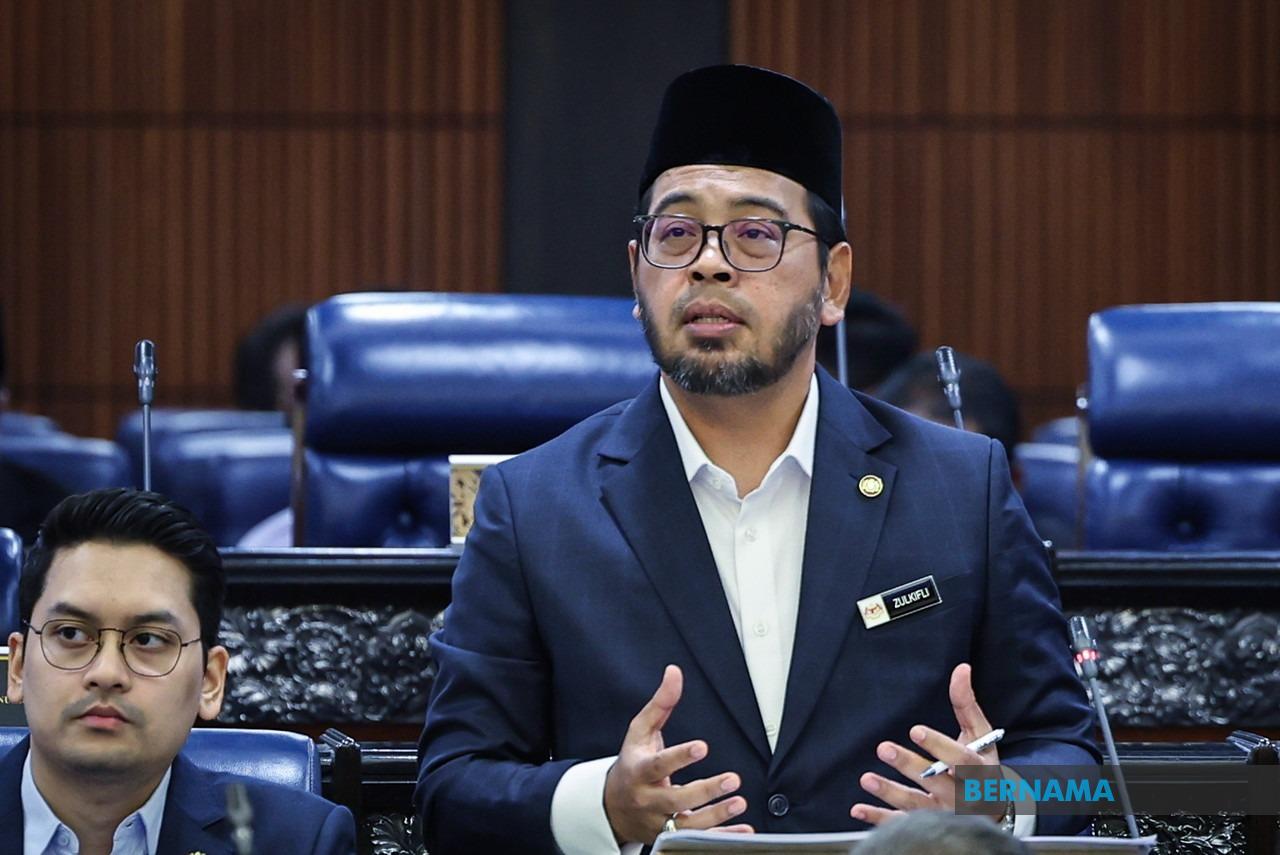
Dr Zulkifli Hasan, Minister in the Prime Minister's Department (Religious Affairs), has laid bare the mechanics of financial deception at Lembaga Tabung Haji (TH), revealing how the pilgrimage fund's management presented an illusion of prosperity to depositors while the institution teetered on the brink of collapse. Speaking during parliamentary debate following a briefing on the Royal Commission of Inquiry (RCI) report into TH's affairs, Zulkifli employed a strikingly relatable analogy involving a single mother named Mak Cik Senah to articulate how ordinary Malaysians—predominantly those saving for the hajj pilgrimage—were misled by accounting manipulations that violated fundamental financial regulations.
The core problem, according to Zulkifli, centred on an elementary but devastating violation of the Tabung Haji Act itself. Under law, dividend distributions to depositors are only permissible when the fund's total assets exceed its liabilities and obligations. Fund managers circumvented this safeguard by artificially inflating asset values on paper, creating the false appearance of profitability that justified paying out substantial dividends. While depositors received cash returns that seemed impressive on the surface, the underlying financial reality was deteriorating steadily. The practice essentially amounted to distributing money that did not exist—what Zulkifli described as paying dividends with "invisible money," operationally indistinguishable from a Ponzi scheme or the infamous Skim Pak Man Telo, a notorious Malaysian pyramid scheme.
The RCI's investigation confirmed that financial statements produced by TH prior to 2018 were systematically manipulated to showcase inflated profits, enabling management to declare profit distributions that bore no relationship to the fund's actual financial performance. This deceit was particularly pernicious because it targeted a vulnerable demographic: ordinary Muslims, many of modest means, who had entrusted their savings to what they believed was a secure, religiously sanctioned institution. The manipulation was not limited to simple presentation or accounting interpretation; it involved deliberate methodological choices designed exclusively to facilitate the appearance of solvency and profitability.
A central tool in this deception was the application of Realisable Asset Value (RAV)—an asset valuation conducted entirely outside TH's audited financial statements. By employing RAV, the fund's management inflated the recorded value of assets to exceed liabilities on paper, thereby satisfying the superficial threshold required by law, even though genuine audited valuations told a different story. Additionally, the fund engaged in creative accounting practices that deviated markedly from Malaysian Financial Reporting Standards (MFRS). Management altered impairment policies to avoid recognising genuine losses, thereby presenting financial statements that did not offer a fair and true picture of the institution's condition.
The audit landscape surrounding these practices merits careful examination. PricewaterhouseCoopers (PwC) conducted an independent review in 2018 that confirmed TH's financial manipulation. Significantly, of the total assets valued at RM4.6 billion, only RM556 million—approximately 12 percent—had been assessed by professional valuers. The remaining asset valuations relied on internal assessments and the dubious RAV methodology. This stark disparity reveals the extent to which asset values had been inflated to support a false narrative of financial health. Ernst & Young, another major audit firm, was not engaged as TH's primary auditor; it was tasked only with reviewing pro forma statements that TH itself had prepared, a distinction that Zulkifli emphasised to clarify the limited scope of external scrutiny.
The immediate consequence of this legally indefensible distribution strategy was that TH continued declaring profits and paying dividends even as the gap between its assets and liabilities widened—a development that directly contradicted the Tabung Haji Act's foundational requirement and jeopardised the institution's financial sustainability for future generations of depositors. Year after year, as management inflated paper assets and distributed profits, the fund's genuine financial position deteriorated imperceptibly to the average depositor. By the time the full extent of the crisis became undeniable, the damage was profound.
Zulkifli's invocation of Mak Cik Senah served to strip away the technical jargon and expose the human impact. In his formulation, the single mother appears to prosper, receiving dividends that exceed her contributions, yet she remains vulnerable to catastrophic loss. If management continued presenting false financial statements, if the artificial profits and inflated assets collapsed, depositors like Mak Cik Senah would potentially lose their lifetime savings. Worse still, without external intervention, few institutions or parties would willingly rescue the fund or compensate aggrieved depositors. The analogy powerfully illustrated why financial regulators impose strict rules: not to burden legitimate institutions, but to protect ordinary people from exactly this scenario.
The government's decision to inject more than RM10 billion into TH represented a rescue operation of last resort, undertaken not merely to preserve a financial institution but to prevent a national catastrophe affecting millions of predominantly Muslim depositors whose savings would otherwise have evaporated. This enormous sum, Zulkifli noted pointedly, represented an opportunity cost of staggering proportions. The same RM10 billion could have constructed dozens or even hundreds of hospitals, schools, mosques, and community facilities—infrastructure that the Muslim community and the nation broadly require. The bailout thus transcended the technical matter of restoring TH's balance sheet; it illustrated the wider economic price of allowing institutional corruption and financial manipulation to persist unchecked.
The significance of the TH affair extends beyond the fund itself. The case demonstrates how institutional governance failures at supposedly religiously aligned organisations can betray the trust of Muslim communities, undermining confidence in institutions designed to serve specific religious and cultural purposes. For Malaysian policymakers, the RCI findings and Zulkifli's parliamentary exposition signal the necessity of strengthening auditing standards, enforcement mechanisms, and board accountability across religiously affiliated financial institutions. The manipulation persisted across multiple years, suggesting that existing oversight mechanisms—whether internal audit, external auditing, or regulatory supervision—had failed collectively to identify or prevent the misconduct before enormous damage accumulated.
For Southeast Asian observers, the TH case offers a cautionary lesson regarding the regulatory challenges posed by hybrid institutions that combine commercial financial functions with religious and social missions. Such institutions often enjoy elevated public trust precisely because of their religious and cultural legitimacy, making them potentially more vulnerable to management abuse and less subject to the intense scrutiny directed at purely commercial banks. The crisis underscores the necessity for Southeast Asian financial regulators to impose uniform, rigorous standards regardless of an institution's founding purpose or community orientation.
Zulkifli's willingness to articulate the full scope of the manipulation in parliamentary debate reflects a broader effort to ensure public accountability and to signal that financial misconduct—particularly when it affects vulnerable depositors—will be examined transparently and consequences extracted. The RM10 billion bailout, while necessary to protect ordinary Malaysians, has become an inescapable reminder of the costs of inadequate institutional oversight and the importance of enforcing financial regulations consistently, even when doing so proves politically inconvenient or administratively cumbersome.

