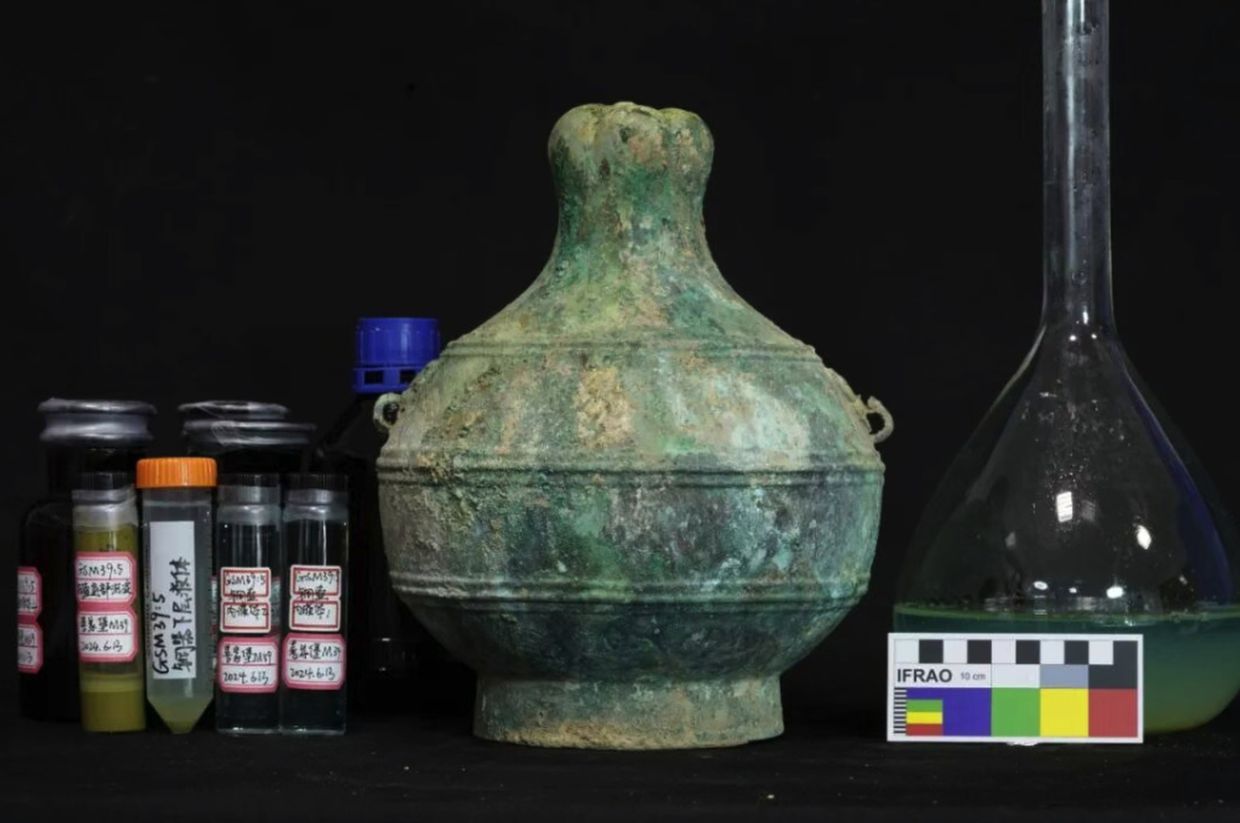
A bronze wine vessel unearthed at the Shanjiabao cemetery in Ningxia, roughly two kilometres from the ancient Warring States Qin Great Wall, has provided unprecedented insight into how people along China's defensive frontier produced and consumed alcoholic beverages more than two millennia ago. The discovery, documented in the Journal of Archaeological Science, represents one of the most comprehensively preserved examples of Qin-era wine yet identified in archaeological records, offering researchers a rare opportunity to reconstruct the brewing techniques and daily practices of soldiers stationed at remote border posts during antiquity.
The excavation site itself tells a broader story about frontier life during the Warring States period. Archaeological teams uncovered 183 tombs at Shanjiabao, with 179 classified as belonging to Qin culture, suggesting the location functioned as a burial ground for military personnel and civilians attached to the garrison installations scattered across the 170-kilometre stretch of fortified wall. These settlements housed soldiers, administrators, and their families in a network of forts and defensive outposts designed to control movement and protect the expanding Qin state's territorial interests. The presence of such substantial cemetery remains implies a permanent, organised community rather than a temporary military encampment, underscoring the logistical complexity required to maintain these border defences.
Tomb No 39, where the most significant discovery occurred, contained a distinctive bronze vessel shaped like a garlic head—a characteristic design feature of Qin metalwork. Archaeologists carefully extracted approximately 3,740 millilitres of liquid residue from the sealed pot, an extraordinarily large quantity that immediately suggested the importance of this particular burial. Initial testing confirmed the presence of ancient wine, but the real breakthrough came through systematic chemical analysis conducted in collaboration with Northwest University, which revealed the composition and likely production methods of the fermented beverage.
The exceptional preservation of this wine owes much to the sophisticated sealing technology employed by Qin craftspeople. A double-layer system featuring an inner textile lining combined with an outer coating of organic clay created an airtight barrier that prevented contamination and oxidation across the centuries. Wang Xiaoyang, leading the archaeological project for the Ningxia Institute of Cultural Relics and Archaeology, publicly stated that this represents the most thoroughly preserved and information-rich Qin wine discovery documented in mainland China to date. This distinction matters because it enables scholars to examine not merely residual traces but substantial quantities of ancient liquid, permitting far more detailed chemical profiling than previous findings have allowed.
The chemical analysis identified 24 distinct compounds within the ancient wine, including organic acids and their derivatives, amino acids, and various carbohydrates. Significantly, the pattern and concentration of organic acids matched those found in artificially aged yellow wine—a traditional Chinese fermented beverage style. This consistency provided critical evidence that the liquid represented a grain-based alcoholic beverage rather than a wine derived from fruit sources such as grapes, offering clear differentiation between northern and southern Chinese winemaking traditions that already existed in antiquity.
Among the most revealing findings was the starch composition analysis, which demonstrated that over 92 percent of the starch residue originated from broomcorn millet, a hardy grain well-suited to the semi-arid climate of northern China's frontier regions. This high proportion of millet, also known as proso millet in some contexts, indicates that the Qin brewers deliberately selected locally available grains for fermentation rather than importing materials from distant regions. The choice reflects both economic pragmatism and adaptation to environmental constraints—border garrisons needed to produce sustenance and beverages from what their immediate surroundings could provide, making millet-based wine a logical outcome of necessity and agricultural reality.
China's lengthy history as an early centre of alcoholic beverage production dates back thousands of years, with archaeological evidence pointing to fermentation practices among some of the world's oldest civilizations. Recent decades have witnessed accelerating discovery of ancient alcoholic residues across Chinese archaeological sites, fuelling scholarly interest in tracing brewing evolution and identifying the origins of various fermentation techniques. However, understanding these developments has been hampered by the geographical diversity of Chinese winemaking traditions. Northern regions historically favoured grain-based fermentation using millets and other cereals, while southern areas predominantly relied on rice, reflecting the agricultural divide that defined Chinese geography and culture for centuries.
The Ningxia discovery fills a significant gap in understanding Warring States-era winemaking specifically in that region. Previously, scholars possessed limited direct evidence about how people in this particular area produced beverages, what raw materials they preferred, and how their methods compared with contemporaneous practices elsewhere. The sealed vessel provides a snapshot of production techniques from approximately 2,300 years ago, allowing researchers to work backwards from the finished product to infer the fermentation processes, ingredient combinations, and quality standards that Qin brewers maintained. This archaeological window into ancient practice extends beyond mere academic curiosity, illuminating the daily lives, resource management, and cultural values of communities that inhabited one of history's most strategically significant frontiers.
The human dimension underlying this discovery adds poignancy to its scientific significance. The quantity of wine interred with the deceased individual—likely a soldier, administrator, or person of some standing at the frontier garrison—suggests that wine held considerable personal and ceremonial importance. Families burying their dead invested effort and expense to include substantial quantities of this valued commodity, indicating beliefs about afterlife provisioning or honouring the deceased through material gifts. The care taken to seal the vessel and preserve its contents suggests reverence for both the beverage itself and the person who would accompany it into the afterlife, revealing attitudes towards death, commemoration, and the material culture that bound communities together at the empire's edges.
The implications of this discovery extend beyond ancient history into broader questions about technological sophistication, long-distance trade networks, and adaptive strategies employed by frontier societies. That Qin-era people along the Great Wall could produce sophisticated fermented beverages demonstrates technical knowledge and agricultural planning extending well beyond basic survival. The existence of such items in burial contexts suggests their value transcended nutritional function, serving social and ceremonial purposes that reinforced community bonds and expressed status or family resources. As scholars continue analysing this remarkable find through multiple disciplinary lenses—archaeology, chemistry, history, and anthropology—understanding of life along ancient China's frontiers will continue deepening, revealing how people adapted, innovated, and maintained cultural traditions in challenging environments far from imperial centres.

