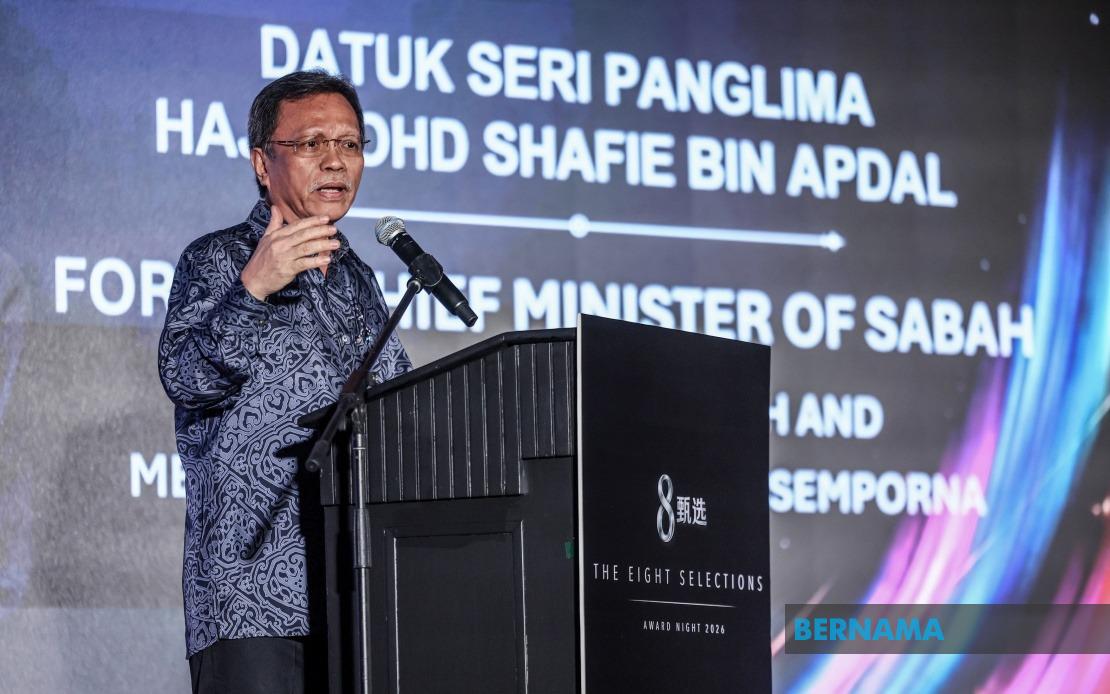
Malaysia's entrepreneurial landscape gained further prominence when 28 business leaders and brand founders were recognised for their exceptional contributions to the nation's economic development at the G Forty Top 40 The Eight Selections Award 2026 ceremony held in Kuala Lumpur. The prestigious event, orchestrated by G Media Asia in collaboration with Media Prima OMNiA, attracted approximately 300 guests representing diverse industrial sectors across the country, creating a significant gathering of Malaysia's corporate and entrepreneurial elite.
The recognition ceremony was formally opened by Datuk Seri Mohd Shafie Apdal, former Chief Minister of Sabah, underscoring the event's importance to Malaysia's business community. The occasion also featured Datuk Wira Dr Calvin Khiu, chairman of G Media Asia, and Stephanie Wong, Chief Operating Officer of Agency Solutions at Media Prima OMNiA, both of whom played instrumental roles in bringing the event to fruition. The participation of such high-profile figures reflected the calibre of individuals and organisations being honoured.
At its core, the awards initiative represents more than a simple recognition ceremony. Instead, it functions as a deliberate platform designed to document and amplify the narratives of Malaysia's most influential business figures, celebrating the trajectories they have charted and the organisational transformations they have engineered. By creating this space, organisers aim to preserve important chapters in Malaysia's entrepreneurial evolution for posterity and inspire the next generation of business leaders.
Cathy Ooi, Chief Executive Officer of G Media Asia, articulated a compelling vision during her address at the ceremony. She emphasised that true entrepreneurial influence cannot be adequately captured through awards and accolades alone. Instead, she positioned media platforms as essential custodians of business narratives, tasked with documenting, disseminating and validating the stories that define Malaysia's commercial landscape. This perspective elevates the awards beyond mere ceremonial recognition into a framework for building sustained public trust in Malaysia's business sector.
Ooi further highlighted the evolving nature of contemporary business competition in Malaysia and across the region. Modern entrepreneurial success, she contended, extends considerably beyond the traditional metrics of product quality and service delivery. The contemporary environment demands that businesses cultivate strong brand identities and establish meaningful public trust—elements that have become increasingly determinative of long-term competitive advantage. This observation carries particular relevance for Malaysian enterprises seeking to expand regionally and compete in international markets, where brand perception often precedes commercial interaction.
G Media Asia's strategic positioning through these awards reflects an understanding that media institutions bear responsibility for championing Malaysian entrepreneurship as a fundamental driver of both social progress and economic advancement. By systematically recognising and celebrating business achievement, the organisation seeks to construct a compelling narrative about Malaysia's entrepreneurial dynamism—one that resonates both domestically and internationally. This approach aligns with broader regional efforts to position Southeast Asian entrepreneurship as increasingly sophisticated and globally competitive.
The 2026 iteration of the awards encompassed eight primary competitive categories, each targeting distinct facets of entrepreneurial excellence. The Young Entrepreneur of the Year, Male Entrepreneur of the Year, and Female Entrepreneur of the Year categories maintained focus on individual achievement across demographic lines, recognising that entrepreneurial talent manifests across all segments of Malaysian society. Complementing these individual honours, the awards also acknowledged the significance of organisational and brand development through categories including Era Influence Representative of the Year, Brand Heritage of the Year, Brand Innovation of the Year, Brand Influence of the Year, and Brand Social Value of the Year.
Beyond the primary eight categories, the awards structure incorporated specialised recognition through the Icons of the Era Honours category. This designation comprised the G Icon Legacy Award and G Icon Award, both designed to celebrate organisations that have not merely achieved temporary success but have sustained competitive leadership, maintained significant market influence, and demonstrated durability across extended periods. This emphasis on long-term sustainability and institutional resilience suggests growing recognition within Malaysia's business community that enduring success requires more than innovative products or services—it demands organisational adaptability and cultural depth.
The convening of such a diverse assembly of 300 business professionals, corporate executives and industry leaders in a single venue carries implications extending beyond the immediate ceremony. These gatherings function as networking nexuses where business relationships are forged, collaborations are conceptualised, and partnerships are initiated. For Malaysia's entrepreneurial community, particularly for mid-tier enterprises aspiring to achieve greater scale and regional prominence, such occasions provide invaluable opportunities to establish connections with established industry figures and potential commercial partners.
The recognition of these 28 individuals and organisations also carries symbolic weight for Malaysia's broader business narrative. In an era when Southeast Asian nations compete intensely for entrepreneurial talent and foreign direct investment, highlighting homegrown business success stories strengthens Malaysia's positioning as a destination for ambitious entrepreneurs and commercial innovation. These recognition initiatives help counterbalance perceptions that may characterise Malaysia's business environment as less dynamic than competing regional economies.
Looking forward, such awards initiatives are likely to become increasingly important mechanisms for shaping Malaysia's business reputation and attracting investment capital. As global investors assess emerging market opportunities, they increasingly examine not merely macroeconomic indicators but also the quality and dynamism of local entrepreneurial ecosystems. Recognition programmes that systematically celebrate business achievement therefore serve strategic national interests by strengthening Malaysia's attractiveness to both international investors and domestic talent retention.

