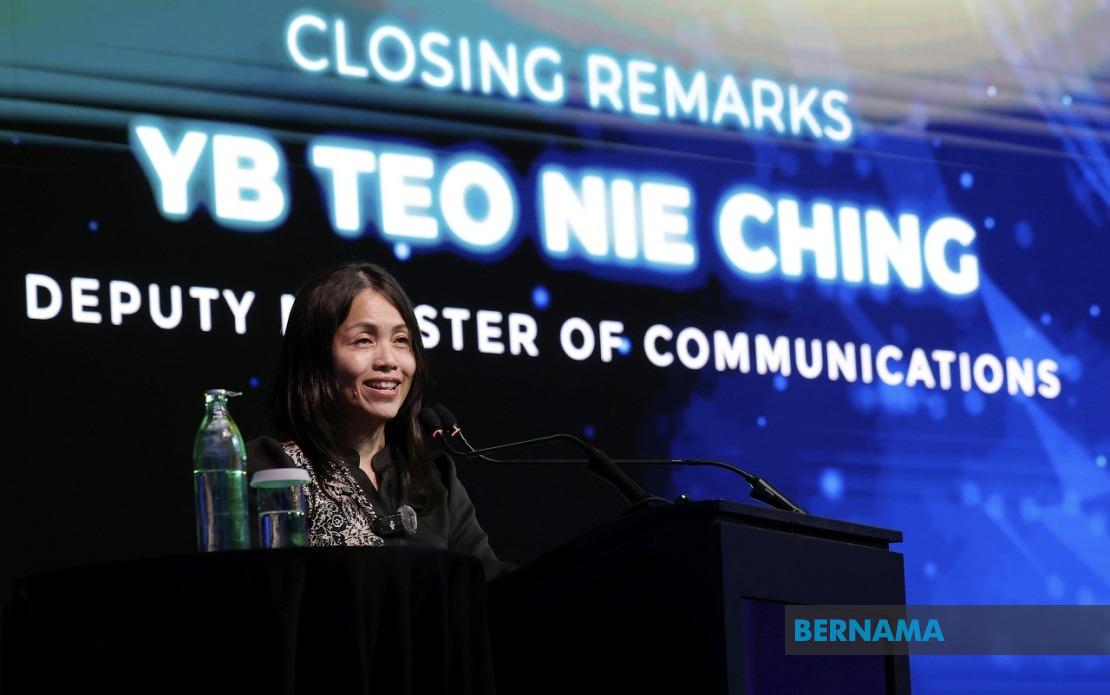
Deputy Communications Minister Teo Nie Ching has underscored that building a secure and inclusive digital future hinges on two interconnected pillars: institutional accountability and a governance framework that places public welfare at its centre. Speaking at the conclusion of the International Regulatory Conference 2026 in Kuala Lumpur, Teo articulated a vision of digital progress that moves beyond measuring success solely through technological advancement, instead evaluating innovation against criteria of safety, fairness, and demonstrable public benefit.
The minister's framing reflects a fundamental shift in how policymakers across the region are approaching digital governance. Rather than treating technology and regulation as separate domains, Teo argued for their evolution as interlocking systems. She noted that citizens do not assess digital tools primarily on technical sophistication, but rather on whether those tools operate transparently, distribute risks equitably, and deserve their trust. This perspective carries significant implications for Malaysia's regulatory posture, particularly as the nation positions itself as a digital economy leader within Southeast Asia while simultaneously grappling with the enforcement challenges of an increasingly complex online ecosystem.
The scale of Malaysia's digital safety challenge becomes evident when examining recent data from the Malaysian Communications and Multimedia Commission. Between January 2022 and mid-July 2026, the MCMC submitted 1.2 million content removal requests to social media platforms, resulting in the deletion of 1.138 million pieces of harmful content. These figures demonstrate both the pervasiveness of problematic material circulating on Malaysian digital platforms and the resource-intensive nature of content moderation undertaken by regulatory bodies. The trend has accelerated markedly in 2026, with the MCMC already issuing 377,502 removal requests in the first half of the year alone—a pace that would exceed all of 2025's removal request activity and reflects an average of approximately 1,900 requests per day.
While the removal success rate has remained relatively consistent, with platforms taking down 350,332 items during the January-July 2026 period, the sheer volume of content requiring intervention raises questions about the sustainability of reactive moderation strategies. Teo's acknowledgement that regulation cannot shoulder this burden alone represents a pragmatic recognition of institutional limitations. No government agency, regardless of resourcing or mandate, can unilaterally police the digital conduct of millions of users across multiple platforms operating under different corporate policies and jurisdictional frameworks.
Instead, Teo advocated for a multi-stakeholder approach that distributes responsibility across platforms, educational institutions, community organisations, and the broader technology sector. This collaborative model reflects emerging best practices in digital governance globally, yet its implementation within Malaysia's context presents distinct challenges. Technology platforms operating in the country must navigate between Malaysian regulatory expectations, their own corporate policies, and pressures from other jurisdictions. Schools and communities, meanwhile, often lack resources and expertise to embed digital literacy and safety practices effectively. The success of such collective approaches depends substantially on aligned incentives and shared commitments to outcomes rather than mere compliance.
A particularly crucial aspect of Teo's framework involves shifting the temporal focus of safety interventions. Rather than treating harm as an inevitable consequence of digital innovation that regulators subsequently address, she advocated embedding safety considerations into design and deployment stages from inception. This "privacy by design" and "safety by default" philosophy represents a more preventative orientation than Malaysia's historical reliance on post-hoc content removal and enforcement actions. Implementing such an approach would require closer collaboration between regulators and platform developers, potentially including design consultations, security audits, and algorithmic transparency mechanisms that go considerably beyond current practices.
The International Regulatory Conference itself, now in its third edition, serves as an important convening space for such dialogues. Themed "Shaping the Next Digital Era: Regulation, Resilience and Trust," the conference assembles communications regulators, technology sector leaders, and digital policy experts to deliberate on governance challenges and innovative regulatory solutions. For Malaysia, hosting such a platform positions the country as a serious participant in regional digital governance debates and creates opportunities for learning from international peers managing comparable challenges. The conference's emphasis on resilience and trust reflects recognition that digital ecosystems must withstand both malicious interference and inadvertent failures while maintaining public confidence in their integrity.
The Malaysian context adds particular urgency to these conversations. As a middle-income nation with significant digital adoption rates but developing regulatory infrastructure, Malaysia faces distinct pressures. The country must simultaneously promote digital innovation to drive economic competitiveness, protect vulnerable populations from online harms, and manage the reputational implications of illegal or harmful content circulating within its digital space. Foreign investors and technology companies assess regulatory environments based on perceived stability and clarity; excessive or arbitrary content removal can deter legitimate innovation, while inadequate regulation can undermine platform trustworthiness and user safety.
Teo's emphasis on measuring technology by its fairness and safety rather than merely its sophistication also challenges the prevailing narrative that digital progress is inherently beneficial. This perspective acknowledges that technological capabilities can simultaneously create opportunities and risks, and that concentrating decision-making power over digital tools in private corporate hands raises governance questions distinct from traditional utility regulation. If platforms effectively determine which speech reaches audiences, which transactions occur, and which groups can organise, then questions about their accountability, transparency, and governance become fundamentally political rather than merely technical.
Moving forward, Malaysia's regulatory framework will likely need to evolve to address several emerging dimensions. First, platforms must operate with greater transparency regarding how they moderate content, make algorithmic decisions, and respond to government removal requests. Second, regulatory agencies require sufficient capacity and expertise to evaluate platform compliance truthfully rather than accepting assurances at face value. Third, educational systems should integrate digital citizenship and critical information literacy into curricula so citizens can navigate digital spaces with greater discernment. Finally, community-based initiatives can help vulnerable populations, including children and elderly citizens, develop protective skills and access support when harm occurs.
The deputy minister's message ultimately reflects a maturing understanding that digital governance cannot be delegated entirely to either technology companies pursuing profit or regulators operating in reactive mode. Instead, Malaysia's digital future depends on continuous negotiation among platforms, government agencies, schools, civil society organisations, and engaged citizens about acceptable norms, appropriate safeguards, and fair distribution of benefits and risks. Whether Malaysia can successfully orchestrate such coordination across these diverse stakeholders, particularly given competing interests and limited resources in some sectors, will substantially determine the nation's trajectory as a trusted digital economy.

