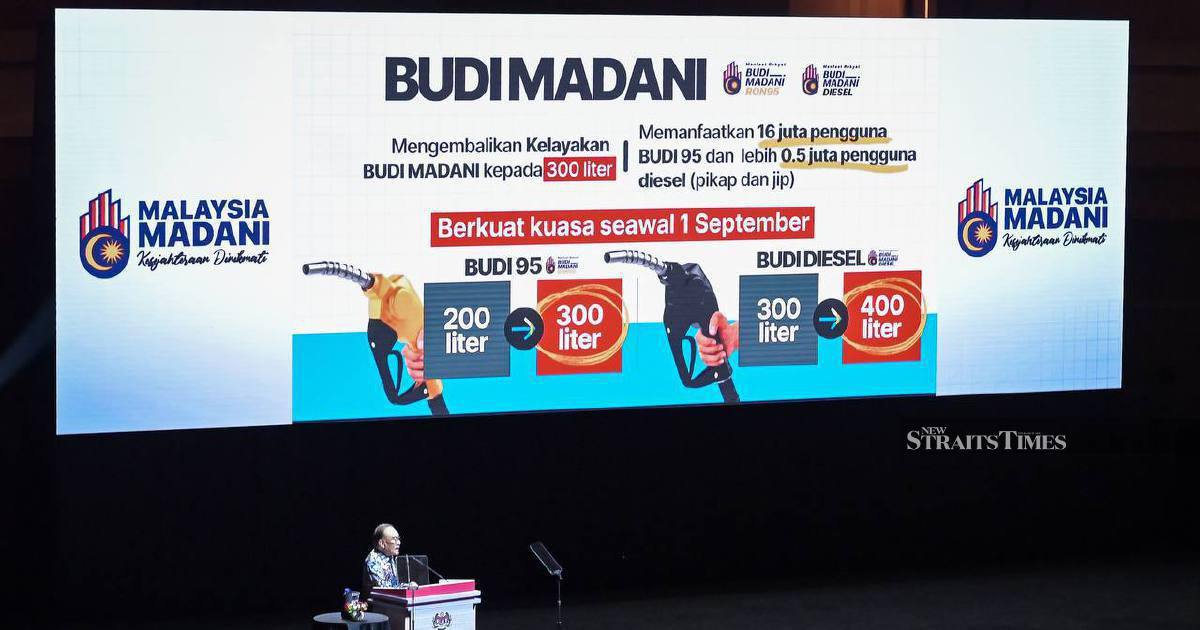
Prime Minister Datuk Seri Anwar Ibrahim outlined a six-point economic relief strategy during his National Day Eve address in Putrajaya, signalling the government's commitment to alleviating household expenses and business pressures during a period of mounting economic headwinds. The announcement comes as Malaysia grapples with sustained inflation concerns and purchasing power challenges that have rippled across households and small enterprises, making intervention a priority before the October tabling of the 2027 Budget.
The timing of these measures reflects the government's understanding that immediate relief is essential to stabilise consumer sentiment and maintain economic momentum heading into next year. By introducing targeted interventions ahead of the formal budget presentation, the administration is seeking to demonstrate responsiveness to ground-level concerns while providing businesses with clarity on policy direction during planning cycles. This approach also sets the tone for forthcoming fiscal announcements, framing them within a broader narrative of gradual, sustained support rather than sudden policy shifts.
For Malaysian households, the ability to manage household budgets has become increasingly strained as essential costs—food, transport, utilities, and accommodation—consume larger portions of disposable income. The six measures are designed to create breathing room in family finances by reducing pressure points across multiple expense categories. This multi-pronged approach differs from one-off subsidies by attempting to create systemic relief through structural adjustments that ripple across the economy.
The initiatives also extend support to small and medium-sized enterprises, which form the backbone of Malaysia's economic ecosystem and employment base. Many SMEs have faced margin compression as input costs surge while competitive pressures limit pricing power. By incorporating business support within the relief framework, the government aims to prevent cascading layoffs and business closures that would ultimately worsen the consumer situation by reducing employment opportunities.
Strengthening public services represents the third pillar of the announcement, reflecting recognition that government efficiency directly impacts citizens' quality of life and government spending effectiveness. Enhanced public services can reduce indirect private expenditures—for instance, improved healthcare reduces out-of-pocket medical costs; better transport infrastructure reduces commuting expenses. This integration of public service improvements within an economic relief package demonstrates sophisticated understanding of how government expenditure and private household economics interact.
The announcement carries particular significance for Malaysia's regional standing. As a middle-income nation competing for foreign investment and talent, the government's ability to maintain macroeconomic stability while protecting living standards influences both investor confidence and human capital retention. Neighbouring countries are navigating similar challenges, making Malaysia's policy responses instructive for regional policymakers and potentially positioning the nation as a model for pragmatic economic management.
Sector-specific implications emerge from such comprehensive relief measures. Consumer goods companies, telecommunications providers, and utilities may face regulatory or pricing pressures. Construction and infrastructure companies could benefit from public service strengthening initiatives. Financial institutions may see demand patterns shift as households prioritise necessity spending. Understanding these sectoral dynamics helps investors and business leaders anticipate market movements following formal policy implementation.
The relief package also intersects with Malaysia's longer-term development agenda. The 2027 Budget will likely elaborate on these measures with specific allocations and timelines. The six immediate measures essentially serve as down payment on broader commitments, building public confidence that the government has concrete plans beyond the immediate announcement. This sequencing—immediate action followed by detailed budgetary elaboration—represents a political communication strategy designed to manage expectations while demonstrating governmental competence.
International economic conditions provide crucial context for understanding why the government is acting now. Global inflation, interest rate volatility, and supply chain uncertainties create headwinds that Malaysian policymakers cannot fully control but must actively mitigate domestically. By anchoring expectations and providing tangible relief, these measures attempt to insulate Malaysia's economy from external shocks while maintaining the consumer confidence necessary for sustained growth.
The announcement's reception across different demographic and geographic segments will likely vary significantly. Urban middle-class households may perceive the measures as insufficient, while lower-income groups may view them as meaningful relief. Rural communities and agricultural sectors may assess the initiatives differently depending on sector-specific provisions. This constituency heterogeneity creates implementation challenges but also reflects the government's need to balance competing demands within limited fiscal space.
Longer-term fiscal sustainability remains an undercurrent consideration. While immediate relief is politically necessary and economically justified, the government must ensure these measures do not create structural fiscal deficits that become problematic in subsequent years. The October budget will reveal how these immediate measures are financed and how they integrate with medium-term fiscal consolidation objectives.
Looking ahead, the success of these measures will be judged not merely by their announcement but by effective implementation, timing, and measurable impact on household finances and business conditions. Government agencies will face significant responsibility in translating policy announcements into concrete benefits reaching intended beneficiaries. Monitoring mechanisms and mid-term evaluation frameworks will be essential for assessing whether the six-point plan achieves its objectives.

