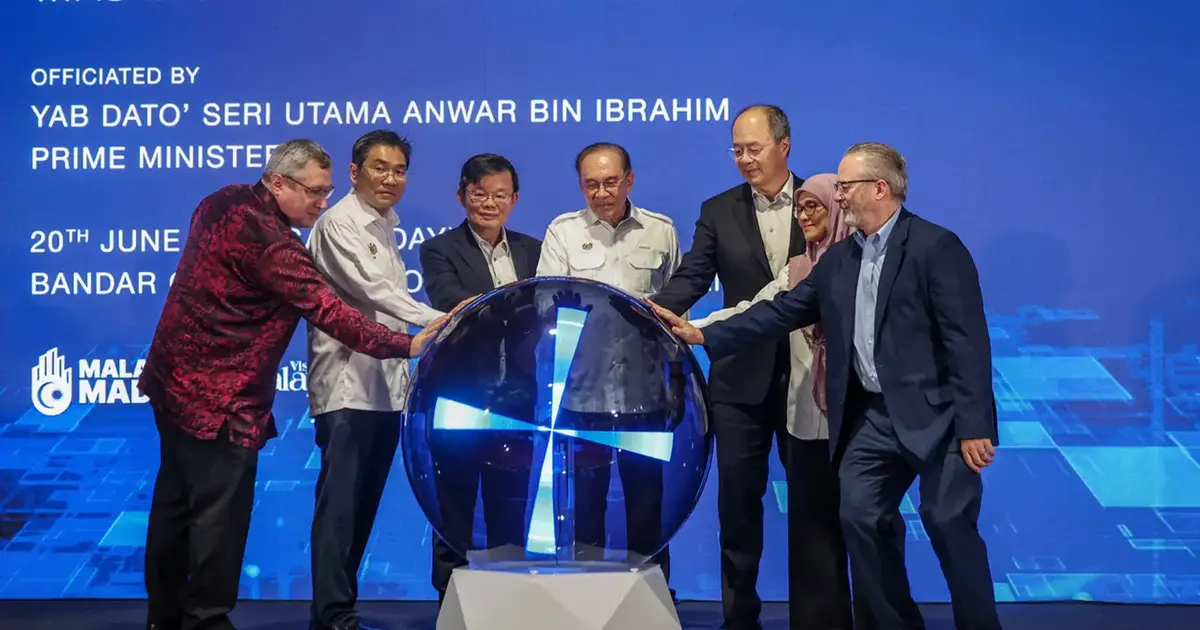
Prime Minister Anwar Ibrahim has moved to deepen connections between Malaysia's semiconductor sector and its universities by appointing a dedicated adviser to the role, signalling the government's commitment to leveraging academic expertise for industrial advancement. The appointment underscores the administration's recognition that the nation's competitiveness in the high-value semiconductor space depends on stronger knowledge transfer and coordination between research institutions and commercial manufacturers. Anwar emphasized that the initiative would impose no additional financial burden on the government, reflecting a pragmatic approach to achieving strategic objectives through existing resources and personnel allocation.
Malaysia's semiconductor industry ranks among the region's most significant, with the country hosting major manufacturing and assembly operations for global chipmakers. However, the sector has faced mounting pressure from international competition and the need to move up the value chain into design and advanced manufacturing. Universities across Malaysia possess considerable research capacity in electronics, materials science, and engineering disciplines, yet this expertise remains largely underutilized in addressing real-world industrial challenges. The new advisory role seeks to bridge this persistent gap, creating formal mechanisms for knowledge exchange and collaborative problem-solving that benefit both sectors.
The timing of this appointment reflects broader regional dynamics shaping Southeast Asia's tech ambitions. Taiwan, South Korea, and Singapore have long leveraged university-industry partnerships to maintain semiconductor leadership, while Malaysia has historically lagged in formalizing such connections at the policy level. As geopolitical tensions drive semiconductor supply-chain diversification away from China and Taiwan, countries positioning themselves as alternative manufacturing hubs see opportunity. An enhanced collaboration framework could help Malaysia capture greater share of this shifting demand, particularly in specialized segments where academic innovation plays a direct role.
The semiconductor adviser role carries implicit pressure to deliver measurable outcomes without inflating the civil service or duplicating existing institutional functions. This constraint suggests the appointee will likely work within current budgetary allocations, possibly coordinating efforts across existing government agencies, industry associations, and tertiary institutions. Such efficiency-focused appointments have become common in Malaysian governance, particularly under Anwar's administration, which has emphasized cost-consciousness despite pressing development needs. The success of this model hinges on the adviser's political capital and ability to catalyze cooperation among institutional players with different priorities and cultures.
Universities in Malaysia have invested substantially in semiconductor research infrastructure over recent years, establishing specialized laboratories and attracting research talent through government funding initiatives. Institutions such as Universiti Teknologi Malaysia, Universiti Kebangsaan Malaysia, and Universiti Malaya maintain strong engineering programs with semiconductor focus areas. Yet these capabilities often remain fragmented and insufficiently connected to immediate industry demand. An effective adviser could facilitate joint research projects, internship placements, and technology licensing arrangements that translate academic discoveries into commercial applications. Such mechanisms would particularly benefit smaller and mid-sized local semiconductor companies seeking to differentiate themselves in global markets.
The appointment also carries implications for Malaysia's broader technology strategy, particularly its aspirations to position itself as a regional innovation hub. The government has previously announced ambitions in artificial intelligence, advanced manufacturing, and digital services, yet semiconductor strength provides foundational importance to all these areas. By visibly prioritizing semiconductor industry-university collaboration, Anwar signals to both domestic stakeholders and international investors that the government recognizes semiconductors as a strategic priority worthy of high-level attention. This messaging effect may prove as valuable as the adviser's direct contributions to coordination.
International semiconductor firms operating in Malaysia may view stronger academic connections as advantageous for their operations and expansion plans. Enhanced access to graduate talent, research facilities, and technical expertise could influence location decisions for future investments or upgrades to existing facilities. Companies like Intel, NXP Semiconductors, and Penang-based manufacturers could potentially collaborate with universities on process improvements, new material research, or workforce development programs. Such partnerships often operate at arm's length from government, but a dedicated adviser can help identify opportunities and remove administrative obstacles.
The absence of additional financial costs reflects the government's current fiscal constraints following pandemic-related expenditures and structural revenue challenges. Rather than establishing new institutions or significantly expanded programs, the adviser model represents a coordinating function designed to optimize existing resources. This approach risks limiting the adviser's ability to fund major collaborative initiatives, though such constraints can also encourage creative, partnership-driven solutions that prove more sustainable than government-financed programs. The adviser will likely succeed through convening power and access to senior decision-makers rather than command over substantial budgets.
Looking forward, the success of this initiative will depend on how effectively the adviser can navigate the complex politics of Malaysia's higher education system and semiconductor industry. Universities operate with significant autonomy and diverse research agendas, while semiconductor companies operate with proprietary concerns and profit imperatives. Creating genuine collaboration requires establishing trust, demonstrating mutual benefit, and building institutional mechanisms that survive beyond any individual appointee's tenure. The appointment represents an important first step, but sustained commitment from multiple stakeholders will determine whether this advisory role catalyzes meaningful industry-university collaboration or remains a symbolic gesture toward addressing a persistent gap in Malaysia's innovation ecosystem.

%22%2F%3E%3C%2Fpattern%3E%3C%2Fdefs%3E%3Crect%20width%3D%22100%25%22%20height%3D%22100%25%22%20fill%3D%22url(%23phf3lfg)%22%2F%3E%3Crect%20width%3D%22100%25%22%20height%3D%22100%25%22%20fill%3D%22url(%23phf3lfp)%22%2F%3E%3Ctext%20x%3D%2250%25%22%20y%3D%2250%25%22%20text-anchor%3D%22middle%22%20dominant-baseline%3D%22central%22%20fill%3D%22rgba(255%2C255%2C255%2C0.95)%22%20font-family%3D%22Georgia%2C%20'Times%20New%20Roman'%2C%20serif%22%20font-weight%3D%22700%22%20font-size%3D%22272%22%20letter-spacing%3D%22-0.02em%22%3EAnwar%3C%2Ftext%3E%3C%2Fsvg%3E)