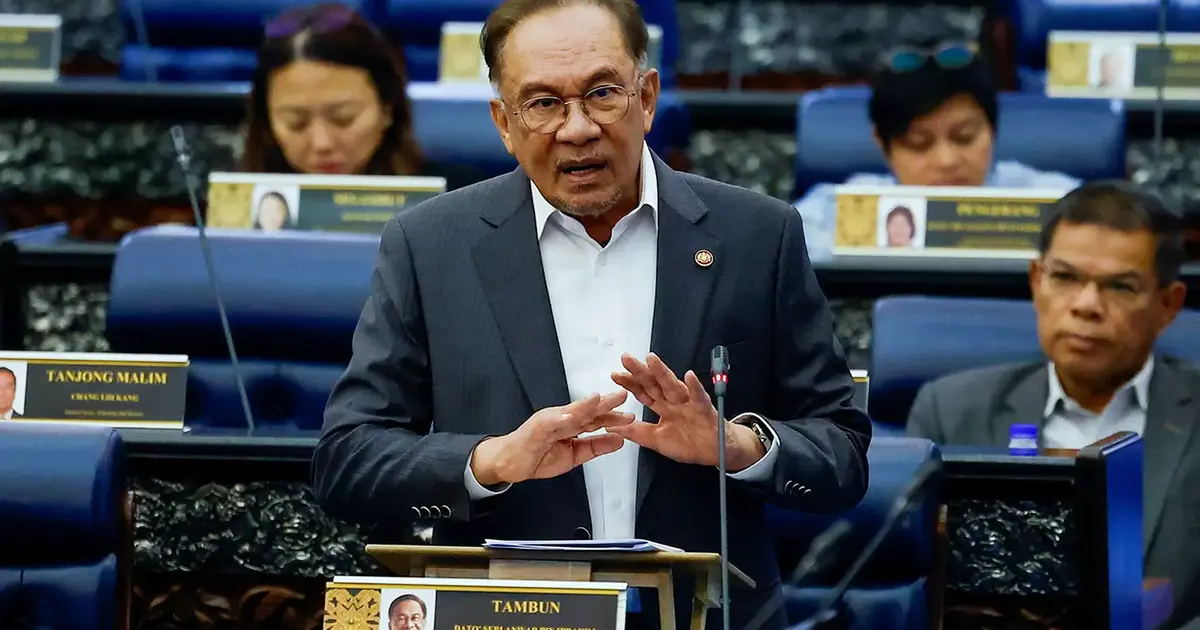
Prime Minister Anwar Ibrahim has clarified that Sabah's escalating special grant allocations were previously sanctioned by the state's former Warisan administration, providing crucial context to ongoing discussions about federal funding mechanisms for East Malaysia. The government head stated that the amounts, which have grown substantially over recent years, reflected agreements reached between federal authorities and the former state leadership rather than new policy initiatives introduced under current arrangements. This revelation underscores the continuity of fiscal arrangements across different political administrations and highlights how resource distribution agreements transcend electoral cycles in Malaysia's federalist structure.
The progression of these grant figures presents a striking trajectory that demands examination. The baseline allocation of RM53.4 million allocated for both 2020 and 2021 represents the entry point in this funding schedule. By 2024, however, the amount had exactly doubled to RM106.8 million, indicating a significant expansion in federal commitment to the state's coffers. This doubling over a four-year period represents an average annual increase that substantially outpaces inflation, suggesting deliberate policy choices to enhance financial transfers to Sabah rather than mere cost-of-living adjustments.
The timing of these grant arrangements carries particular significance within Malaysia's broader political landscape. The Warisan party, which governed Sabah until recently, represents one of the major political entities in East Malaysia and has historically played a crucial role in national coalition-building efforts. That the party had negotiated and approved these escalating grant rates underscores the importance of Sabah's position in federal-state relations and the necessity of securing the state government's cooperation through substantive fiscal commitments. The previous administration's agreement to these graduated amounts suggests that such arrangements are negotiated as part of broader political understandings between federal and state authorities.
For Malaysian readers and policymakers, Anwar's confirmation carries implications beyond mere bureaucratic accounting. The fact that these special grants were previously approved demonstrates that allocating enhanced resources to economically significant but geographically remote states represents established practice rather than ad hoc political favours. Sabah, with its substantial territorial expanse, resource wealth, and strategic location within the broader ASEAN region, warrants special consideration in federal fiscal planning. The mechanism of special grants serves as a recognition that certain states face distinctive development challenges and revenue generation limitations that necessitate federal support beyond standard revenue-sharing formulas.
The doubling of allocations from 2020–2021 to 2024 invites analysis of what circumstances prompted such substantial increases. Economic recovery following the pandemic's initial impact may have influenced revised assessments of Sabah's financial requirements. Alternatively, the state's ambitious development agenda, particularly regarding infrastructure modernisation and economic diversification, could have necessitated enhanced federal backing. Understanding the rationale behind these increases provides insight into how federal-state fiscal relationships adapt to changing circumstances and priorities within Malaysia's complex political economy.
Sabah's special status within the Malaysian federation derives from historical circumstances encoded in the Malaysia Agreement 1963. The state's entry into Malaysia as a co-equal founding member, alongside Sarawak, established constitutional recognition of distinctive governance arrangements and fiscal considerations. Special grants represent one mechanism through which this constitutional recognition manifests in contemporary practice. That such grants have grown substantially reflects both the evolving scope of state government responsibilities and the continuing importance of maintaining equitable development opportunities across Malaysia's geographically dispersed territories.
The relationship between federal funding arrangements and political stability warrants consideration in this context. East Malaysian states, particularly Sabah with its volatile political history marked by frequent defections and coalition shifts, represent critical elements in Malaysia's overall political stability. Adequate federal financial support serves not merely as resource distribution but as an implicit acknowledgment of state governments' legitimacy and their essential role in the federation's cohesion. Enhanced special grants function simultaneously as fiscal mechanism, political recognition, and investment in national stability.
Anwar's decision to publicly confirm the previous administration's role in approving these grant structures reflects a measured approach to inter-state relations that transcends partisan divisions. Rather than claiming credit for new initiatives, the prime minister has acknowledged the bipartisan nature of Sabah's enhanced funding arrangements. This approach suggests recognition that sustainable federal-state relationships depend upon agreements perceived as legitimate across different political administrations. By anchoring current arrangements in decisions made by the previous government, Anwar potentially strengthens their durability and reduces susceptibility to reversal based on electoral outcomes.
Looking forward, these grant arrangements establish fiscal baseline expectations that future administrations will likely need to maintain or exceed. The doubling of allocations from 2020–2021 to 2024 effectively establishes a new floor for federal commitment to Sabah. Any attempt to reduce these allocations would provoke substantial political difficulties and allegations of discrimination against an East Malaysian state. This dynamic illustrates how fiscal commitments, once established, acquire political durability that constrains future policy flexibility regardless of which coalition holds federal power.
For Southeast Asian observers monitoring Malaysia's internal federalism, these arrangements demonstrate how resource distribution serves as a critical tool for maintaining territorial cohesion within diverse, geographically dispersed nations. The mechanism of negotiated special grants, approved through mutual understanding between federal and state authorities, reflects pragmatic statecraft aimed at accommodating distinctive regional needs within a unified national framework. Sabah's experience provides instructive parallels for other Southeast Asian federations navigating the perpetual challenge of equitable resource distribution across territories with unequal development potential.

