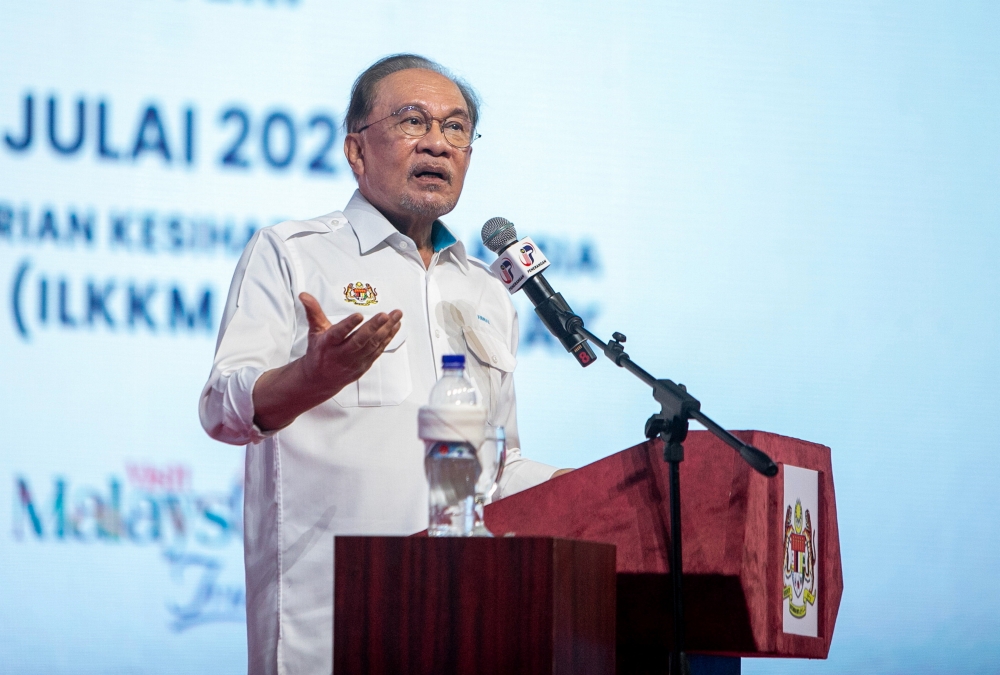
Prime Minister Datuk Seri Anwar Ibrahim has mounted a robust defence of the government's fuel subsidy framework, arguing that maintaining affordable energy prices must be balanced against the pressing need to control the nation's debt trajectory. Speaking in Kajang, the premier acknowledged the complex trade-offs inherent in energy policy, where populist measures to keep pump prices low could ultimately undermine Malaysia's long-term financial stability if pursued without restraint.
Anwar's comments reflect a government caught between competing pressures: the desire to shield households and businesses from global commodity price volatility, and the imperative to maintain fiscal discipline amid Malaysia's existing debt burden. The fuel subsidy system, one of the largest budget expenditures in Southeast Asia, has historically consumed vast portions of the federal budget, potentially crowding out investments in education, healthcare, and infrastructure that could enhance productivity and competitiveness. The premier's framing of the issue in terms of intergenerational responsibility suggests an attempt to reposition subsidy policy as a matter of national stewardship rather than mere handout politics.
Malaysia's fuel subsidy regime has evolved considerably over the past two decades, oscillating between periods of tighter targeting and looser universal support depending on global oil prices and domestic political calculations. When crude prices spike internationally, the fiscal cost of maintaining artificially depressed pump prices escalates rapidly, forcing governments to either absorb enormous budget deficits or face politically damaging price adjustments. Anwar's warning against "piling on debt" implicitly acknowledges that previous administrations may have deferred difficult choices, allowing subsidy costs to accumulate as contingent liabilities on the nation's balance sheet.
The premier's position carries particular weight given Malaysia's broader fiscal challenges. Government debt has fluctuated around sixty percent of gross domestic product in recent years, approaching levels that international rating agencies have flagged as concerning for a middle-income nation. If debt servicing costs continue rising, they consume an expanding share of government revenue, limiting fiscal space for discretionary spending and potentially triggering capital flight if investors lose confidence in Malaysian assets. In this context, Anwar's caution about mounting obligations represents more than rhetorical posturing; it reflects genuine constraints on policy options.
Yet the political economy of fuel subsidies in Malaysia complicates any attempt at rapid reform. Petrol and diesel prices directly influence transport costs, food prices, and general inflation expectations, making them sensitive touchstones for public sentiment about government performance. Urban commuters and rural drivers alike keenly feel pump price increases, while freight companies pass on costs immediately to consumers. Any significant subsidy reduction typically generates immediate backlash, forcing governments to cushion impacts through targeted cash transfers or income supplements for lower-income groups—adding new administrative complexity and budgetary commitments.
Anwar's rhetorical emphasis on "who will pay" signals that the government may be preparing Malaysians psychologically for future adjustments, even if imminent policy changes are not announced. By framing fiscal discipline as a collective responsibility rather than an elite preference, the administration attempts to build social consensus around potentially unpopular measures. This approach contrasts with governments that simply impose price hikes without explanation, which typically generate greater political turbulence and public resentment.
The broader regional context amplifies Malaysia's dilemma. Neighbouring Thailand, Indonesia, and the Philippines have all grappled with similar subsidy burdens, with varying degrees of success in implementing reform packages. Indonesia's landmark fuel subsidy cuts in 2005 and subsequent reforms, though economically necessary, generated sustained social friction and required complementary safety-net expansions. Thailand's periodic price adjustments have frequently sparked protests and political instability. Malaysia's leaders, observing these experiences, likely seek to avoid the shock-therapy approach while still addressing underlying fiscal imbalances gradually.
International financial institutions and credit rating agencies have consistently urged Malaysia to rationalize energy subsidies, not from ideological dogmatism but from empirical observation that unchecked subsidy spending eventually forces sharper, more destabilizing corrections. The International Monetary Fund and World Bank have documented how subsidy reforms, when properly sequenced with complementary social policies, can actually improve overall welfare by freeing resources for targeted support to vulnerable populations and productive investments.
Anwar's defence of current policy must also be situated within domestic political calculation. As premier, he leads a coalition government dependent on support from multiple parties representing diverse constituencies. Sudden subsidy reductions risk fracturing this coalition, as component parties face pressure from voters benefiting from cheap fuel. By emphasizing shared responsibility for fiscal prudence, Anwar may be building political cover for gradual adjustments that distribute adjustment costs across society rather than concentrating them on particular groups.
Looking forward, Malaysia's fuel policy trajectory will likely depend on several factors: the direction of global oil prices, the government's success in diversifying revenue sources and improving tax collection, the political durability of the current coalition, and public receptiveness to reframing subsidies as unsustainable. Anwar's cautionary rhetoric suggests the administration recognizes that subsidies cannot expand indefinitely, even if formal policy changes remain incremental. The prime minister's framing positions fiscal responsibility as patriotic rather than austere, potentially easing public acceptance of future refinements to energy pricing.

