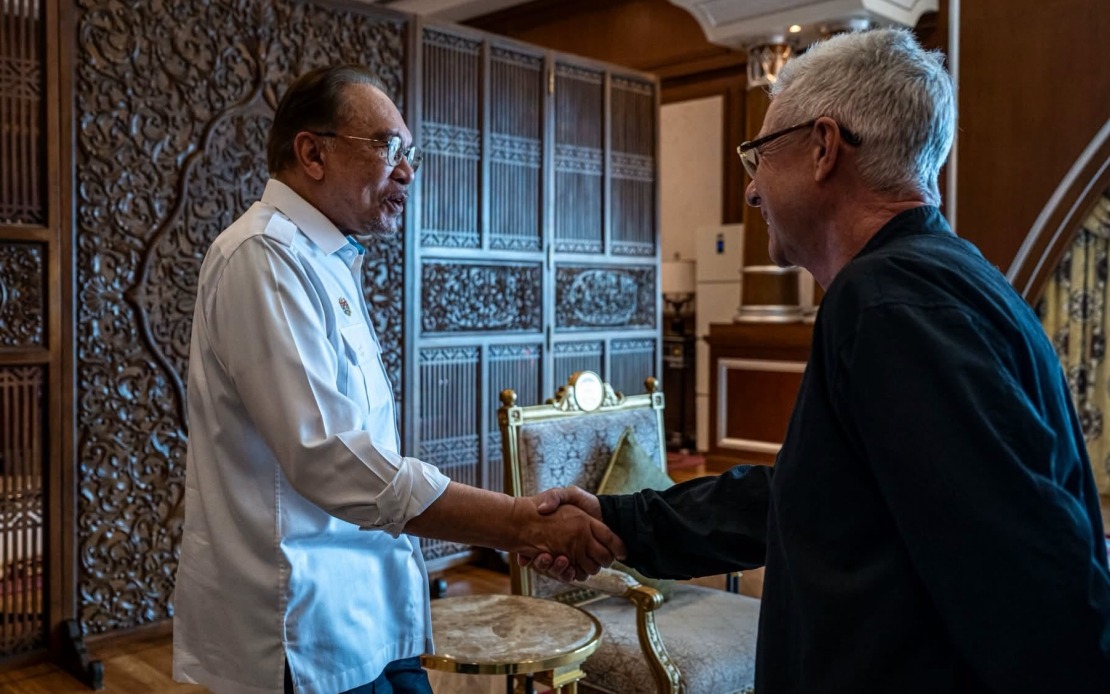
Prime Minister Datuk Seri Anwar Ibrahim has convened with Michael Roche, the executive director overseeing Singapore's Grand Prix operations, to examine operational frameworks and strategies that have made the city-state's motorsports event one of Asia's most successful. The encounter took place as Malaysia prepares to host the Formula 1 Gulf Air Bahrain Grand Prix at the Sepang International Circuit in October, marking a significant return for Formula 1 to Malaysian soil after nearly a decade of absence from the racing calendar.
The strategic dialogue reflects the government's determination to extract maximum value from hosting a premier international motorsports event. Through this exchange with Singapore's racing establishment, Malaysian officials aim to understand the comprehensive architecture underlying a world-class Formula 1 operation—from logistical coordination to stakeholder management and public engagement. Singapore's annual Grand Prix has become a template for regional event management, drawing global attention and generating sustained economic returns long after the chequered flag falls.
According to statements released through official channels, Anwar articulated an ambitious vision for what the Bahrain Grand Prix at Sepang could achieve for Malaysia's economy and international standing. The prime minister identified multiple channels through which the event would deliver tangible benefits: a measurable surge in tourist arrivals, employment opportunities across hospitality and service sectors, expansion of business activities in associated industries, and renewed investor confidence in Malaysia as a destination for high-value events. These economic multipliers extend well beyond race weekend itself, with hotel occupancy, restaurant bookings, retail activity, and transportation services all experiencing sustained uplift.
The October event dovetails strategically with the broader Visit Malaysia 2026 campaign, the government's comprehensive initiative to position the nation as a compelling tourism destination. By successfully executing a Formula 1 Grand Prix of international calibre, Malaysia would demonstrate its capacity to manage complex, high-profile events while simultaneously attracting global media coverage and international visitor flows. The convergence of these objectives means that success at Sepang carries implications extending far beyond motorsports into national branding and economic policy.
Formula 1 and the international motorsports governing body, the Fédération Internationale de l'Automobile, previously confirmed that the 2026 Bahrain Grand Prix would relocate to Malaysia under a bilateral arrangement between Malaysian and Bahraini authorities. This collaborative framework represents a practical solution to regional circumstances while providing Malaysia with an unprecedented opportunity to reassert itself as a motorsports destination.
The original Bahrain Grand Prix, scheduled for April at the Bahrain International Circuit, underwent postponement to October following escalating geopolitical instability across the wider West Asian region. This disruption necessitated finding an alternative venue capable of hosting a Formula 1 event to international specifications. Sepang's established infrastructure, its track record of successfully managing the Malaysian Grand Prix over two decades, and its existing facilities positioned the circuit as the logical choice to accommodate the rescheduled race.
Malaysia's motorsports pedigree runs deep. The Sepang International Circuit hosted the Malaysian Grand Prix consistently from 1999 through 2017, establishing itself as a fixture on the Formula 1 calendar and earning recognition as one of Asia's premier racing venues. The decision to discontinue Malaysia's Grand Prix stemmed from escalating financial pressures—specifically, rising hosting costs and escalating licensing fees charged by Formula 1's commercial rights holders. These economic realities reflected broader structural challenges facing grand prix hosting during that period, when competition among venues intensified and commercial terms became increasingly demanding.
The reintroduction of Formula 1 racing to Sepang through this October event signals potential renewed engagement with the sport at the highest level. However, officials have positioned this not as a permanent resumption of an annual Malaysian Grand Prix, but rather as a one-off hosting arrangement facilitating the Bahrain Grand Prix relocation. Nonetheless, successful execution of the Bahrain event could demonstrate to Formula 1's decision-makers that Malaysia remains capable of delivering world-standard motor racing events and might reignite discussions regarding future Formula 1 presence on the Malaysian calendar.
Anwar's emphasis on meeting international standards while strengthening Malaysia's regional motorsports prominence reflects a sophisticated understanding of the event's dual utility. Beyond immediate economic returns, hosting a Formula 1 Grand Prix reinforces Malaysia's credentials as a destination for international investment, sporting tourism, and premium experiences. The event generates extensive international broadcasting coverage, exposing Malaysia to billions of television viewers globally and creating narrative opportunities for national promotion through sports diplomacy.
The preparations underway at Sepang involve substantial infrastructure review and modernization to ensure compliance with current Formula 1 technical requirements. This includes assessment of track conditions, safety infrastructure, spectator facilities, transportation networks, and emergency protocols. Learning from Singapore's meticulous attention to operational detail—from traffic management to weather contingencies to sponsorship activation—provides Malaysian organizers with tested frameworks to adapt for local circumstances.
The October timeline presents a compressed preparation schedule, demanding coordinated action across government agencies, circuit operators, security services, and commercial partners. The meeting between Anwar and Roche represents the kind of high-level engagement necessary to align strategic objectives and secure the commitment and resources required for successful delivery. By engaging directly with Singapore's experienced motorsports leadership, Malaysian officials demonstrate their intent to approach this opportunity with professional seriousness and commitment to excellence.
As Malaysia moves forward with preparations, the Bahrain Grand Prix at Sepang represents more than a single sporting event. It constitutes a demonstration of national capability, an economic stimulus initiative, and a platform for regional repositioning. Success would validate Malaysia's aspirations as a major event destination and potentially unlock subsequent opportunities in sports tourism and international event hosting—sectors increasingly vital to diversified economic development across Southeast Asia.

