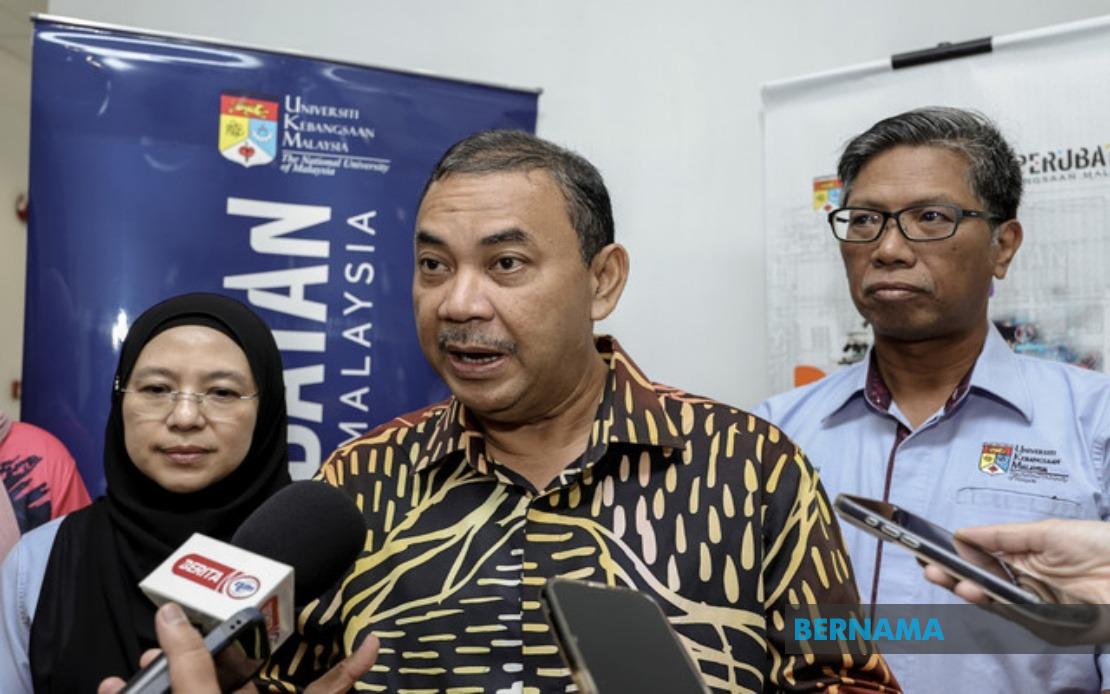
Prime Minister Datuk Seri Anwar Ibrahim's MADANI Government has gained acknowledgment across multiple sectors for its economic stewardship and financial management, according to remarks made by Datuk Azman Abidin, the Premier's political secretary. Speaking in Kuala Lumpur on August 19, Azman highlighted three key areas where the administration claims demonstrable success: attracting foreign and domestic investment, managing the broader economic trajectory, and bolstering the ringgit's performance in international currency markets. These achievements, he suggested, underscore Anwar's capability to lead the nation and furnish voters with compelling reasons to grant his government another five-year mandate in the forthcoming general election.
Azman's comments arrived as he presided over the opening of STEM Exploration 2.0, a scientific education initiative organised by Universiti Kebangsaan Malaysia's Department of Tissue Engineering and Regenerative Medicine. His remarks appeared calibrated to respond to recent analysis from political observers who have characterised the MADANI administration's early tenure as marked by substantial policy implementation and institutional reform. These analysts have contended that permitting the government to maintain its course would allow completion of its stated reform agenda and pursuit of higher standards of governance and service delivery.
The political secretary's characterisation of the government's record represents a clear attempt to frame the administration's case for electoral renewal ahead of the expected general election cycle. By invoking external validation—asserting that recognition has come from "all quarters"—Azman sought to position governmental performance as objectively verifiable rather than merely partisan claim. The three sectors he identified—investment climate, macroeconomic management, and currency stability—touch directly on concerns that affect Malaysian households through employment opportunities, purchasing power, and overall financial confidence.
Azman indicated the government intends to amplify its messaging about achievements and tangible benefits in the coming months. He referenced forthcoming announcements anticipated before Malaysia's National Day and Malaysia Day observances, as well as the presentation of Budget 2027, suggesting these occasions will provide platforms for the administration to showcase new initiatives and programme benefits aimed at reaching diverse community segments. This sequencing indicates an intentional communications strategy designed to maintain momentum and demonstrate continued policy innovation.
The political secretary expressed confidence that voters would evaluate the government's record rationally and base their electoral choices on documented performance rather than alternative considerations. This framing implicitly positions the MADANI Government as amenable to scrutiny and reliant on factual assessment of its tenure. Whether this confidence reflects internal polling data or represents aspirational messaging remains unclear, though it signals the administration's conviction that its track record will withstand comparative evaluation.
Beyond electoral messaging, Azman's intervention at the STEM programme underscores the administration's investment in human capital development and technological capability building. The programme targeted 200 Form Three students from Kuala Lumpur, Selangor, and Negeri Sembilan, exposing them to practical scientific work including microbiology, immunology, circulatory system studies, and medical applications of three-dimensional printing technology. Azman called for nationwide expansion of the initiative, signalling governmental ambitions to broaden access to early scientific careers guidance across Malaysia's states.
The STEM Exploration programme reflects broader anxiety across the region regarding technological competitiveness and the need to cultivate expertise in fields critical to future economic performance. Malaysia, competing with regional neighbours including Singapore, South Korea, and Vietnam for technology sector investment and talent, faces persistent challenges in channelling sufficient student interest toward scientific and engineering careers. Azman's remarks emphasising STEM as essential rather than optional coursework align with these structural concerns and the government's apparent determination to treat scientific education as a national priority rather than specialised pursuit.
In his address, Azman appealed to participating students to view the experience as foundational inspiration for ambitious futures in science and statesmanship. He acknowledged that significant professional accomplishment develops gradually, beginning with fundamental knowledge-seeking. This mentoring tone sits somewhat apart from the electoral framing that dominated his other public remarks, suggesting Azman and the government perceive value in positioning themselves as invested in generational advancement and long-term national capability building.
The timing of these remarks—made mid-August, several months before any constitutionally required general election—reflects the perpetual campaign dynamic characterising contemporary Malaysian politics. With no fixed election date, political actors maintain continuous electoral readiness, and senior government figures routinely interweave policy announcements with electoral framing. Azman's remarks exemplify this pattern, merging genuine policy initiative (the STEM programme) with electoral positioning (the government's economic management claims).
For Malaysian readers and regional observers, the underlying message concerns governmental confidence in its ability to secure renewed mandate based on measurable performance. Whether economic gains, investment inflows, and currency performance have reached sufficient scale and geographical distribution to generate broad voter satisfaction remains contested terrain. Urban professional classes and business communities may perceive clear benefits from improved investment climate and currency stability, while rural and lower-income constituencies might assess outcomes differently based on employment, wage, and price trajectories affecting their immediate circumstances. Azman's assertion that all segments should feel benefit from government initiatives acknowledges this gap, even as it claims the administration is working to bridge it.

