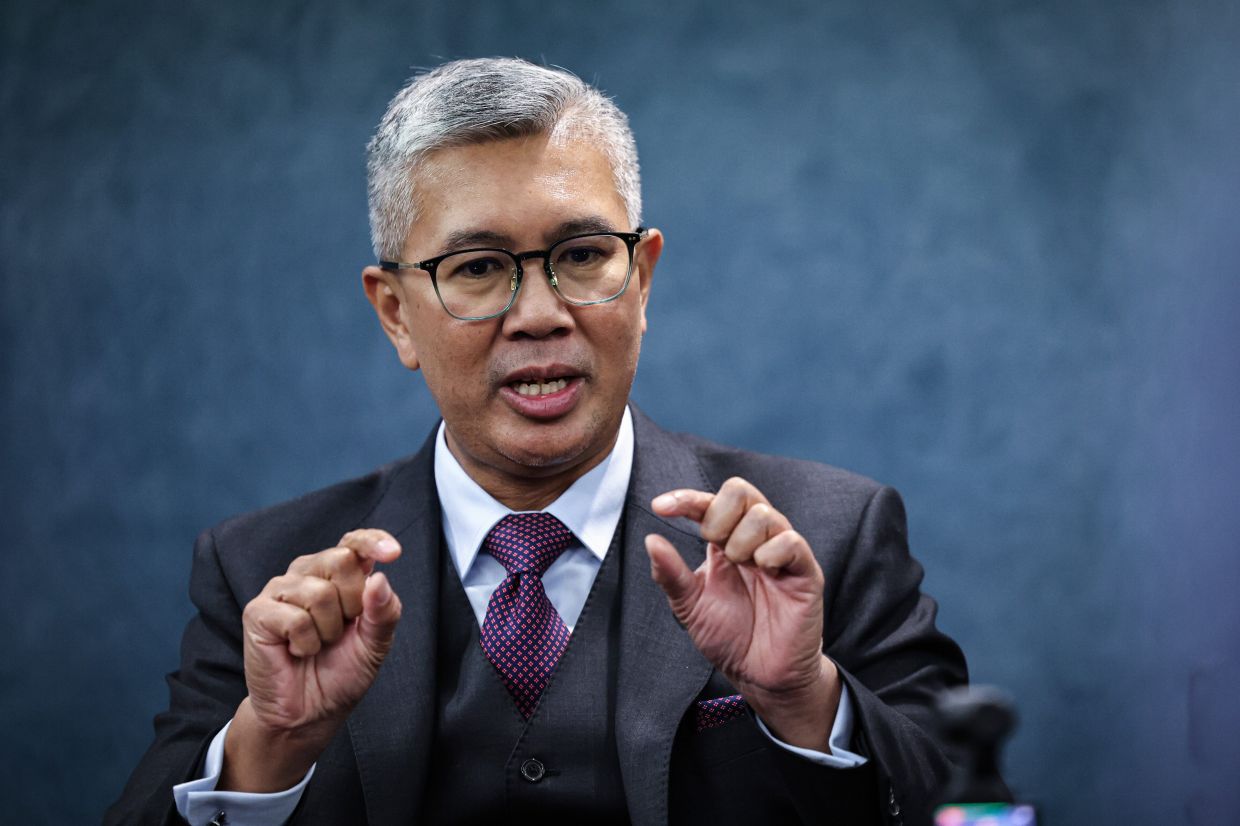
Malaysian Investment Development Authority chairman Tengku Datuk Seri Zafrul Abdul Aziz has issued an urgent plea for ASEAN nations to deepen their regional coordination on energy security, warning that without unified action, the bloc faces mounting vulnerability to energy shocks and climate transition delays. Speaking at the 7th International Sustainable Energy Summit (ISES) 2026 in Kuala Lumpur, Tengku Zafrul framed the challenge not as a lack of political will but as a structural problem of capital coordination that transcends national borders and demands collective solutions.
At the heart of his argument lies a stark financial reality: ASEAN requires approximately US$200 billion annually through 2030 to finance its energy transition away from fossil fuels toward renewable and cleaner sources. This figure underscores the scale of investment required across the region's diverse economies, from large industrial powers to smaller developing nations with more constrained fiscal capacities. The funding gap represents not merely a technical hurdle but a systemic challenge that individual countries cannot overcome in isolation, making regional mechanisms essential rather than supplementary.
Tengku Zafrul identified several interconnected obstacles preventing capital from flowing efficiently toward energy transition projects across ASEAN. Project development remains protracted, with ventures often languishing in feasibility stages before reaching the maturity required to attract institutional investors. Regulatory frameworks vary significantly from country to country, creating friction when developers and financiers must navigate multiple jurisdictions. Cross-border financing mechanisms remain underdeveloped, limiting investors' ability to diversify risk across the region. Additionally, the absence of standardized risk-sharing instruments means that the heaviest burdens fall disproportionately on domestic governments and limited regional development finance institutions.
The chairman's diagnosis pinpoints a paradox facing ASEAN: nearly all member states have formally committed to net-zero carbon emissions targets, yet these ambitions struggle to translate into accelerated project deployment and financial mobilization. This gap between climate pledges and operational progress reflects deeper governance and institutional weaknesses that weaker cooperation cannot resolve. Tengku Zafrul's emphasis on "capital coordination" rather than "ambition" suggests that ASEAN nations possess the political resolve but lack the infrastructure and mechanisms to deploy capital effectively across borders.
Central to his proposal is the ASEAN Power Grid (APG), an ambitious initiative targeting full integration by 2045. This interconnected electrical network would leverage the region's complementary renewable resources: hydropower from Laos, which possesses substantial untapped potential; geothermal capacity from Indonesia, situated on the Pacific Ring of Fire; wind energy resources from Vietnam's coastal regions; and solar power advantages in Malaysia and other equatorial and tropical zones. By linking these diverse generation sources through a unified grid, ASEAN could optimize electricity dispatch, reduce redundancy, and ensure more efficient utilization of intermittent renewables. Such integration would enhance energy security by enabling nations to access power generated elsewhere in the region during local shortages or maintenance periods.
Tengku Zafrul's second proposal introduces an ASEAN Green Investment Facility designed to aggregate sovereign wealth, pension fund capital, and private investment into a regional pool. This mechanism would effectively mutualize risk across member states, allowing individual nations to participate in projects throughout the region without bearing the full financial burden. By combining public resources with institutional investor capital, such a facility could achieve the scale and risk profile necessary to attract international climate finance and development banking. The facility would also reduce the pressure on individual national treasuries, which currently face competing demands from infrastructure, healthcare, and social spending.
Emergency preparedness forms the third pillar of Tengku Zafrul's framework, reflecting lessons from recent global energy crises. He advocated for shared emergency protocols, coordinated fuel reserves positioned strategically across ASEAN, aligned crisis communication procedures, and integrated supply-chain monitoring systems. These measures would enable the region to respond collectively to future energy disruptions, whether caused by geopolitical tensions, natural disasters, or market volatility. The reference to ensuring "the next shock does not catch this region flat-footed the way the last one did" alludes to the energy price spikes and supply uncertainties that have plagued global markets in recent years, demonstrating that even wealthy nations struggle when acting unilaterally.
Malaysia itself is positioning at the forefront of this agenda through several national initiatives. The New Industrial Master Plan (NIMP) 2030 aims to strengthen manufacturing competitiveness through sustainable practices. The National Energy Transition Roadmap (NETR) establishes Malaysia's pathway toward cleaner energy generation. The Green Investment Strategy mobilizes domestic capital toward sustainability projects. These frameworks reflect Malaysia's recognition that national energy security cannot be achieved in isolation from regional dynamics, particularly given ASEAN's integrated supply chains and growing energy interdependence.
Tengku Zafrul's closing remarks elevated the discussion beyond technocratic concerns to emphasize political stakes. He argued that effective regional leadership requires bringing all stakeholders along rather than pursuing unilateral solutions. The characterization of energy security as a fundamentally regional challenge—one that generates shocks affecting the entire bloc and therefore demands regional remedies—reflects a broader understanding that ASEAN's strength depends on connectivity rather than fragmentation. His framing of a "connected region" as "unbreakable" versus a "fractured region" as "vulnerable" articulates an implicit warning about the consequences of continued national-level approaches to energy policy.
The urgency embedded in Tengku Zafrul's message stems from the accelerating climate imperative and narrowing window for preventing irreversible warming. Each year of delayed investment coordination translates into deferred renewable capacity additions and extended reliance on fossil fuels. For Malaysia and other ASEAN nations, the stakes involve not only climate commitments but also competitiveness in increasingly carbon-conscious global markets, attraction of climate-aware foreign investment, and protection of populations from energy price volatility and supply disruptions.
Implementing his proposals faces considerable hurdles, including divergent national interests, varying development stages among ASEAN economies, and political sensitivities around sovereignty in shared infrastructure. However, Tengku Zafrul's articulation of a comprehensive regional framework provides a structured foundation for dialogue. The emphasis on capital coordination as the binding constraint suggests that solutions need not require perfect political alignment but rather pragmatic mechanisms that allow capital to flow across borders while respecting national control over energy policy.
For investors, policymakers, and development professionals across Southeast Asia, Tengku Zafrul's intervention signals Malaysia's commitment to pushing ASEAN toward more integrated energy governance. The proposal moves beyond rhetorical appeals for cooperation to identify specific institutional innovations—the APG, the investment facility, and emergency protocols—that could materially accelerate the region's energy transition while distributing costs and risks more fairly across member states.

