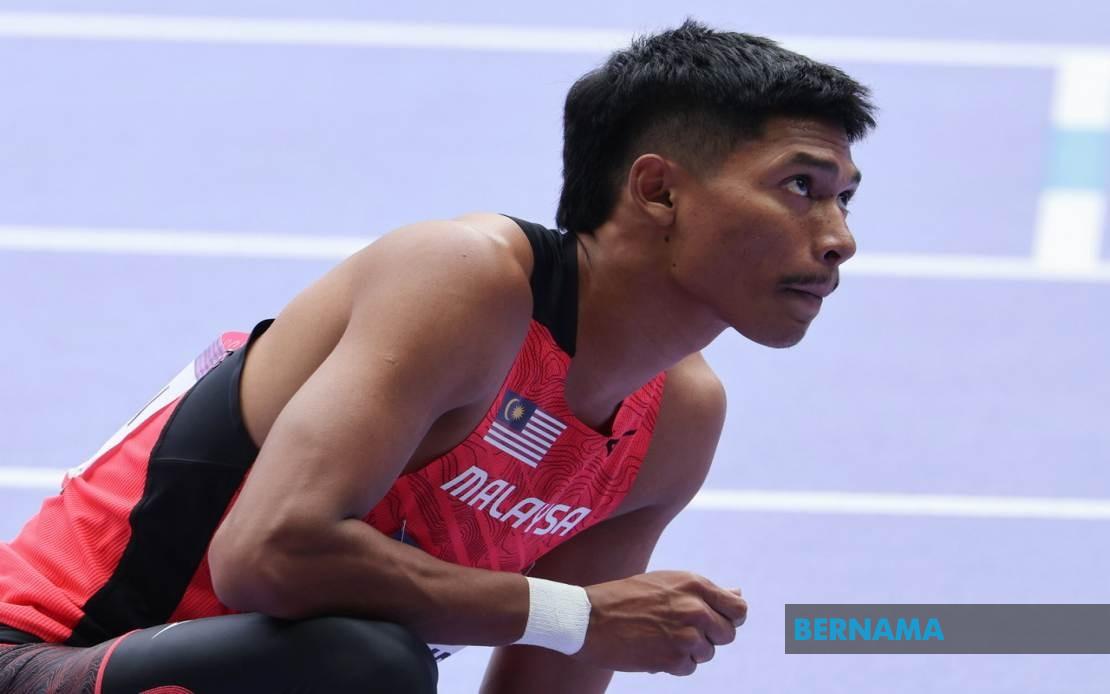
Muhammad Azeem Mohd Fahmi, Malaysia's leading sprinter and holder of the national 100-metre record, has signalled his intention to establish his post-university athletic career within Malaysia rather than pursue opportunities overseas. The 22-year-old, who recently completed his studies at Auburn University in the United States, made the announcement after four years of intensive academic and sporting commitments abroad, marking a significant development for the country's track and field programme.
Azeem's decision reflects a shift in priorities away from the opportunities that international residency might offer. Having clocked 10.09 seconds in the 100-metre sprint, he holds Malaysia's fastest-recorded time in this crucial short-distance event. Rather than remaining in the United States for professional development or relocating to another athletics hub, he has determined that the immediate future should centre on reconnecting with his support network in Malaysia. This choice underscores how personal and family considerations can shape an athlete's trajectory, particularly for young competitors navigating the balance between ambition and life beyond competition.
The sprinter emphasised that his extended absence from Malaysia has intensified his desire to reconstruct bonds with family members, parents, and siblings who remained in the country throughout his university years. For athletes undertaking four-year degree programmes abroad whilst competing at representative level, the psychological toll of separation can be substantial. Azeem's explicit acknowledgement that his loved ones have been instrumental in his development suggests a mature recognition of how support systems operate beyond coaching and technical expertise.
His training framework will combine international oversight with local implementation, a structure increasingly common in Malaysian athletics. Ken Harnden, his American coach at Auburn, will continue designing the training programme remotely, while Muhammad Amir Izwan Tan Abdullah, a Malaysian coach, will manage day-to-day supervision and adjustment. This hybrid approach attempts to preserve the technical direction established during Azeem's university years whilst grounding his development in the Malaysian athletics infrastructure.
The arrangement reflects broader trends in how middle-income nations with emerging athletic talent navigate the tension between accessing world-class coaching expertise and maintaining domestic athlete development systems. By retaining Harnden's programmatic input, Malaysia avoids losing the accumulated knowledge and relationships built during Azeem's four-year stint, yet by appointing a local daily supervisor, the national athletics federation can ensure continuity within its own coaching networks and athlete management protocols.
Azeem's immediate priorities indicate a deliberate deceleration of his career trajectory. Rather than launching into competition season, he intends to take several months to focus exclusively on training and adaptation to his home environment. This period will allow physical and psychological reorientation after the different training conditions, coaching philosophies, and competitive structures he experienced in the American collegiate system. The decision also suggests confidence that taking time to rebuild before engaging in serious domestic and regional competition will ultimately strengthen his long-term prospects.
Educational advancement remains part of his longer-term planning. Azeem has expressed interest in pursuing postgraduate study, though he has deferred this ambition to concentrate on athletics first. This sequencing reflects pragmatism about competing demands during peak athletic years. Pursuing a master's degree whilst maintaining the training intensity required to progress as a national record holder and emerging professional athlete would present logistical and mental demands that might compromise performance in either domain.
His return to Malaysia carries implications for the national athletics programme's ability to retain emerging talent. The departure of promising athletes to overseas training bases is a persistent challenge for Southeast Asian sports federations, as superior facilities, coaching, and financial incentives abroad frequently prove difficult to match domestically. Azeem's choice to remain suggests either satisfaction with Malaysia's developing athletics infrastructure, confidence in the support available, or a personal prioritisation of stability over marginal competitive advantages that overseas bases might offer.
The timing of this commitment is noteworthy as Malaysian athletics seeks to build momentum heading towards major regional competitions. Having a domestically-based national record holder under structured coaching enhances the visibility and accessibility of the sport within the country. Azeem's presence could inspire younger sprinters and demonstrate tangible pathways from local training to national representation. Furthermore, his willingness to work within Malaysian athletics systems may influence how international partnerships are structured, showing that elite-level development need not require permanent athlete relocation.
Looking forward, Azeem's focus will be demonstrating whether the hybrid coaching arrangement and Malaysian-based training environment can sustain performance improvements achieved during his Auburn years. The next competitive seasons will indicate whether his decision represents a sustainable model for athlete development or whether he experiences limitations from reduced access to American collegiate-level training facilities and competition schedules. His trajectory will likely influence how future emerging Malaysian sprinters evaluate their options regarding domestic versus international career development.