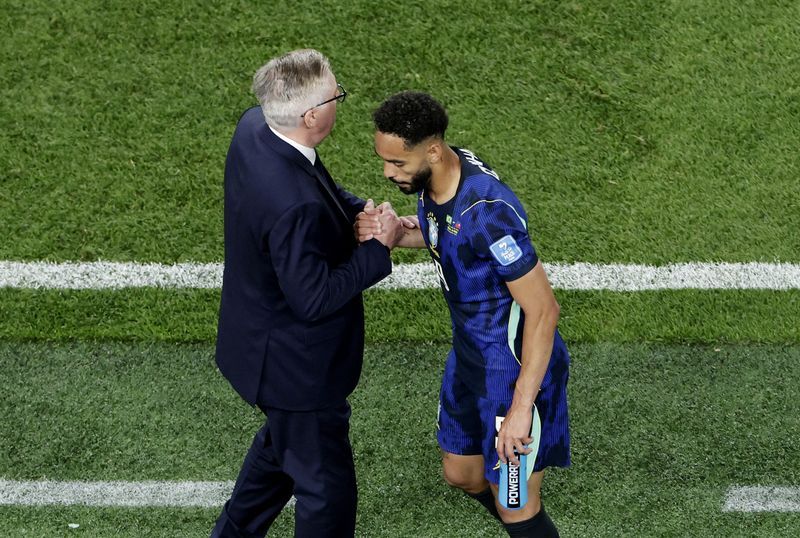
Brazil's commanding 3-0 dismissal of Haiti in Philadelphia on June 19 marked a significant step forward for Carlo Ancelotti's side after the demoralising 1-1 stalemate with Morocco in their Copa América opener, though the Italian manager's work to restore the Seleção to championship contention remains decidedly unfinished. While the opposition provided limited resistance, Haiti's willingness to press high without defensive cover allowed Brazil to find passages they had struggled to locate in their tournament debut, creating a laboratory of sorts in which Ancelotti could test and refine the diamond midfield shape that forms the cornerstone of his vision.
The manager's most consequential alteration came in the attacking department, where Matheus Cunha displaced Igor Thiago and immediately infused the team with a different operational rhythm. Cunha's appointment was not merely about inserting fresh legs; it fundamentally reorganised Brazil's front-line dynamics by establishing a functional bridge between the midfield's deeper layers and the forwards operating in advanced positions. This reorganisation proved instantly productive, generating the fluid combinations and incisive passing that had eluded Brazil against the Moroccan defensive block. Cunha's constant repositioning and willingness to drift laterally created the angles and numerical advantages that contemporary attacking football demands, particularly in the space where he could receive possession and immediately thread passes into threatening areas.
The left flank became the tournament's first genuine showcase of Ancelotti's tactical intentions, where Lucas Paquetá's positioning as the diamond's left midfielder finally allowed the playmaker to demonstrate the qualities that had made him a standout performer at club level. Heavily scrutinised after a subdued first-half display against Morocco, Paquetá appeared revitalised in his new role, combining intelligently with Cunha whilst simultaneously providing meaningful defensive coverage for Vinicius Júnior. Vinicius himself benefited immeasurably from Cunha's presence, receiving the ball in advanced positions with time to assess his options rather than the pressurised situations that had characterised Brazil's opening match. The three Brazil goals unsurprisingly emanated from this sector, where understanding and chemistry had replaced the disjointed movements that had frustrated supporters and analysts alike through the opening fixture.
Cunha's effectiveness recalled Brazil's attacking pedigree on the left wing during periods when Neymar commanded that territory, before serious injury stripped the Seleção of its most reliable creative force in that area. The connections that developed between Cunha, Paquetá and Vinicius suggested that Ancelotti has identified a solution that, whilst different in personnel and style from Neymar's mercurial brilliance, nonetheless restores attacking coherence to Brazil's left-sided operations. The tireless movement Cunha demonstrated, combined with his positional intelligence and technical facility, created the platform upon which Brazil's improved rhythm was constructed.
However, the symmetry of tactical improvement on one flank threw Brazil's right-sided deficiencies into sharper relief. Raphinha's inability to influence proceedings for a consecutive match highlighted a fundamental mismatch between the winger's established skill set and the demands of the narrow right-wing position that Ancelotti has assigned him. Whereas Raphinha's Barcelona role permits greater freedom to roam and create from multiple positions, the Brazilian system confined him to a rigid wide corridor where he mislaid passes and struggled with basic ball control. Physical complications—blisters sustained earlier in the week that forced him to miss training—likely compounded his technical struggles, though the positioning issue remains regardless of fitness.
The failure of Raphinha to replicate Cunha's impact on the opposite flank creates a strategic vulnerability that Scotland and potentially stronger opponents would attempt to exploit. Rayan's uninspiring cameo as Raphinha's replacement offers no comfort, suggesting that should the Barcelona player require additional recovery time, Luiz Henrique represents the likeliest solution, despite untested pedigree at this tournament level. This imbalance threatens to undermine the coherence that Ancelotti has established elsewhere, particularly if right-sided flaccidity permits opponents to compress space and isolate Brazil's left-wing combinations.
Defensive solidity presents a secondary concern that Brazil's comfortable margin against Haiti conveniently obscured. At 34 years old, Casemiro's ability to shield the back line and dictate tempo against technically superior midfields remains an open question, particularly as the tournament progresses and opponents elevate their intensity. Ancelotti possesses the option of deploying Bruno Guimarães in a deeper midfield role rather than the right-sided position he occupied against Haiti, sacrificing some attacking fluidity to bolster defensive architecture and build play from deeper positions. This recalibration would represent a philosophical compromise, trading the vibrancy that emerged against Haiti for the solidity necessary against elevated opposition.
The performance against Haiti therefore represents progress rather than arrival, offering Brazilian supporters a glimpse of Ancelotti's architectural vision whilst simultaneously revealing the vulnerabilities that stronger opponents will probe. The diamond midfield, when functioning optimally with Cunha's dynamism and Paquetá's positioning, generates the rhythmic attacking patterns that contemporary Brazil teams have lacked. Yet the right flank remains a structural weak point, and the midfield's defensive capacity against elite competition remains unproven. Scotland presents Ancelotti with an opportunity to strengthen the right side and test whether the system withstands sustained pressure from determined opposition. Until Brazil demonstrates it can execute this blueprint consistently and comprehensively against tournament-calibre teams, sustained optimism must remain measured.