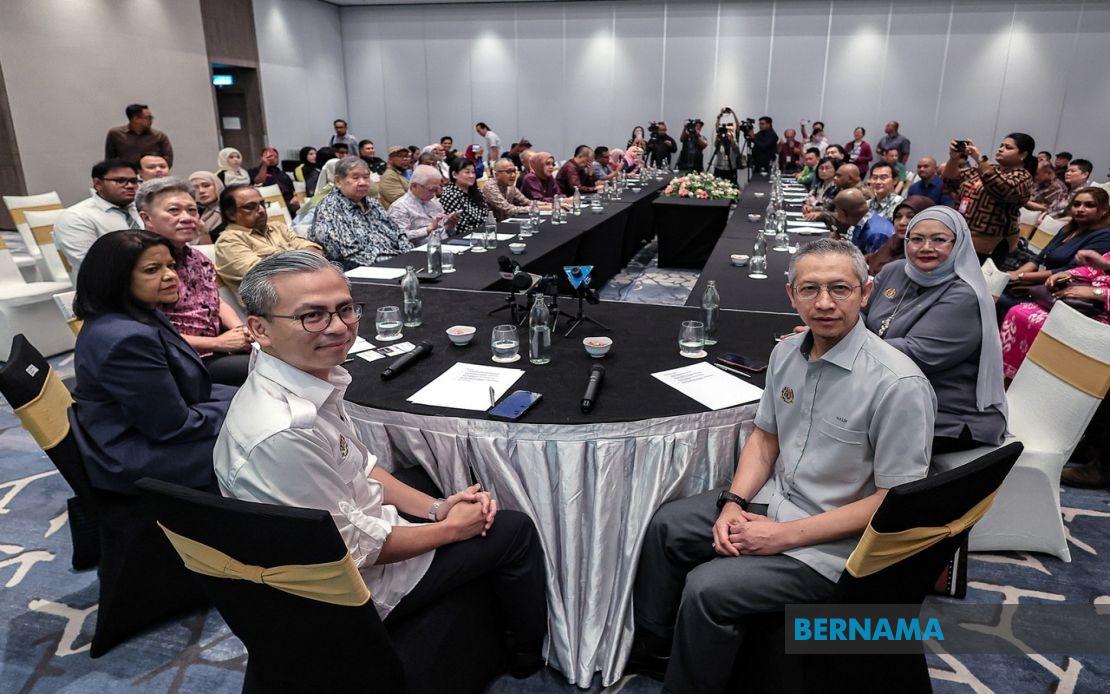
Communications Minister Datuk Fahmi Fadzil has unveiled a strategic proposal to institutionalise dialogue between government and the media by making retreat sessions a permanent fixture of the National Journalists' Day (HAWANA) annual celebration. Speaking in Butterworth following a two-hour engagement with media representatives during HAWANA 2026, Fahmi outlined plans that would see the Malaysian Media Council (MMC) take the lead in coordinating these structured sessions going forward, transforming what has been an occasional interaction into a recurring mechanism for stakeholder consultation.
The minister's proposal addresses a longstanding gap in formal communication channels between the government and Malaysia's news industry. By institutionalising these retreats, the Communications Ministry aims to create a dedicated space where journalists, editors, and media executives can systematically present grievances, innovative ideas, and strategic recommendations directly to policymakers. Rather than relying on sporadic meetings or ad hoc consultations, this framework would ensure that industry voices are formally heard and documented on an annual basis, lending greater weight to media sector concerns.
Fahmi stressed that these retreat sessions would serve a dual purpose within the government's broader policy framework. On one hand, they would function as an input mechanism, allowing the media industry to channel feedback and suggestions upward through the bureaucratic hierarchy. On the other, they would enable the ministry to gauge the sector's real-time needs and emerging challenges, facilitating more responsive and informed policy development. The minister indicated that proposals arising from these sessions could address a wide spectrum of issues, from fundamental regulatory frameworks to targeted amendments of existing legislation affecting news operations.
The economic sustainability of media organisations has emerged as a critical concern driving this initiative. Fahmi publicly acknowledged that Malaysian mainstream media outlets face mounting financial pressure, particularly as their digital content circulates extensively across social media platforms without generating corresponding revenue. This structural challenge has become increasingly urgent as advertising budgets migrate to social platforms, leaving traditional news organisations depleted of funding necessary for quality journalism. By creating a formal consultation mechanism, the government signals recognition that media viability is not merely a private sector problem but one requiring coordinated government engagement.
Central to this dilemma is the relationship between content creators and technology platforms. While media organisations invest substantially in reporting, editing, and fact-checking, social media giants distribute this content to millions of users—often with substantial commercial benefit to themselves—without compensating original news producers. Fahmi indicated the government's willingness to facilitate negotiations between Malaysia's MMC and these technology platforms, effectively positioning itself as a convener in discussions about fair compensation models and intellectual property protection for news content. This represents a potentially significant shift in how Kuala Lumpur approaches platform regulation.
The dialogue in Butterworth drew an impressive array of stakeholders, reflecting the seriousness with which the government approaches media relations. Alongside Fahmi, the gathering included Communications Ministry secretary-general Datuk Abdul Halim Hamzah and deputy secretary-general Datuk Bahria Mohd Tamil, signalling institutional commitment from the civil service. The Malaysian National News Agency (Bernama) was represented at the highest levels, with chairman Datuk Seri Wong Chun Wai and chief executive officer Datin Paduka Nur-ul Afida Kamaludin present, underscoring Bernama's central role in government communications strategy.
The composition of attendees from major Malaysian media organisations indicates broad buy-in for this consultative framework. By including senior management from multiple news outlets alongside government officials, the gathering demonstrated an attempt to move beyond factional media politics toward a more unified industry position. This inclusive approach is strategically important in Malaysia's diverse media landscape, where different outlets often compete fiercely for readers and advertising revenue. Creating a neutral platform through HAWANA could potentially generate consensus around shared challenges like platform payments and regulatory reform.
The MMC's selection as the coordinating body for future retreats is particularly significant. As Malaysia's self-regulatory media council, the MMC occupies a distinctive position between the industry it represents and the government it must maintain credibility with. By delegating coordination to this body rather than retaining direct ministerial control, Fahmi may be attempting to enhance the perceived independence and neutrality of the retreat process. This could make industry participants feel more comfortable sharing candid critiques and frank assessments of government communications policy without fear of retaliation.
The timing of this proposal merits consideration within Malaysia's broader media ecosystem. The country faces ongoing debates about press freedom, misinformation, and the government's relationship with journalism. Some quarters view state intervention in media matters with suspicion, while others argue that structured government engagement strengthens rather than undermines editorial independence by formalising boundaries and expectations. Fahmi's proposal attempts to navigate this tension by framing government involvement as facilitative rather than prescriptive, emphasising the ministry's openness to industry input rather than imposing top-down directives.
Looking forward, the success of this initiative will depend substantially on how faithfully the government implements recommendations emerging from these annual retreats. If industry proposals regarding social media platform payments or regulatory reforms are heard but ignored, the mechanism risks becoming merely cosmetic—a vehicle for channelling grievances without generating meaningful change. Conversely, if the government demonstrates willingness to pursue policy adjustments based on documented industry consensus, these sessions could establish a template for more participatory policymaking across Malaysian government more broadly.
For Southeast Asian observers, Malaysia's approach to institutionalising media-government dialogue offers instructive lessons. Many regional governments struggle with deteriorating relations between journalism and state, creating polarisation that serves neither democratic discourse nor development imperatives. By creating formal mechanisms for systematic engagement, Malaysia may be pioneering an approach that other regional governments could adapt to their own contexts, though implementation will ultimately determine whether this represents genuine institutional reform or rhetorical window dressing.
The proposal also reflects broader shifts in how governments globally are grappling with platform power and news industry economics. As traditional media business models continue eroding, governments increasingly recognise that a vibrant news sector requires not just regulatory oversight but active engagement with economic sustainability challenges. Whether through formal consultations like those proposed for HAWANA or through direct intervention in platform regulation, policymakers from Manila to New Delhi are recognising that media viability affects not just journalists but democracy itself.