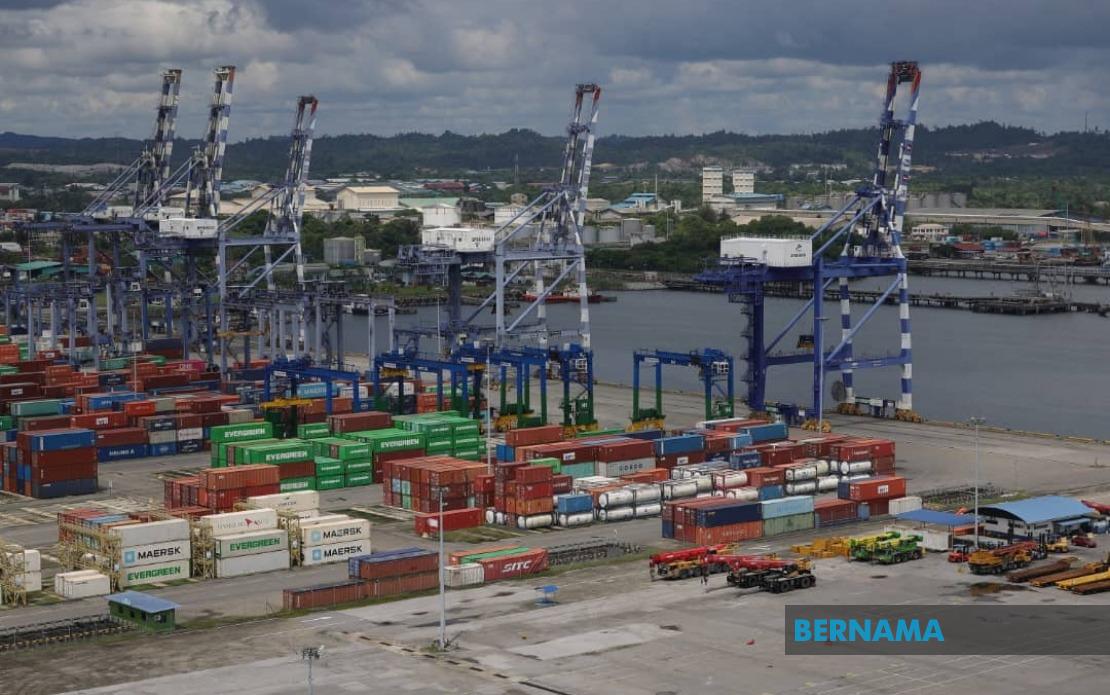
The Sarawak state government has formally assumed regulatory control of Bintulu Port, marking a watershed moment in the implementation of the Malaysia Agreement 1963 and reinforcing Kuala Lumpur's commitment to recognising the constitutional rights of the country's two founding East Malaysian states. The handover ceremony, held in Bintulu today with Prime Minister Datuk Seri Anwar Ibrahim and Sarawak Premier Tan Sri Abang Johari Tun Openg in attendance, formalised the port's transition from federal to state management, a development characterised by the Minister in the Prime Minister's Department (Sabah and Sarawak) Datuk Mustapha Sakmud as emblematic of how MA63 can deliver mutual benefits when pursued collaboratively.
The transfer carries symbolic weight beyond administrative rearrangement. For Sarawak, it represents tangible recognition of the state's standing as a co-founder of the Malaysian federation, a status that has historically generated tensions over resource control and economic sovereignty. By ceding operational authority over one of Malaysia's most strategically significant port facilities, the federal government signals a substantive shift in how it interprets and acts upon the 1963 agreement that brought Sabah and Sarawak into the Malaysian union. For Malaysian and regional observers, the move demonstrates that decades-old constitutional arrangements between the centre and the East Malaysian states remain subject to practical renegotiation when both sides demonstrate political will.
Bintulu Port itself occupies an outsized role in Malaysia's economic infrastructure and regional positioning. Long established as the nation's premier liquefied natural gas export facility, the port has anchored Sarawak's hydrocarbon-dependent economy and contributed substantially to federal revenues. The facility's importance extends beyond traditional energy exports; its strategic location on the South China Sea and natural deep-water characteristics have made it increasingly attractive to investors seeking reliable logistics infrastructure in Southeast Asia. Under state control, Sarawak planners now hold direct authority over facility development, tariff structures, and commercial partnerships that will shape the port's evolution over the coming decade.
Mustapha's framing of the handover emphasises an emerging strategic narrative: Bintulu's transformation from a specialised energy export terminal into a diversified industrial and logistics nexus. This repositioning aligns with Sarawak's ambitious pivot toward green manufacturing and renewable energy-based industries. The state possesses substantial hydroelectric power generation capacity, a competitive advantage in an era when multinational corporations face mounting pressure from investors and regulators to decarbonise supply chains. By controlling Bintulu Port, Sarawak can now offer integrated packages to potential investors—combining reliable port facilities, abundant clean energy, and state-level incentive structures—that would be difficult to assemble under previous federal management arrangements. This transformation could position the state as a magnet for electronics manufacturers, green chemical producers, and other high-value industries seeking to establish low-carbon operational footprints in Asia.
The timing of this development reflects broader regional economic trends. The Asia-Pacific region is experiencing a structural shift toward green industrialisation, driven by decarbonisation mandates in developed markets, the rising cost competitiveness of renewable energy, and supply chain reshuffling away from Chinese manufacturing hubs. Malaysia and Sarawak stand to benefit from this transition, provided they can offer investors compelling combinations of infrastructure, energy stability, and regulatory predictability. Sarawak's assumption of port control removes a potential layer of bureaucratic friction in decision-making, potentially allowing faster responses to investor requirements and market opportunities than federal management structures might permit.
For Malaysia's broader federal architecture, the handover illustrates a potential template for managing centre-state relations in a federal system characterised by constitutional ambiguity and competing interpretations of founding agreements. The MA63 has long been a source of friction, with Sabah and Sarawak frequently contending that the federal government has failed to honour provisions protecting state autonomy in resource management and revenue distribution. By voluntarily transferring control of a major economic asset, the federal government implicitly acknowledges that previous readings of MA63 may have been overly centralising. Whether this represents a genuine reorientation toward what East Malaysian political leaders consider a faithful reading of the agreement, or merely a tactical concession designed to ease near-term political tensions, remains an open question that will likely determine the trajectory of federal-state relations over the coming years.
Mustapha's characterisation of the transfer as a strengthening rather than a weakening of the Malaysian federation merits scrutiny. His assertion that devolving power to Sabah and Sarawak enhances the federation rests on an assumption that the two states' development will generate positive spillovers benefiting the broader Malaysian economy. This logic has intuitive appeal: economically vibrant, politically satisfied East Malaysian states would presumably contribute more fully to the national project than resentful or marginalised ones. However, the claim also contains an implicit acknowledgment that previous decades of federal stewardship failed to produce optimal outcomes, either in terms of state development or centre-state harmony. The success of this new arrangement will depend critically on implementation—specifically, whether Sarawak can mobilise the port's potential and whether federal authorities refrain from seeking to reclaim authority when political circumstances change.
The port handover also carries implications for Malaysian-owned enterprises and workers. Sarawak-based logistics companies, shipping agents, and port service providers may find new opportunities under state management, particularly if Sarawak's authorities adopt development strategies emphasising local participation. Conversely, federal-owned or federal-connected entities that previously held contracts at the port may face uncertainty regarding their future roles. These commercial and employment implications, though less visible than the constitutional and strategic dimensions of the transfer, will ultimately shape how Sarawak's broader population experiences the handover's tangible effects.
Regional competitors monitoring Malaysia's restructuring of its federation include Indonesia and the Philippines, which oversee their own complex centre-periphery relationships. A successfully implemented MA63 devolution that demonstrably enhances Sarawak's development prospects could influence how these nations' provincial leaders view their own constitutional positions and negotiating leverage. Conversely, if the Bintulu Port transfer proves to be a merely symbolic gesture unaccompanied by substantive improvements in state autonomy or economic performance, it may reinforce scepticism among Sabah and Sarawak populations about federal good faith, with potential consequences for Malaysian national cohesion and the durability of the 1963 agreement itself.
The transition also invites scrutiny of the port's governance structure going forward. Whether Sarawak will establish autonomous port authority management insulated from day-to-day political interference, or whether the port becomes subject to more direct political direction, will significantly affect investor confidence and operational efficiency. International port operators and shipping firms will carefully monitor whether the port maintains professional management standards and predictable regulatory environments, or whether state control introduces new uncertainties. The port's ability to compete effectively against regional alternatives—including Tanjung Pelepas in Johor and emerging facilities in Brunei and Singapore—will depend substantially on governance quality.
As the federal and state governments implement this transition in coming months, they face the dual challenge of maintaining the port's operational continuity while establishing new governance frameworks reflecting Sarawak's enhanced authority. The success or failure of this transition will reverberate beyond Bintulu, informing how future MA63 disputes are resolved and shaping the trajectory of Malaysian federalism for years to come. For Malaysian readers and Southeast Asian observers alike, Bintulu Port has become a microcosm of larger questions about how multinational federations can adapt their constitutional arrangements to evolving political realities and economic opportunities.