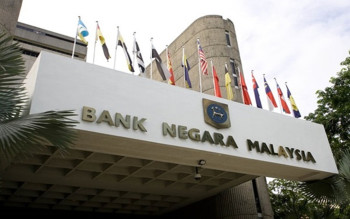
Bank Negara Malaysia has defended its advisory relationship with Tabung Haji, asserting that such guidance derives from the central bank's core statutory mandate to monitor and protect the stability of Malaysia's financial system. The clarification comes as the pilgrimage fund remains under scrutiny through an ongoing Royal Commission of Inquiry, with BNM positioning its role as a prudential safeguard rather than an exercise of supervisory authority.
Under the Central Bank of Malaysia Act 2009, BNM operates with explicit responsibility to identify emerging risks that could threaten the integrity and functioning of the broader financial system. This mandate extends beyond the traditional banking sector to encompass major non-bank financial institutions that maintain significant linkages with other financial entities. Tabung Haji, as one of Malaysia's largest Islamic financial institutions managing pilgrimage savings and investments for millions of Muslims, falls squarely within this purview by virtue of its systemic significance and interconnectedness.
To operationalise this monitoring function, BNM established the Financial Stability Executive Committee under the 2009 Act. This specialised body conducts ongoing surveillance of the financial landscape and identifies potential vulnerabilities that could cascade through the system. Where such surveillance detects concerning patterns or emerging risks, the committee may provide advisory recommendations to senior officials and board members of major non-bank entities, serving as an early warning mechanism rather than a directive.
The central bank emphasised a crucial distinction in its statement: while Tabung Haji remains outside BNM's direct regulatory supervision, the provision of advice to its board and the Minister responsible for its operations represents a preventive approach aimed at preserving institutional soundness. This advisory capacity becomes particularly important when large financial institutions face challenges that could potentially reverberate through the wider financial ecosystem, affecting depositors, related institutions, and ultimately systemic stability.
BNM's engagement with Tabung Haji predates the current RCI. The central bank had previously issued five formal warning letters to the pilgrimage fund's chairman and the Minister of Religious Affairs, specifically highlighting the troubling divergence between TH's asset base and its accumulated liabilities. These warnings signalled mounting concerns about the institution's financial trajectory and capacity to meet obligations to its beneficiaries. The fact that BNM resorted to multiple written alerts suggests that initial informal communications had not yielded satisfactory corrective action.
The pattern of BNM's warnings aligned with external scrutiny from other accountability bodies. The Auditor-General's office included critical observations about Tabung Haji's financial position in its 2017 Financial Statements Report, suggesting that concerns about the institution's financial health crossed multiple oversight agencies. This convergence of warnings from both the central bank and the statutory auditor indicated a shared assessment that TH faced material challenges requiring urgent administrative attention.
The establishment of the RCI in 2021 represented a significant escalation in the inquiry's scope and formality. The formal appointment of commission members on January 20, 2022 signalled the government's intention to conduct a comprehensive, independent examination of Tabung Haji's operations, governance, and the circumstances that contributed to its financial difficulties. By August 30, 2022, when the commission presented its findings to the Yang di-Pertuan Agong, the investigation had presumably uncovered detailed evidence regarding systemic failures and accountability questions.
For Malaysian and regional financial stability analysts, BNM's clarification carries important implications regarding the division of labour among financial regulators. The central bank's position suggests a tiered approach where direct supervisory regulators handle day-to-day compliance and operational oversight, while BNM maintains a parallel macroprudential lens focused on systemic interconnections. This framework allows the central bank to intervene in non-regulated entities when their distress could jeopardise broader financial stability, without duplicating supervisory functions.
The Tabung Haji situation illustrates how Islamic financial institutions, despite their specialised products and governance structures, remain subject to the same systemic risk principles as conventional banks. The pilgrimage fund's role in mobilising and managing the savings of millions of Malaysian Muslims gives it systemic importance regardless of its formal regulatory classification. When such institutions accumulate large liabilities relative to their asset bases, the potential for runs, loss of public confidence, and contagion effects becomes acute.
BNM's intervention also reflects evolving best practices in central banking, particularly post-global financial crisis, where regulators have adopted macroprudential mandates alongside traditional monetary policy functions. Malaysia's regulatory framework, underpinned by the 2009 Act, embedded this macroprudential responsibility into BNM's core legal remit. The Tabung Haji case demonstrates how such mandates translate into practical action when major financial institutions face stress.
The question of how effectively BNM's advisory warnings were heeded remains central to understanding how Tabung Haji reached its alleged problematic financial condition. If the central bank's letters and recommendations were not acted upon promptly, the episode raises questions about enforcement mechanisms available to unregulated institutions and the clarity of lines of accountability. These issues likely feature prominently in the RCI's findings and recommendations.
Looking forward, the BNM statement clarifies that central banks maintain legitimate grounds to engage with significant non-bank financial institutions on stability grounds, even absent formal supervisory authority. For Tabung Haji and similar entities across Southeast Asia, this signals that systemic importance carries obligations to respond to central bank guidance, regardless of regulatory status. The principles articulated here may inform how other regional economies calibrate their supervisory frameworks for Islamic financial institutions and non-bank entities of systemic consequence.

