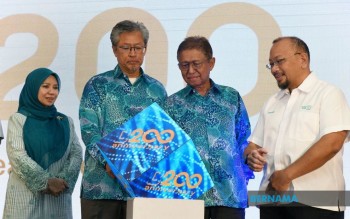
Boustead Holdings Bhd has mapped out an aggressive expansion strategy aimed at nearly tripling its annual revenue to RM30 billion within five years, marking a decisive shift for the 200-year-old conglomerate away from its historical roots in agriculture toward high-technology defence manufacturing and urban development. The strategic reorientation, unveiled during a soft launch ceremony in George Town celebrating the company's bicentennial journey, reflects a fundamental repositioning that aligns the group with Malaysia's broader industrial ambitions and national security objectives.
The transformation centres on three pillars: defence technology development, large-scale property projects, and commercial services expansion. This represents a departure from the company's origins as an agricultural trading house focused on commodity sales and warehouse operations. Group managing director Datuk Dr Ahmad Sabirin Arshad outlined how shareholders and the Defence Ministry have tasked Boustead with spearheading the country's advancement in indigenous military capabilities, a responsibility that carries significant implications for Malaysia's economic diversification and strategic autonomy in the Southeast Asian region.
At the heart of Boustead's defence ambitions lies a commitment to building a robust local supply chain, with the company targeting establishment of approximately 400 vendors across the defence industry ecosystem by 2030. This vendor development programme aims to catalyse wealth creation throughout the Malaysian manufacturing base while reducing dependence on foreign suppliers for critical defence systems. The initiative aligns with the National Defence Industry Policy unveiled in January, which seeks to strengthen the country's indigenous capacity to develop and produce military equipment and systems.
Central to this strategy is a 30 per cent local content target for all defence industry technology products by 2030. This threshold reflects Malaysia's determination to ensure meaningful domestic participation in defence manufacturing rather than mere assembly operations, positioning local companies as genuine technology partners rather than subcontractors. The localisation mandate creates opportunities for Malaysian engineers, manufacturers, and suppliers to develop competitive capabilities in advanced sectors ranging from electronics to materials science.
Boustead has been assigned leadership of four flagship defence initiatives announced by the government. These encompass satellite development, production of rolling chassis for armoured vehicles, light weapons manufacturing, and creation of an advanced Combat Management System. Each project carries substantial technical and commercial significance, with satellite capabilities particularly crucial for Malaysia's independent observation and communication needs in an increasingly complex geopolitical environment. The rolling chassis and weapons production initiatives strengthen ground force capabilities, while the Combat Management System represents cutting-edge integration of sensor, communication, and targeting technologies.
Beyond defence manufacturing, Boustead is advancing a transformational urban development initiative through the Batu Cantonment strategic project, undertaken jointly with the Armed Forces Fund Board. This ambitious undertaking involves consolidating nine existing military installations, releasing substantial land within the Kuala Lumpur metropolitan area for conversion into a mixed-use commercial hub. The relocation project exemplifies how defence infrastructure modernisation can simultaneously drive urban renewal and generate commercial returns, a model increasingly relevant for Southeast Asian capitals grappling with limited urban land and growing defence needs.
Chairman General (Rtd) Tan Sri Abdul Aziz Zainal emphasised that the company's transformation must be executed with rigorous accountability and governance standards befitting an entity managing defence-sensitive projects and armed forces retirement assets. This governance imperative reflects the sensitive nature of defence procurement and the fiduciary responsibilities Boustead carries toward Malaysian Armed Forces contributors and members. The company's ability to deliver returns to these stakeholders while advancing national defence objectives represents a delicate balance requiring transparent operations and consistent performance.
International technology partnerships form a critical enabling element of Boustead's defence strategy. The company plans to forge selective alliances with credible foreign partners to facilitate technology transfer and knowledge absorption, ensuring that international collaboration genuinely builds Malaysian capabilities rather than creating permanent dependency. This approach recognises that rapid advancement in defence technology necessitates access to global expertise and systems, while still prioritising the development of local technical competence and eventual self-sufficiency.
The emphasis on credible partner selection underscores Malaysia's intention to avoid the pitfalls of previous defence acquisitions, where technology transfer provisions remained largely aspirational and local suppliers continued playing peripheral roles. Boustead's mandate to achieve meaningful localisation signals a more rigorous approach to measuring and enforcing technology transfer commitments, potentially establishing precedents for future defence procurement across the region.
Beyond the defence mandate, Boustead intends to consolidate existing tourism and insurance sector subsidiaries as supplementary growth drivers. While these sectors contribute less prominently to the five-year revenue target than defence and property, they provide diversification and cash generation supporting the group's capital-intensive transformation. Tourism assets generate recurring revenues resilient to cyclical downturns, while insurance operations create financial flexibility for long-term project financing.
The revenue trajectory from RM12 billion to RM30 billion presupposes successful execution across multiple complex domains simultaneously. Defence manufacturing demands technical excellence and regulatory compliance, property development requires navigating urban planning and market cycles, while managing Armed Forces Fund assets involves fiduciary sensitivities. This multi-domain challenge distinguishes Boustead's transformation from simpler corporate expansions, creating execution risks that Malaysian investors and analysts will monitor closely.
For the Malaysian economy, Boustead's pivot holds significance extending beyond a single company's performance. Successful development of defence manufacturing capabilities strengthens the broader industrial base, creates employment in high-technology sectors, and generates export opportunities if Malaysian systems prove competitive internationally. The vendor ecosystem development initiative particularly offers pathways for small and medium enterprises to upgrade capabilities and enter defence supply chains, potentially catalysing broader manufacturing excellence. Boustead's 200-year history of adaptation positions the company as a credible anchor for this transformation, though delivering the ambitious revenue and localisation targets will require sustained execution excellence and favourable market conditions.

