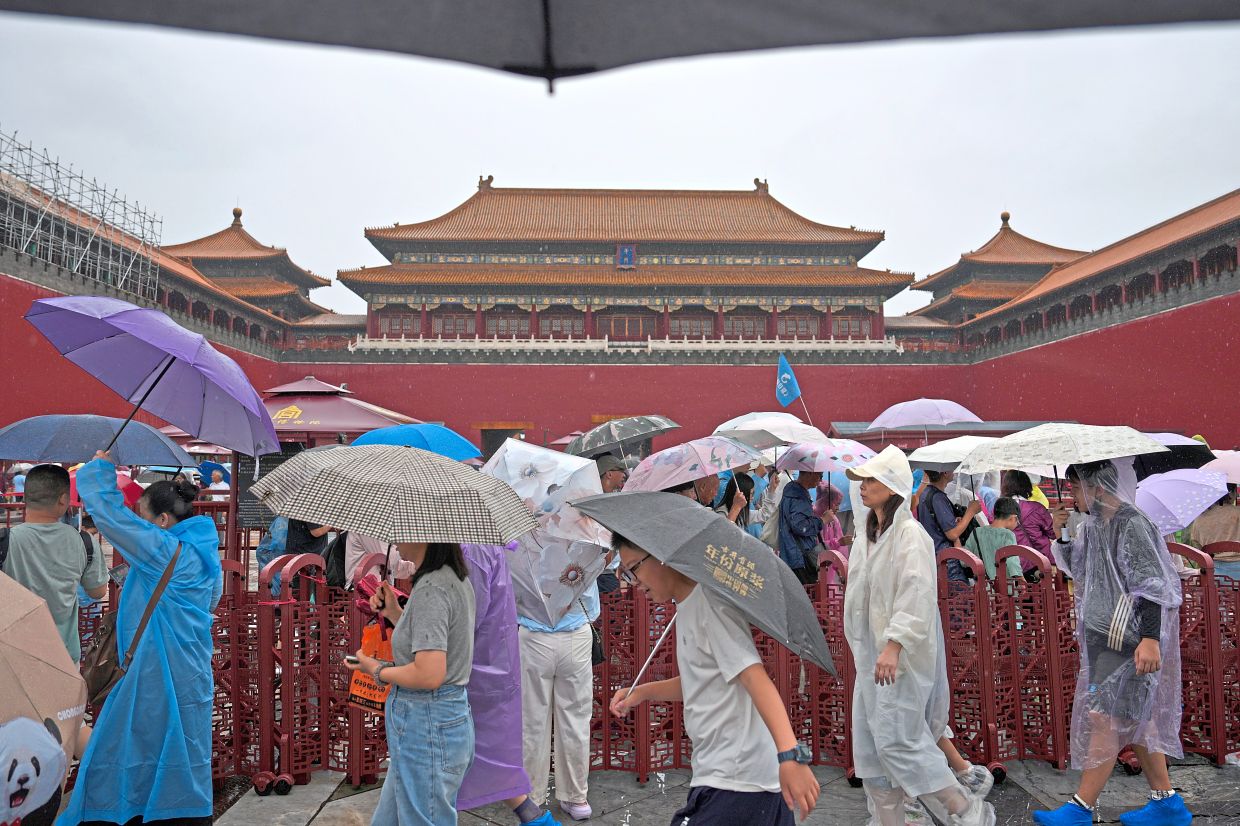
China's push to reclaim its position as a major global tourism destination has succeeded dramatically, with international arrivals and spending climbing above pre-pandemic figures for the first time in 2025. The milestone reflects a carefully orchestrated strategy combining visa liberalisation, government-backed promotional campaigns, and the organic spread of travel content across social platforms—a combination that appears to be transforming perceptions of the country among younger, digitally engaged travellers worldwide.
The turnaround centres on the visa-free travel programme launched in 2023, which initially expanded access to 50 countries but faced headwinds from lingering pandemic concerns and incomplete airline route restoration. By 2024 and into 2025, however, momentum accelerated sharply. Visa-free travellers now account for more than 70 per cent of international arrivals, a remarkable increase from just 50 per cent in 2024. In the first half of 2026 alone, 18 million people entered via visa-free arrangements, propelling overall arrivals up 20 per cent year-on-year and demonstrating the policy's catalytic effect on tourism flows.
What distinguishes this recovery is the deliberate fusion of government support with organic viral marketing. While Beijing and Shanghai allocated substantial budgets—CNY2.64 million for Beijing in 2026 and CNY1.6 million for Shanghai's campaigns on Expedia and Booking.com—the most potent driver appears to be social media content created and shared by travellers themselves. Instagram reels showcasing minimalist villas in misty landscapes, TikTok videos of viral shopping experiences, and hashtags like "Chinamaxxin" have cultivated curiosity among Western audiences in ways traditional advertising rarely achieves. Officials recognised this dynamic and began establishing accounts on international platforms like X and TikTok—platforms banned within China itself—to amplify promotional messages to overseas audiences.
The strategy capitalises on shifting global perceptions. According to Pew Research Centre data, favourable views of China reached record highs across numerous countries in 2025, a shift partly attributed to international attention turning toward the United States under the Trump administration. Simultaneously, lifestyle trends portraying Chinese practices as aspirational—from hot tea consumption to efficiency-focused daily habits—have reframed China's image among young Western consumers from industrial superpower to lifestyle inspiration. Marketing consultants based in Shanghai report that some recent visitors now compare Shanghai favourably to established travel hubs like Tokyo, indicating a recalibration of international perceptions that extends beyond traditional tourism metrics.
Geographically, the recovery shows pronounced variations. South Korea, Russia, Malaysia, and Thailand lead the surge among visa-free entrants, reflecting both the geographic and cultural proximity of these markets to China's tourism offerings. However, Japanese visitor numbers have declined following diplomatic tensions between Beijing and Tokyo, illustrating how political relations can quickly reshape tourism flows in the region. Vietnamese and Russian visitors have flooded into Beijing, while far-flung provinces such as Yunnan, Xinjiang, and Harbin increasingly attract repeat visitors planning multi-destination trips beyond traditional coastal cities.
At the macroeconomic level, China now ranks alongside Asia's most established tourism destinations. With approximately 35 million international arrivals last year, the country exceeds Thailand and approaches Japan and Malaysia, positioning it firmly in the upper tier of regional competitors. Yet this progress masks a significant structural limitation: China generates substantially less per-visitor spending than mature tourism economies. At roughly US$2,240 per tourist, per-capita spending remains only 40 per cent of the international average and represents less than one-third of US receipts. Moreover, inbound tourism contributed less than 0.5 per cent to China's national GDP in 2025—a fraction of the 8 per cent share in tourism-dependent economies like Spain and Thailand—indicating enormous untapped potential.
The geopolitical dimension adds another layer to tourism recovery. Middle East conflict and elevated air ticket prices through Gulf routes have redirected passenger flows through China instead, benefiting state-owned carriers like China Eastern, Air China, and China Southern. These airlines offer significantly lower fares than foreign carriers, which have not restored pre-pandemic capacity to Chinese routes. This unintended routing advantage demonstrates how regional instability can reshape economic patterns across seemingly unrelated sectors.
Beyond international arrivals, the tourism surge generates immediate benefits for domestic retail and specialty services. Dental tourism has emerged as an unexpected draw for American visitors seeking procedures at one-fifth US costs, whilst European travellers frequent local garment markets for bespoke tailoring. Miniso's flagship Shanghai store now derives up to 70 per cent of foot traffic from international visitors during peak periods, attracted by exclusive collaborations with global character franchises spanning Chiikawa, Sanrio, Harry Potter, and Disney. The viral beauty brands Judydoll and Joocyee, operated by parent company Joy Group, generated over CNY600 million in overseas retail sales last year, with Judydoll achieving tenfold growth across Vietnamese and Japanese markets as social media exposure from international travellers fuels demand.
Yet structural barriers remain formidable. China's cashless economy, efficient though it may be for residents, creates friction for international visitors lacking local bank accounts, digital payment wallets, or phone numbers. The absence of mainstream global applications—Google, Instagram, WhatsApp—and the prohibition on VPN usage compound navigation difficulties, whilst inconsistent English-language support in service sectors frustrates non-Mandarin speakers. These impediments threaten to cap the ceiling on tourism growth unless systematically addressed.
Innovative solutions are emerging to address these gaps. Kora, an AI-powered tourist guide platform, has served tens of thousands of visitors since its 2025 launch by simplifying ride-hailing, restaurant reservations, and providing multilingual chatbot support. Such platforms recognise that converting curiosity into sustained visitation requires friction-reducing infrastructure matching the sophistication of digital marketing campaigns. The company's founder notes that tourists who experience authentic local life rather than curated attractions develop fundamentally different perceptions of China, transitioning from abstract impressions to visceral engagement.
The strategic implications for Southeast Asian tourism economies warrant close examination. China's aggressive repositioning threatens to compete for the same young, digitally native demographic that currently sustains growth in Thailand, Vietnam, and Malaysia. However, the regional landscape also creates opportunities for cooperation and niche differentiation. Malaysia and Thailand themselves appear as feeders into the China tourism pipeline, suggesting that integrated regional tourism products spanning multiple countries could capture higher total spending than individual destinations competing independently.
Looking ahead, China's tourism trajectory hinges on whether the government sustains investment in removing operational barriers whilst maintaining the social media strategies proving effective with international audiences. The current recovery, though historically significant, remains economically modest relative to China's broader economy. Scaling tourism to match the contribution levels in Spain or Thailand would require addressing cash-payment systems, enhancing language support, and potentially reconsidering digital restrictions that isolate the country from global communication platforms. Whether Beijing prioritises these modifications against other policy objectives will ultimately determine whether the current boom represents a genuine structural shift or a cyclical surge destined to plateau.

