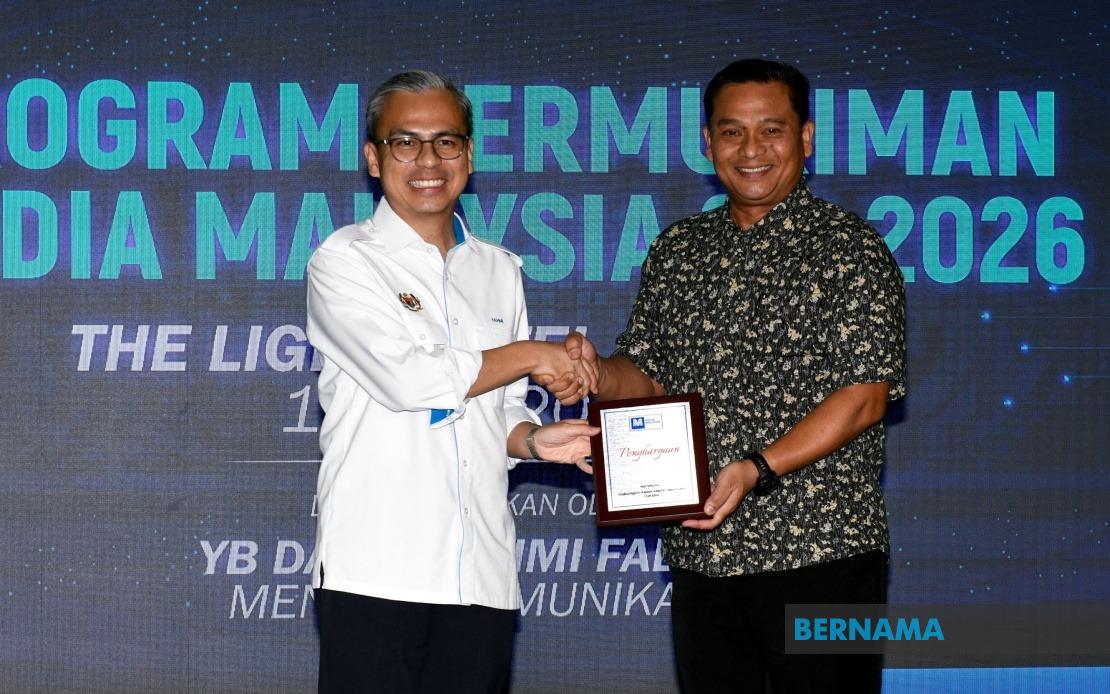
Communications Minister Datuk Fahmi Fadzil has unveiled a financial commitment to support Malaysia's journalism community through targeted grants to regional media clubs and their national umbrella organisation. Speaking at the Malaysia Media Retreat Programme 2.0 in Butterworth on June 19, Fahmi announced that the Ministry of Communications would distribute RM10,000 to each state media club affiliated with the Malaysian Media Clubs Association (GKMM), while the association itself would receive RM30,000 to fund activities and programmes centred on journalist welfare.
The minister's declaration reflects a deliberate policy shift toward recognising the institutional frameworks through which media practitioners organise themselves and advocate for their professional interests. By channelling resources through these established structures rather than individual newsrooms, the government appears intent on strengthening the collective voice of journalists across Malaysia's diverse regional markets. Fahmi emphasised that the contributions should be deployed strategically, suggesting that state media clubs have considerable discretion in determining how best to utilise the funds to serve their membership.
Fahmi's framing of GKMM as an essential platform underscores the government's acknowledgment of the association's role as an intermediary between the media industry and policymakers. Rather than treating GKMM as a formal labour union—a characterisation Fahmi explicitly rejected—the government positions it as a crucial conduit through which the concerns, welfare issues, and future aspirations of journalists can be articulated and addressed. This distinction carries significance in Malaysia's regulatory environment, where labour relations remain tightly controlled through statutory frameworks.
The allocation arrives amid broader government efforts to foster dialogue with the media sector on industry-wide challenges. Fahmi reiterated that the Communications Ministry remains committed to consulting journalists during policy development, citing the Malaysian Media Council Act as a recent example where media industry input shaped legislative outcomes. This collaborative rhetoric suggests the government recognises that sustaining a functional fourth estate requires maintaining working relationships with professional media organisations, even when editorial independence remains contested.
Central to Fahmi's remarks was an assertion about journalism's irreplaceability in an era of accelerating technological disruption. He rejected the notion that artificial intelligence could substitute for human journalists, arguing that the human dimensions of news gathering—conducting interviews with primary sources, applying professional judgment, and crafting narratives grounded in lived experience—remain fundamentally irreplaceable. This defence of journalism's essential role carries particular resonance given global trends of newsroom contraction and the Malaysian industry's ongoing struggles with advertising revenue decline and digital transition.
The minister's commitment to preserving journalistic employment reflects awareness of structural pressures within Malaysian media. Regional newsrooms have faced repeated downsizing over the past decade as advertising budgets migrated toward digital platforms and circulation declined. By emphasising the government's commitment to job preservation, Fahmi signalled receptiveness to industry concerns about workforce sustainability, even as the quantum of support—RM30,000 nationally distributed across multiple state associations—remains modest relative to the scale of employment challenges facing the sector.
The gathering in Butterworth, attended by senior communications ministry officials and Bernama executives, underscored the government's continued engagement with the formal structures of Malaysia's media establishment. The presence of Communications Ministry secretary-general Datuk Abdul Halim Hamzah and Bernama leadership suggested this was not a routine funding announcement but rather a deliberate occasion for reinforcing the government's narrative about its relationship with the press. Bernama's prominent role—as Malaysia's state news agency and effectively a bridge between government and private media—reflected the government's preference for institutional channels of communication.
For regional readers across Southeast Asia, Malaysia's approach to media sector support illuminates broader governance questions about state-press relations in the region. Unlike some neighbouring countries that have pursued overtly adversarial policies toward independent media, Malaysia's government continues investing in institutions and funding mechanisms designed to maintain working relationships with journalism organisations. Whether such investments constitute genuine support for a free press or represent a more subtle form of accommodation remains subject to analytical debate.
The implications for Malaysian journalists themselves are mixed. The funds provide welcome additional resources for professional development, networking, and welfare initiatives at a time when individual newsrooms face tightening budgets. However, the allocation's modesty—particularly the RM30,000 distributed nationally—suggests constraints on what practical impact the funding can achieve in addressing larger industry challenges such as wage stagnation, precarious employment arrangements, and the ongoing digital transition pressures facing traditional newsrooms.
Looking forward, Fahmi's emphasis on government consultation during policy formulation signals potential for further legislative or regulatory engagement with the media sector. The Communications Ministry's role in overseeing broadcasting, telecommunications, and increasingly digital content means future policy decisions will likely continue to affect the operating environment for journalists. Whether GKMM and state media clubs effectively leverage their enhanced institutional presence to influence such decisions will partly depend on their capacity to translate financial support into consolidated advocacy for industry interests.
The funding announcement also reflects Malaysia's complex regulatory ecosystem for media. While the government maintains statutory control over broadcasting through the Malaysian Communications and Multimedia Authority, and wields significant influence over the news agenda through state advertising and Bernama content placement, these grant allocations suggest a willingness to acknowledge journalists' professional concerns within existing institutional structures. This approach contrasts sharply with zero-tolerance postures adopted elsewhere, though critics argue it may ultimately serve to consolidate rather than diversify the media landscape by strengthening established institutional players.