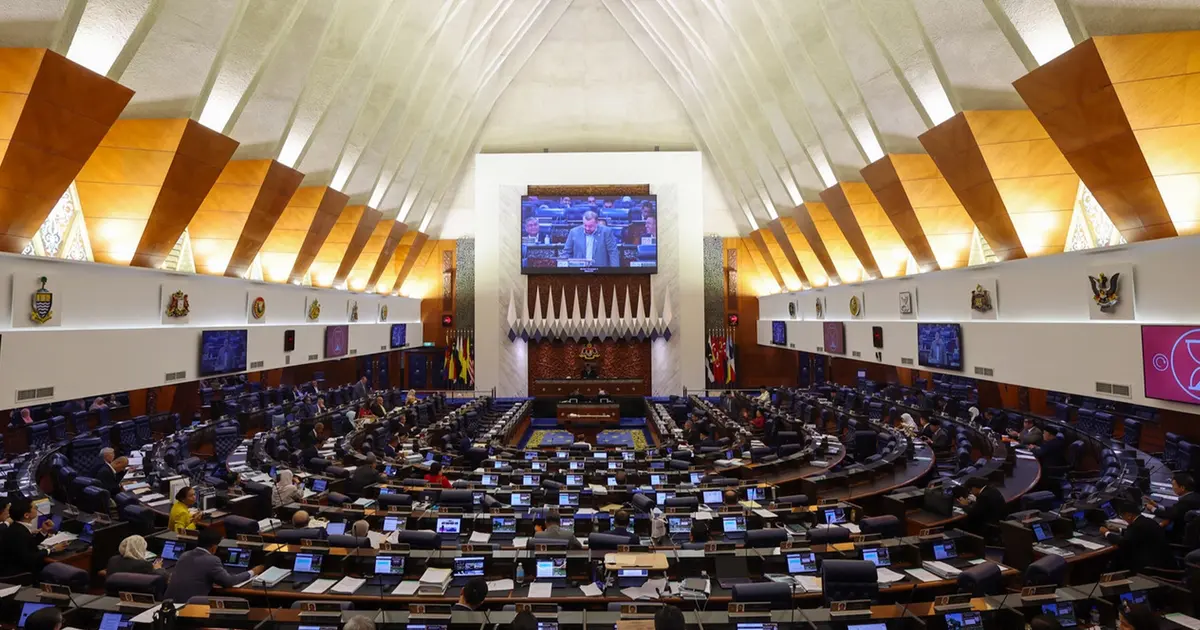
The Malaysian Parliament faces a defining moment this week as it prepares to revisit one of the most debated pieces of legislation in recent years: a constitutional amendment to limit the Prime Minister's tenure to a single 10-year term. The proposal, which will be accompanied by three other major bills on the parliamentary agenda, represents a decisive push toward institutional reform that proponents argue strengthens democratic governance while critics contend could create unintended complications for future administrations.
During the previous Dewan Rakyat session, this same measure fell short of the two-thirds supermajority required to amend the Federal Constitution, a threshold that ensures broad parliamentary consensus for fundamental changes to Malaysia's legal framework. The failure to achieve that crucial threshold highlighted the deep divisions within the chamber over whether such constitutional constraints serve the nation's political interests. Now, Parliament reconvenes with apparent renewed momentum, suggesting either a shift in voting alignments or a recalibrated advocacy strategy aimed at converting fence-sitters and skeptical lawmakers.
The Prime Minister's tenure question taps into longstanding debates about executive power in Malaysia. Currently, the constitution imposes no formal limit on how many times a Prime Minister may be reelected, theoretically allowing an individual to occupy the office indefinitely provided they retain parliamentary support. Advocates for a 10-year ceiling argue this creates healthier institutional succession, reduces opportunities for personalised power accumulation, and encourages long-term policy planning rather than short-term political survival calculus. They point to precedents in democracies worldwide where term limits have reinforced checks and balances.
Detractors raise practical concerns about such constraints. A decade-long tenure ceiling could disrupt continuity during critical development phases or international negotiations, they contend. Some also worry that term limits might paradoxically embolden a Prime Minister in their final years, removing incentives for political restraint. For Malaysia specifically, where coalition governments frequently shuffle following elections, a rigid term limit could intersect awkwardly with electoral cycles and power-sharing arrangements typical of the country's multiparty system. These complications explain why the previous vote fell short despite apparent public support for the principle.
The return of this bill to Parliament's agenda signals determination from government and allied lawmakers to push through constitutional reform. The composition of the current Dewan Rakyat, where party alliances have evolved considerably since the previous sitting, may provide more favourable arithmetic. Alternatively, the government may have undertaken intensive negotiations with independent or swing-vote MPs to secure the additional support necessary for a two-thirds majority. Such behind-the-scenes diplomacy forms an essential, if often invisible, component of constitutional amendment campaigns in Westminster-derived parliaments like Malaysia's.
Beyond the term limit question, three additional bills featuring on this week's agenda suggest Parliament intends a broader legislative agenda addressing governance structures and perhaps economic or social priorities. Although details remain limited in available reporting, such grouped legislative initiatives typically indicate coordinated reform efforts. The clustering of major bills reflects parliamentary prioritisation decisions and suggests the government has structured debate around interconnected policy themes or institutional changes.
Malaysian constitutional amendments carry profound significance because they reshape the foundational rules governing national politics. Unlike ordinary legislation passed by simple majority, constitutional changes demand two-thirds support and presidential assent—creating intentional friction that ensures major alterations enjoy genuine parliamentary breadth rather than razor-thin partisan advantage. This high bar protects constitutional stability but also means failed amendment attempts, like the previous PM term limit vote, represent genuine political setbacks requiring renewed effort and consensus-building.
For regional observers, Malaysia's constitutional debates illuminate broader Southeast Asian governance challenges. Across the region, countries grapple with balancing executive strength necessary for decisive governance against limiting mechanisms preventing authoritarian consolidation. Thailand's cycles of military intervention and constitutional revision, Singapore's deliberate constitutional structure, and Indonesia's evolving presidential system all represent different solutions to this perpetual tension. Malaysia's current deliberation over Prime Minister term limits thus reflects continental-scale questions about optimal institutional design for diverse, complex democracies.
The upcoming parliamentary sitting will reveal whether consensus has genuinely solidified behind the term limit proposal or whether the earlier failure reflects fundamental disagreement that persists despite re-tabling. Parliamentary watchers will scrutinise not merely voting outcomes but the rhetoric deployed during debate—which factions mobilise support, whether opposition to the measure remains cohesive, and whether government backbenchers demonstrate unified backing or harbour reservations. Such indicators often prove as informative as final tallies for understanding Malaysian political dynamics.
For Malaysian governance long-term, the outcome of this week's votes may reverberate for decades. If the term limit amendment succeeds, future Prime Ministers will operate under novel constraints fundamentally altering succession mechanics and political incentive structures. If it fails again, proponents must recalibrate their approach or accept that parliamentary consensus on this particular reform remains elusive. Either outcome shapes how Malaysian institutions evolve and whether the country embraces constitutional constraints that increasingly characterise mature democracies worldwide.