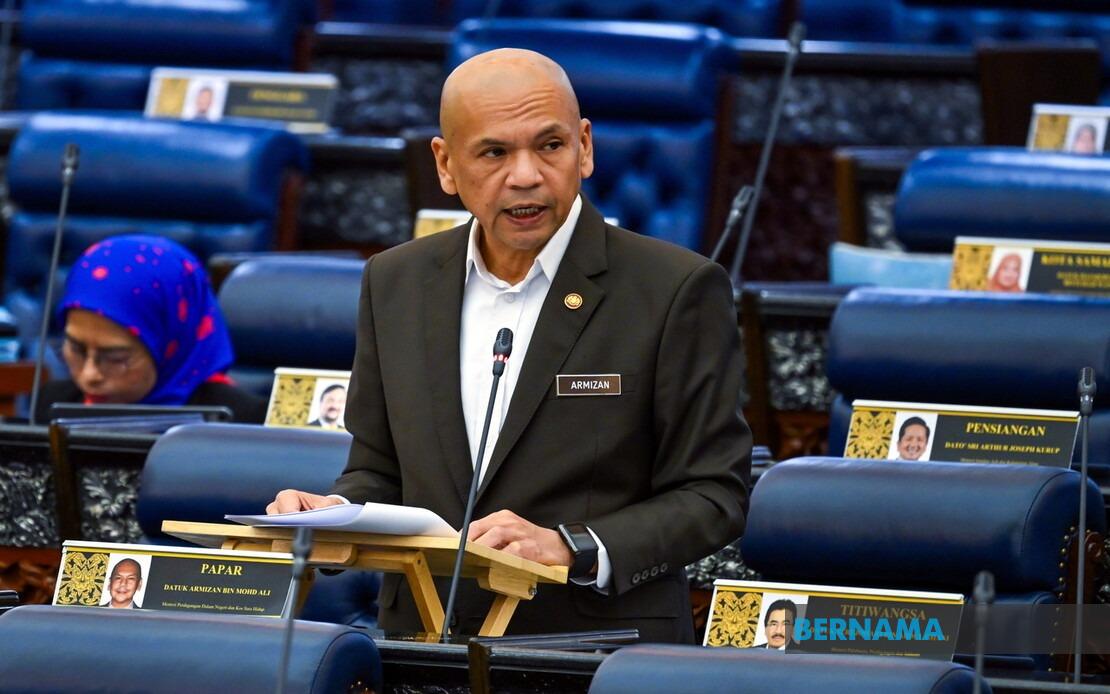
Parliament passed the Competition Commission (Amendment) Bill 2026 on July 6, securing approval through majority voice vote after discussions involving 12 legislators from both government and opposition benches. The legislation represents a significant evolution in Malaysia's approach to market regulation, introducing 34 distinct amendments designed to modernise the Malaysia Competition Commission's capacity to police anti-competitive behaviour in an increasingly sophisticated economy.
Domestic Trade and Cost of Living Minister Datuk Armizan Mohd Ali framed the reforms as essential protection for consumers and legitimate businesses operating in a marketplace threatened by elaborate cartel schemes. The minister highlighted that existing competition law already addresses price-fixing arrangements, market division between competitors, production quotas, bid-rigging conspiracies, and exploitative monopolistic conduct. However, enforcement capacity had not kept pace with these challenges, necessitating the legislative upgrades now approved by Parliament.
A cornerstone of the amendments expands MyCC's authority to demand information specifically for the purpose of conducting market reviews—comprehensive investigations into how entire sectors or product categories function. Previously, investigators faced persistent obstacles when requesting data from government ministries, state-owned enterprises, and private companies reluctant to disclose commercially sensitive information. This structural barrier had hampered MyCC's ability to identify systemic problems affecting competition, such as coordinated pricing behaviour or shared customer lists among suppliers. The amendment directly addresses these institutional friction points by placing information-gathering authority on firmer legislative footing.
The bill introduces new governance provisions under Section 17A regarding delegation of powers and functions within MyCC's organisational structure. As the commission grows larger and takes on expanded responsibilities, clear procedural frameworks become critical to operational efficiency. Without explicit legislative authority to distribute decision-making power across departments and regional offices, the organisation risks bureaucratic bottlenecks and inconsistent enforcement. The amendment ensures that MyCC leadership can effectively delegate investigative and administrative tasks while maintaining accountability.
Parliamentary debate revealed significant concern about proposed powers allowing MyCC officers to directly impose financial penalties without necessarily obtaining court approval beforehand. Legislators from both ruling and opposition coalitions expressed unease that such concentrated enforcement discretion might invite arbitrary decisions or excessive fines that burden smaller enterprises disproportionately. Chong Zhemin, representing Kampar under Pakatan Harapan, acknowledged support for penalty authority in principle, yet insisted on robust safeguards including transparent methodologies, consistent guidelines, and differentiated treatment reflecting the severity of violations. He noted that penalties must be calibrated high enough to genuinely deter large corporations from treating competition breaches as acceptable business costs, while avoiding crushing smaller firms that may violate rules through ignorance rather than deliberate wrongdoing.
Chong's intervention highlighted a fundamental tension in competition policy design: penalties must create genuine deterrence for well-resourced corporations with sophisticated market knowledge, yet apply fairly to smaller enterprises operating with limited compliance capacity. If unlawful conduct generates profits substantially exceeding the financial consequences imposed, the law loses its preventative effect. Conversely, excessively punitive regimes may chill legitimate competitive behaviour and innovation. The distinction between organised cartels deliberately manipulating markets and smaller businesses accidentally breaching technical requirements reflects international best practice in jurisdictions such as the European Union, where enforcement agencies consider factors like cartel sophistication, duration, and intentionality when determining penalties.
Regional representation emerged as another critical parliamentary concern, with multiple lawmakers emphasising enforcement gaps in East Malaysia. Isnaraissah Munirah Majilis @ Fakharudy from Warisan party representing Kota Belud urged establishing a dedicated MyCC branch in Sabah to tackle competition violations in the Borneo region, where distance from federal headquarters had historically created enforcement delays. Similar calls came from PN's Datuk Abdul Khalib Abdullah and BN's Datuk Andi Muhammad Suryady Bandy, reflecting cross-party consensus that competition law must function effectively across Malaysia's geography rather than concentrating enforcement capacity in Kuala Lumpur. Cartel activity and monopolistic practices affecting Sabahan consumers and businesses require responsive local investigation capacity rather than investigations managed from the federal capital.
The approved amendments reflect Malaysia's evolving understanding of how market regulation must adapt to contemporary business environments. Digitalisation has enabled sophisticated cartel coordination through encrypted communications and complex supply chains spanning multiple jurisdictions. Simultaneously, economic concentration in specific sectors—particularly infrastructure, telecommunications, and agricultural products—has intensified concerns about monopoly power harming consumers and small suppliers. The bill positions MyCC with modernised tools while Parliament grapples with balancing effective enforcement against potential power overreach that could discourage competition itself.
For Malaysian businesses and consumers, the legislative changes carry immediate practical implications. Companies engaging in price coordination, market allocation, or bid-rigging face significantly enhanced detection risk and consequences, as MyCC gains clearer authority to demand information and conduct sector-wide reviews. Small and medium enterprises should familiarise themselves with competition law requirements and risk assessment processes, particularly regarding informal arrangements with competitors that might inadvertently breach the Act. Consumers benefit from stronger institutional capacity to address cartels artificially inflating prices for essential goods and services, though the quality of enforcement ultimately depends on MyCC resource allocation and skilled investigators.
The regional emphasis on East Malaysian enforcement reflects growing recognition that competition policy cannot remain centralised in Peninsular Malaysia while Sabah and Sarawak face different market structures and competitive pressures. Agriculture, palm oil production, timber operations, and logistics in Borneo involve distinct supply chains and competitive dynamics requiring localised expertise. Parliamentary support for expanding MyCC's geographical presence signals commitment to applying consistent competition standards across the federation, addressing longstanding complaints that enforcement efforts concentrate disproportionately on larger federal markets.

