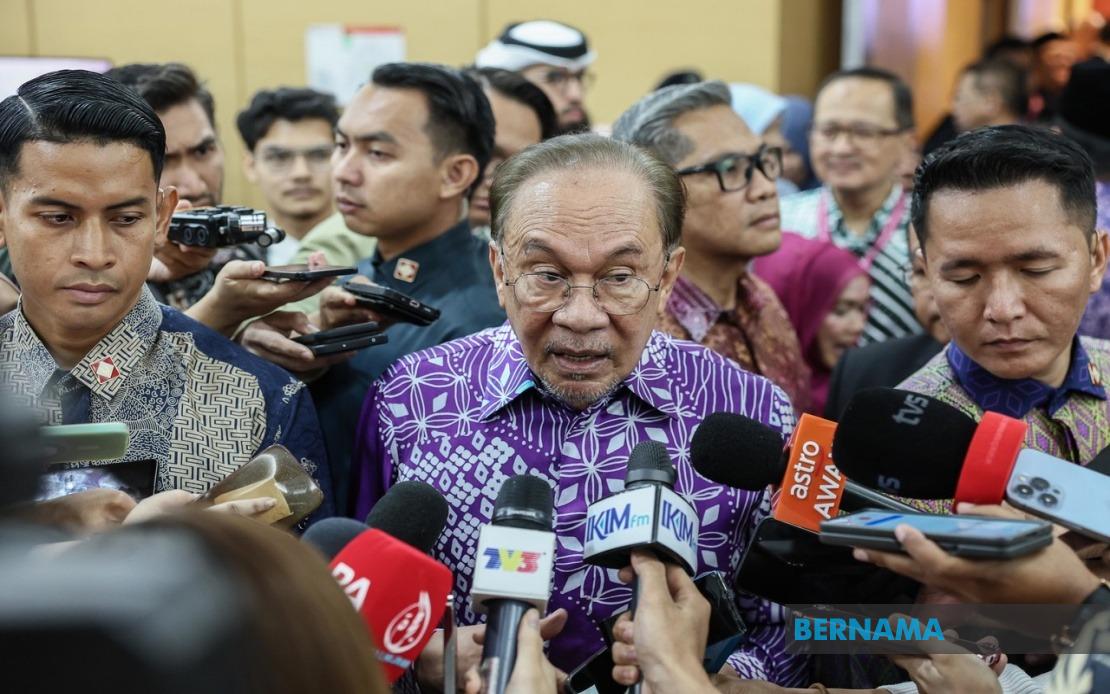
Prime Minister Datuk Seri Anwar Ibrahim has delivered a sharp reminder that Malaysia's economic ambitions must remain tethered to a deeper purpose: the welfare and dignity of its people. Speaking at the Humane Economy Global Discourse event in Kuala Lumpur, the Prime Minister articulated a vision of development that rejects the notion that economic growth exists as an end unto itself, instead positioning it as a vehicle for human flourishing. This intervention reflects growing concerns in policy circles worldwide that the relentless pursuit of GDP expansion has often come at the expense of social cohesion, environmental sustainability, and individual well-being.
The Prime Minister's comments arrive as Malaysia navigates a pivotal moment in its technological evolution. The global economy is undergoing profound transformation driven by artificial intelligence, renewable energy systems, advanced manufacturing capabilities and biotechnology innovations. These forces are reshaping labour markets, productivity patterns and the fundamental nature of economic competition. In this context, Anwar's emphasis on anchoring policy to humanistic values takes on particular urgency. Without careful stewardship, the benefits of technological advancement risk concentrating among a narrow elite while displaced workers and marginalised communities struggle to adapt.
Anwar's formulation—that the economy is a means rather than an end—challenges the technocratic consensus that has dominated policy-making for decades. This perspective acknowledges that economic metrics like GDP growth, foreign direct investment and export volumes matter primarily insofar as they translate into tangible improvements in living standards, health outcomes, educational opportunities and social mobility. The distinction may seem philosophical, yet it carries profound practical implications for how governments allocate resources, regulate industries and design social safety nets.
Malaysia's position as a Southeast Asian economy increasingly dependent on technology-driven sectors makes this reorientation particularly relevant. The nation has invested heavily in becoming a hub for semiconductor manufacturing, fintech innovation and digital commerce. Yet these industries often operate on efficiency paradigms that can marginalise workers lacking specialist skills or displace traditional economic sectors without adequate transition mechanisms. An economy guided by moral purpose would ensure that transformation creates pathways for broader participation rather than concentrating gains among capital owners and high-skilled professionals.
The Prime Minister's rhetoric also speaks to mounting public frustration with inequality and perceived disconnection between headline economic growth figures and everyday financial security. Despite Malaysia's track record of solid GDP growth, surveys consistently reveal anxieties about affordability, wage stagnation and limited opportunities for younger generations. This disconnect between macro-economic performance and micro-economic experience has fuelled political volatility in democracies globally. Anwar's articulation suggests recognition that legitimacy and social stability depend on ensuring growth translates into shared prosperity rather than merely inflating aggregate national wealth.
The broader framing positions Malaysia within an emerging international conversation about alternative development models. Countries and regions from New Zealand to the Nordic nations have begun experimenting with wellbeing frameworks that measure success through health, education, environmental quality and social cohesion metrics rather than GDP alone. Thailand and Indonesia have similarly explored Buddhist economics and inclusive growth paradigms respectively. Anwar's intervention signals Malaysia's engagement with these global currents while asserting a distinctly Malaysian ethical foundation.
Inviting Minister in the Prime Minister's Department (Religious Affairs) Dr Zulkifli Hasan to this event underscores the moral and spiritual dimensions of the government's economic vision. Religious traditions offer resources for thinking about distributive justice, communal responsibility and limits on acquisitiveness that secular economic frameworks often neglect. This interfaith and values-based approach to economic governance distinguishes the Malaysian government's positioning from purely technocratic paradigms.
The participation of Chairman of Forum Ekonomi Manusiawi and HEGD 2026 director Prof Datuk Dr Saadiah Mohamad indicates that the government is engaging with academic and think-tank expertise in developing these ideas. This suggests the rhetoric is not merely ceremonial but reflects substantive intellectual work on translating humanistic principles into concrete policy mechanisms. Questions remain about how these principles will shape decisions on taxation, labour regulation, financial sector oversight and investment priorities.
For Malaysia specifically, operationalising this vision requires deliberate choices. Wage-setting policies, skills development programmes, rural development initiatives and regulation of automation in manufacturing sectors will all provide tests of whether the commitment to humanity-centred growth extends beyond rhetoric. The technology sector particularly will require careful navigation—fostering innovation and competitiveness while ensuring benefits diffuse widely and displacing workers receive adequate support.
Sector-specific implications abound. In agriculture, prioritising human dignity might mean supporting smallholder farmers through cooperative models and technology transfer rather than pursuing capital-intensive industrial consolidation. In healthcare, it suggests investing in primary care accessibility rather than tertiary hospital expansion in urban centres. In education, it points toward expanding vocational training and lifelong learning rather than narrowly pursuing academic credentials. These are not anti-growth positions but rather growth pursued through different mechanisms and with different distributional outcomes.
The challenge ahead involves translating this moral framework into institutional reforms and budget allocations. Malaysia's civil service, development agencies and government-linked companies will need clear guidance on how humanistic principles should influence procurement decisions, project evaluation methodologies and investment selection criteria. Without such operationalisation, the discourse risks remaining elevated and abstract.
International investors and business leaders monitoring Malaysia will need reassurance that humanistic economics does not translate into hostility toward enterprise or capital formation. The Prime Minister's emphasis on remaining "competitive, productive and open to investment" attempts to strike this balance. However, the genuine test will come when profit maximisation directly conflicts with human welfare—as it periodically does in sectors ranging from resource extraction to labour-intensive manufacturing. How the government arbitrates such tensions will reveal whether the commitment is fundamental or rhetorical.
Anwar's framing ultimately reflects a mature economic vision acknowledging that sustainable development requires more than markets and innovation—it demands ethical foundations ensuring growth serves broad populations rather than concentrating wealth and opportunity. For a nation at Malaysia's stage of development, with substantial remaining poverty, regional inequality and vulnerability to global economic shocks, reconnecting economics to moral purpose offers a constructive path forward that neither rejects modernisation nor accepts its destructive side effects as inevitable.

