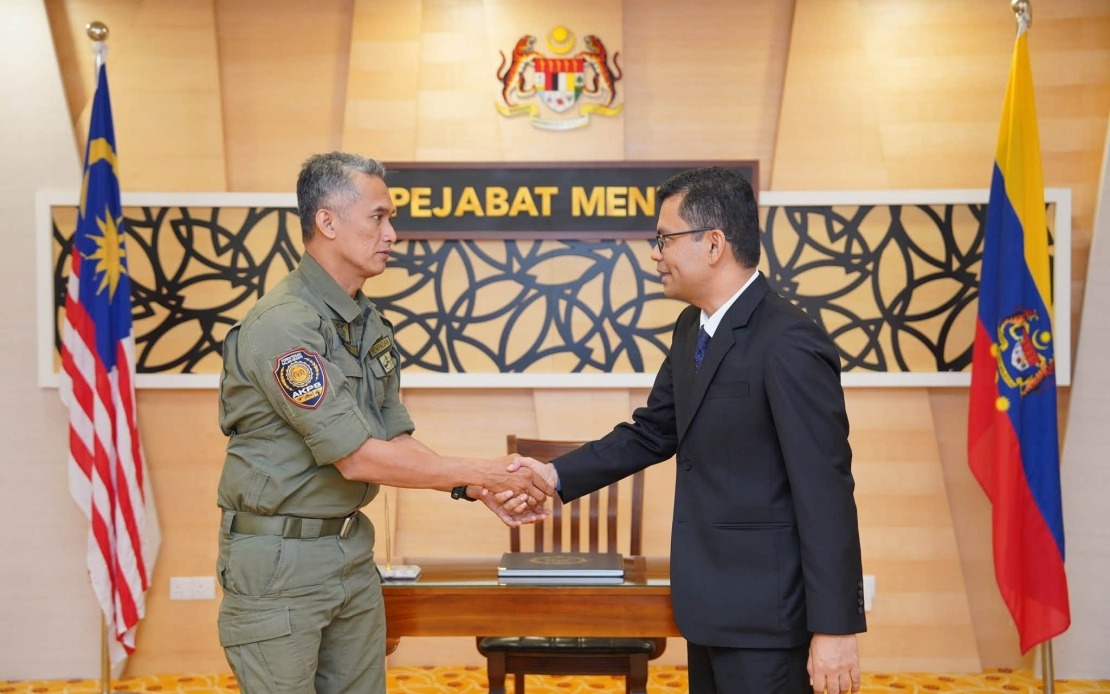
The Malaysian Border Control and Protection Agency (AKPS) and the Economy Ministry have begun formal discussions on securing adequate development funding to modernise the nation's border management systems, signalling a concerted push to transform how Malaysia oversees its entry points. The dialogue, held between AKPS director-general Datuk Seri Mohd Shuhaily Mohd Zain and Economy Minister Akmal Nasrullah Mohd Nasir in Putrajaya on August 5, reflects the government's recognition that strategic investment in border infrastructure remains essential to both economic competitiveness and national security.
Established on January 1, 2025, AKPS represents a significant institutional consolidation designed to eliminate redundancies and streamline control mechanisms that previously operated across multiple agencies. The new organisation absorbed border enforcement responsibilities from six separate entities: the Immigration Department, the Royal Malaysian Customs Department, the Malaysian Quarantine and Inspection Services Department, the Health Ministry, the Department of Wildlife and National Parks, and the Road Transport Department. This integration framework offers Malaysia an opportunity to implement unified protocols and shared intelligence systems that individual agencies struggled to coordinate effectively.
The discussions between the two government bodies centred on four strategic pillars. First, the pair explored how infrastructure upgrades could expand capacity at congested border crossings and modernise aging facilities at air, land, and sea entry points. Second, they examined technology adoption pathways that could accelerate processing times and reduce administrative bottlenecks. Third, they identified gaps in strategic asset development, including equipment procurement and facility enhancement. Fourth, they assessed mechanisms for building operational capacity through human resource planning and staff training programmes.
The Economy Ministry's public acknowledgement that AKPS capability enhancement serves broader economic interests reveals an understanding that border efficiency directly impacts foreign investment confidence and manufacturing competitiveness. When trade processing delays at entry points stretch for hours or days, exporters face hidden costs that erode profit margins and discourage relocation to Malaysia. The ministry's statement emphasised that structured development planning for AKPS would enable smoother trade flows, a particularly vital concern given Malaysia's position as a regional manufacturing and logistics hub where just-in-time supply chains demand predictable border crossing times.
Mohd Shuhaily indicated that AKPS is currently in its critical formative stage, prioritising operational integrity alongside efficiency gains. He outlined that the agency is simultaneously developing a comprehensive strategic direction and long-term development plan while enhancing human resource capacity. This dual focus reflects recognition that technology alone cannot succeed without staff trained to implement new systems and adapt to evolving border security challenges. The agency faces the complex task of harmonising six different organisational cultures and standard operating procedures into a cohesive whole while maintaining service quality during the integration period.
Smart border technology emerged as a priority investment area within these discussions. AKPS plans to deploy integrated biometric systems that can rapidly authenticate traveller identities against multiple databases, reducing manual processing time and improving accuracy. Automated cargo scanning represents another technological frontier, allowing customs officials to inspect container contents more thoroughly without dismantling shipments—a capability that benefits both security and trade efficiency. Real-time data integration powered by artificial intelligence would enable border officers to identify risk patterns and allocate resources strategically rather than applying uniform screening protocols to all passengers and goods.
For Malaysian businesses, particularly those engaged in cross-border trade with Thailand, Brunei, and Singapore, the implications of AKPS modernisation could prove significant. Enterprises operating on narrow profit margins in competitive markets like palm oil processing, semiconductor manufacturing, and fresh produce export depend on predictable border transit times. If AKPS successfully reduces average crossing delays from current levels through technology and coordination improvements, Malaysian companies could gain competitive advantages over operations in neighbouring countries with similar border inefficiencies. Conversely, implementation delays or technical problems could exacerbate existing frustrations within the business community.
The integration of health and wildlife protection functions within AKPS also reflects Malaysia's evolving border priorities. Post-pandemic awareness of disease transmission risks and growing international pressure regarding illegal wildlife trafficking have elevated these concerns beyond traditional customs and immigration concerns. A unified agency can coordinate quarantine decisions with customs clearances more efficiently, and wildlife inspectors can work alongside customs officers to detect smuggling attempts that might otherwise escape notice. This holistic approach addresses 21st-century border challenges that compartmentalised agency structures struggled to manage.
The funding discussions between the Economy Ministry and AKPS occur against the backdrop of Malaysia's broader fiscal constraints and competing development priorities. The government must balance border modernisation investments against pressures to fund healthcare, education, infrastructure maintenance, and rural development programmes. However, economy ministry officials appear convinced that border efficiency investments generate positive returns through increased trade volume, reduced processing costs, and improved tax collection efficiency. These arguments suggest the government may view AKPS development as an investment rather than an expenditure, supporting stronger budget allocations.
Regional context matters as well. Thailand, which shares Malaysia's land borders and similar trade dependencies, has invested substantially in border automation in recent years. Singapore's sophisticated biometric and cargo screening systems set regional benchmarks that Malaysian officials increasingly reference when justifying modernisation. If Malaysia falls significantly behind regional peers in border technology adoption, the country risks becoming a relatively less attractive location for multinational firms requiring efficient supply chain operations. This competitive dimension likely strengthened AKPS's case during its budget discussions with the Economy Ministry.
The timeline for securing development budgets and implementing systems remains uncertain based on available information. Budget allocation cycles and inter-agency coordination requirements suggest full implementation may extend across multiple fiscal years. However, the fact that AKPS leadership prioritised these discussions during its inaugural months indicates the agency views technological modernisation and infrastructure investment as central to its institutional mission rather than optional enhancements. Success in these efforts will significantly shape how effectively Malaysia manages border challenges throughout the coming decade.

