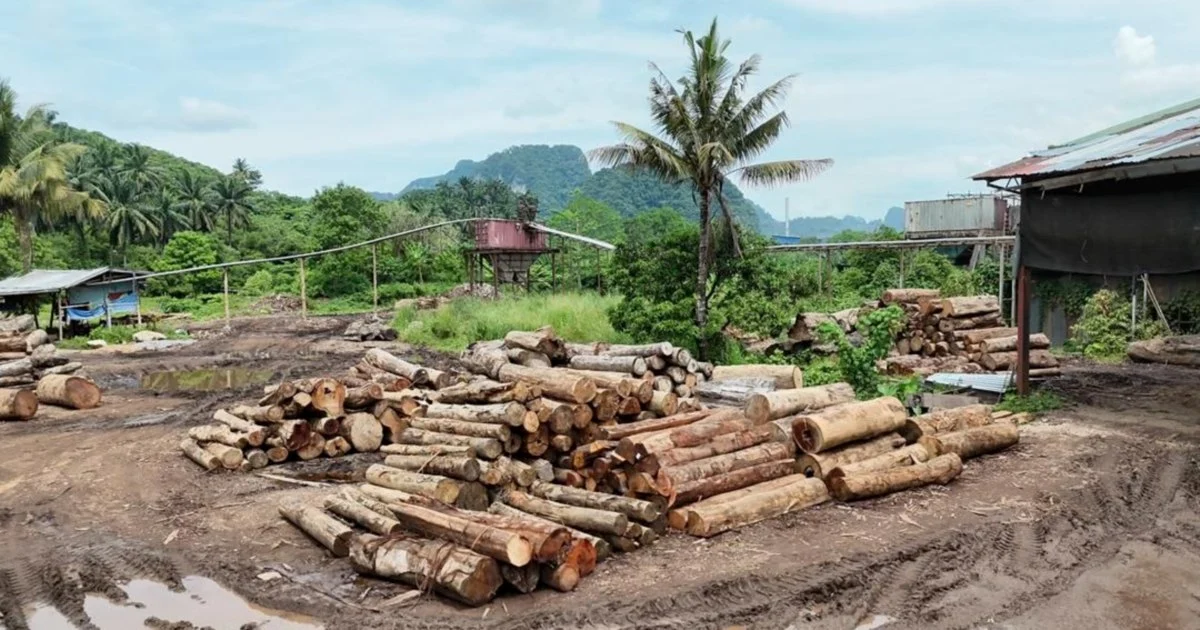
Coordinated enforcement operations across Malaysia's east coast have yielded significant results in the ongoing battle against illegal timber trafficking, with authorities detaining 11 suspects and recovering assets worth RM2.43 million in a single day of raids spanning Kelantan and Terengganu. The scale of the seizure underscores the persistent challenge posed by organised timber smuggling networks operating across the region, particularly those involving cross-border labour and sophisticated supply chains that exploit the porous boundaries between Malaysia and Indonesia.
The detained group included four Indonesian nationals, reflecting a broader pattern in which transnational criminal syndicates recruit foreign workers to facilitate the extraction, transportation, and distribution of illegally harvested timber. The involvement of foreign personnel in these operations complicates enforcement efforts, as it requires coordinated action between Malaysian authorities and their Indonesian counterparts, who are similarly grappling with deforestation issues within their own jurisdiction. The presence of international players in local timber crimes demonstrates how these networks operate with minimal regard for national boundaries or conservation laws.
The recovered merchandise extended beyond timber itself to include machinery valued as part of the overall haul. This suggests operations targeting the mechanical infrastructure that enables large-scale harvesting and processing—equipment such as chainsaws, portable mills, and transport vehicles that form the backbone of illegal logging enterprises. By dismantling these operational assets, enforcement agencies strike at both the immediate profit margins and the long-term capability of criminal networks to resume activities quickly following intervention.
The Kelantan and Terengganu region has emerged as a persistent hotspot for timber-related offences, owing to several interconnected factors. Both states contain substantial forest reserves and are geographically proximate to Kalimantan across the Sulu and Celebes Seas, making them convenient transshipment points for contraband timber originating in Indonesian territory. Additionally, the relative remoteness of certain forest areas and the limited presence of enforcement personnel in vast tracts of woodland create enforcement vacuums that criminal groups deliberately exploit. Local economic pressures, particularly in rural communities dependent on forestry-related livelihoods, can inadvertently facilitate recruitment of individuals willing to participate in illegal operations for short-term financial gain.
The monetary value attributed to the seized materials—RM2.43 million—provides insight into the profitability of illegal timber trafficking and the stakes involved in enforcement actions. This figure likely represents only the value of goods recovered in this particular operation; the total value generated through these networks before interdiction is substantially higher. Criminal syndicates can move valuable timber rapidly through multiple transactions and intermediate markets, making it difficult for authorities to trace full supply chains or quantify total illicit flows. Each successful raid therefore represents a disruption to revenue streams that fund further criminal activity and incentivise operational expansion.
The operational success reflected in today's detentions and seizures indicates coordination among enforcement authorities, likely involving the Forestry Department and other relevant agencies tasked with natural resource management and law enforcement. Effective action against timber smuggling networks demands sustained intelligence gathering, border surveillance, inter-agency communication, and rapid response capabilities. The timing and scale of coordinated raids suggests planners had developed sufficient evidence and operational intelligence to warrant simultaneous strikes, minimising the possibility that suspects would receive advance warning and disperse their assets or personnel.
From a conservation perspective, illegal timber extraction poses direct threats to forest ecosystems that provide critical environmental services regionally and globally. Beyond the immediate loss of standing timber, unregulated harvesting destabilises remaining forest structure, increases vulnerability to fires and pests, and fragments wildlife habitats. The economic consequences extend to legitimate forestry operators and local communities dependent on sustainable forest management, who face market competition from illegally harvested products sold at artificially depressed prices. This undercutting of legitimate commerce creates perverse incentives for businesses and individuals to participate in illegal operations rather than comply with regulations.
The detention of individuals—particularly the four Indonesian nationals—will likely trigger criminal investigations and potential prosecution under forestry and wildlife legislation, as well as possible additional charges related to transnational trafficking or conspiracy. The complexity of cross-border cases means that even substantial seizures may result in drawn-out legal proceedings. Malaysian authorities may also seek cooperation from Indonesian law enforcement to investigate upstream suppliers and determine whether the timber originated in protected areas or was harvested in violation of Indonesian regulations.
These enforcement actions reflect escalating pressure on criminal networks, though expert observers note that enforcement alone cannot address the systemic drivers that make timber smuggling economically attractive. Sustainable reduction in illegal logging requires concurrent efforts to strengthen legal forest management, improve economic opportunities in rural areas, enhance border security, and foster regional cooperation on environmental crime. The consistency of large-scale seizures across multiple years indicates that despite operational successes, the underlying demand and profitability of the illegal timber trade remain sufficiently robust to sustain criminal enterprise and attract recurring participation from individuals across the supply chain.