%22%2F%3E%3C%2Fpattern%3E%3C%2Fdefs%3E%3Crect%20width%3D%22100%25%22%20height%3D%22100%25%22%20fill%3D%22url(%23ph4gj7hg)%22%2F%3E%3Crect%20width%3D%22100%25%22%20height%3D%22100%25%22%20fill%3D%22url(%23ph4gj7hp)%22%2F%3E%3Ctext%20x%3D%2250%25%22%20y%3D%2250%25%22%20text-anchor%3D%22middle%22%20dominant-baseline%3D%22central%22%20fill%3D%22rgba(255%2C255%2C255%2C0.95)%22%20font-family%3D%22Georgia%2C%20'Times%20New%20Roman'%2C%20serif%22%20font-weight%3D%22700%22%20font-size%3D%22272%22%20letter-spacing%3D%22-0.02em%22%3EFahmi%3C%2Ftext%3E%3C%2Fsvg%3E)
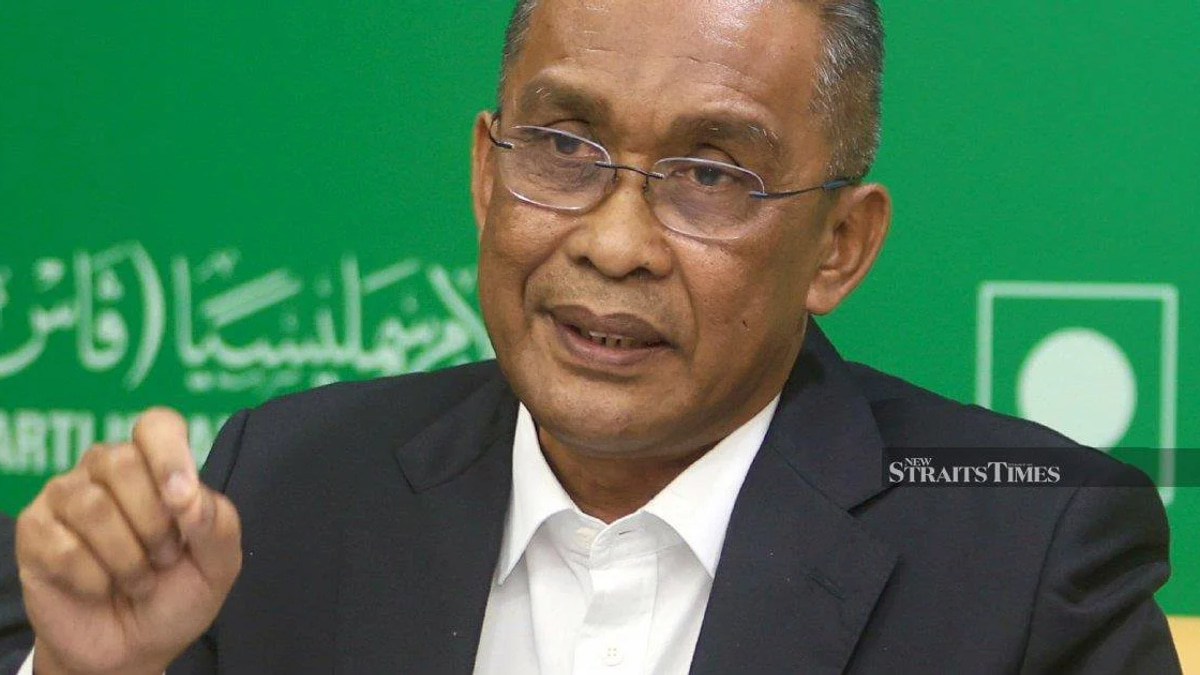
Malaysia's Communications Minister Datuk Fahmi Fadzil has issued a clarion call for media practitioners throughout Southeast Asia to deepen their collaborative efforts, arguing that coordinated action across borders represents the most effective defence against the proliferation of false information that threatens regional stability. Speaking at the National Journalists' Day (HAWANA) 2026 celebration in Butterworth, Penang, Fahmi emphasised that the region's media landscape has become increasingly fragmented, with competing narratives vying for audience attention at unprecedented speed, creating vulnerability to deliberate misinformation campaigns.
The minister articulated a compelling vision of journalism as a fundamental social institution, one that extends far beyond simply reporting events. In his assessment, the media functions as the connective tissue binding citizens to contemporary realities, serving simultaneously as the crucial intermediary between government decision-makers and those implementing policy, and between the raw facts of events and the public's understanding of their significance. This multifaceted role, Fahmi suggested, has only become more critical as information velocity accelerates and audiences struggle to distinguish reliable reporting from misleading content designed to manipulate perception.
At the heart of his advocacy lies a conviction that strengthened institutional cooperation among ASEAN's media organisations can address challenges that no single country can manage alone. By fostering closer partnerships between journalists and media outlets across national boundaries, by systematizing the exchange of investigative knowledge and reporting methodologies, and by sharing standards and best practices that have proven effective at combating false narratives, the region can build resilience against coordinated disinformation. Fahmi positioned this collaborative framework not merely as a professional courtesy but as essential infrastructure for regional peace and long-term prosperity.
The minister articulated his position with pointed clarity: journalism anchored in verifiable truth, editorial integrity, and professional responsibility remains irreplaceable in an age of information chaos. This foundational principle, he suggested, distinguishes legitimate news reporting from the endless stream of unverified claims, conspiracy theories, and deliberately fabricated content that circulates through social media platforms and messaging applications throughout Southeast Asia. The challenge, in Fahmi's framing, is that truth-based journalism requires institutional resources, editorial discipline, and professional standards that are increasingly difficult to maintain when news organisations compete for attention against sensationalised and algorithmically-optimised falsehoods.
The event itself reflected official commitment to elevating journalism's standing within Malaysian society and the broader ASEAN region. Penang Governor Tun Ramli Ngah Talib and Chief Minister Chow Kon Yeow participated alongside senior figures from the Communications Ministry, including secretary-general Datuk Abdul Halim Hamzah and deputy secretary-general Datuk Bahria Mohd Tamil. The gathering also included leadership from Bernama, Malaysia's national news agency, with chairman Datuk Seri Wong Chun Wai and chief executive Datin Paduka Nur-ul Afida Kamaludin present, underscoring the government's emphasis on news agency leadership in addressing regional information challenges.
Fahmi's framing of HAWANA 2026 as more than a celebratory occasion revealed strategic thinking about journalism's institutional role. He positioned the commemoration as an opportunity to reinforce official recognition of the media's partnership in advancing national development, whilst simultaneously strengthening professional commitment to journalism during a period of profound challenge. The minister acknowledged that the profession faces unprecedented pressures from technological disruption, economic contraction of traditional news business models, and the explosive growth of unmediated digital communication channels that bypass professional editorial gatekeeping entirely.
The Penang state government's decision to host this year's HAWANA celebration carries particular significance for Malaysia's federal-state relations on media policy. By shouldering organisational responsibility for the event, Penang demonstrated institutional commitment to supporting journalism and the broader communications ecosystem. Fahmi explicitly recognised this gesture, characterising it as evidence of Penang's respect for the media's contribution to social development and national interests. Such recognition matters because state-level support can translate into tangible resources for media organisations and training initiatives that strengthen local journalism capacity.
Within the ASEAN context, the appeal for enhanced media collaboration addresses a structural vulnerability in the region's information environment. Southeast Asia encompasses diverse media systems, regulatory frameworks, and political contexts, making coordinated response to misinformation campaigns difficult. A Thai journalist operates under different legal constraints than a Malaysian counterpart, while Indonesian news outlets face distinct economic pressures from those in Singapore or the Philippines. Yet misinformation flows freely across these boundaries, exploiting regulatory gaps and the absence of coordinated fact-checking protocols. Fahmi's call implicitly acknowledges that bilateral government-to-government communication on media issues, whilst necessary, proves insufficient without parallel professional networks among journalists themselves.
The communications minister's emphasis on knowledge exchange and best practice sharing suggests recognition that some ASEAN countries have developed particularly effective approaches to combating specific categories of misinformation. The Philippines has pioneered certain fact-checking methodologies; Thailand has developed media literacy initiatives; Indonesia's large, competitive media market has generated sophisticated techniques for covering sensitive topics whilst maintaining editorial independence. Systematising access to these accumulated experiences across the region could accelerate improvement in journalism standards without requiring countries to implement identical regulatory solutions that might conflict with their distinct constitutional frameworks or political cultures.
Fahmi's remarks also implicitly address the economic sustainability crisis affecting quality journalism throughout Southeast Asia. As advertising revenue migrates to digital platforms controlled by foreign technology companies, traditional news organisations across the region have struggled to maintain staffing levels and editorial quality. This financial squeeze incentivises cost-cutting measures that undermine rigorous reporting, making outlets more vulnerable to misinformation sources that require minimal verification. Regional collaboration on business model innovation—such as cooperative approaches to digital subscription services, shared investigative resources, or coordinated advertising initiatives—could help stabilise the financial foundations of serious journalism.
The minister's focus on professional responsibility and journalistic integrity reflects awareness that technical fact-checking tools and regulatory interventions, whilst necessary, cannot alone solve misinformation challenges. Ultimately, combating false narratives requires journalists with sufficient training, time, and institutional support to pursue thorough verification, acknowledge uncertainty, and resist pressure to publish unconfirmed information for competitive advantage. Building professional capacity across ASEAN requires investment in journalist training programmes, support for investigative journalism initiatives that require significant resources, and creation of professional norms that prioritise accuracy over speed and sensationalism.
Looking forward, the success of Fahmi's call for enhanced ASEAN media collaboration will depend on translating rhetoric into institutional mechanisms and sustained commitment. Concrete steps might include establishing regular forums for ASEAN journalists to share experiences, creating joint fact-checking initiatives covering regional issues, developing common standards for identifying and responding to coordinated misinformation campaigns, and securing funding for cross-border investigative journalism projects addressing issues of region-wide significance. Without such mechanisms, the minister's appeal, however eloquently expressed, risks remaining aspirational rather than transformative.