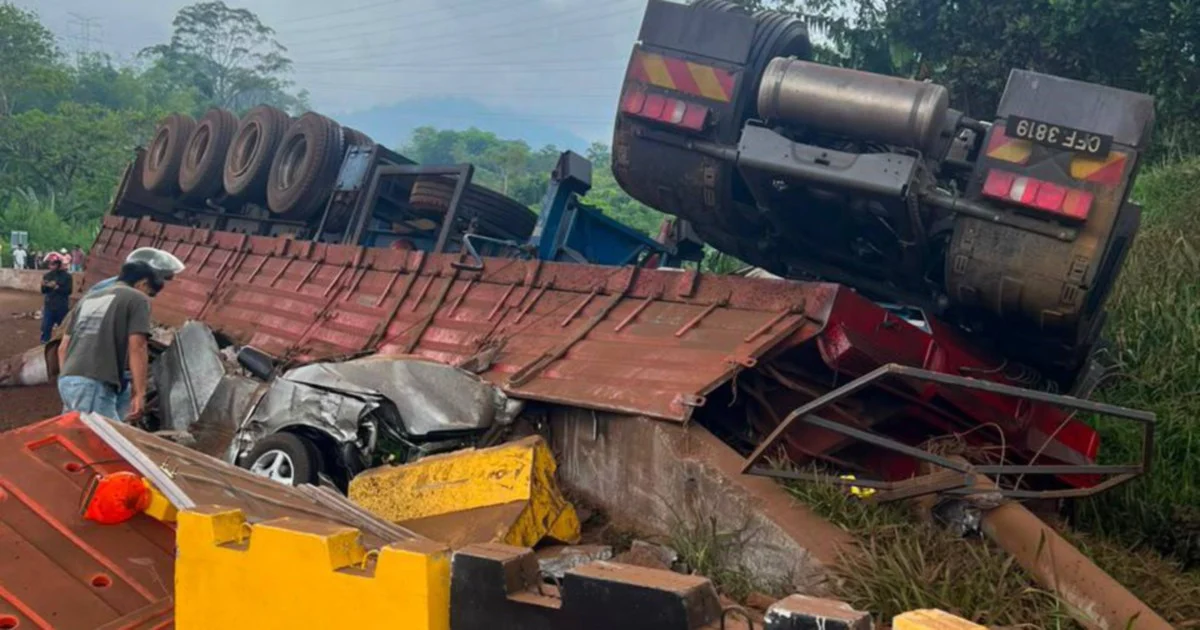
The driver of a heavy trailer involved in a catastrophic collision on the Karak Expressway near Bentong that resulted in four deaths has been freed on police bail while investigators complete their examination of the June 14 incident. The release comes as the Royal Malaysia Police continue gathering evidence and conducting interviews related to the circumstances surrounding one of the highway's deadliest recent accidents.
The fatal collision occurred on June 14 along a busy stretch of the Karak Expressway serving the Klang Valley to Pahang corridor, claiming the lives of four individuals and raising fresh concerns about heavy vehicle safety on Malaysia's major trunk routes. The incident prompted swift police response and immediate commencement of a detailed investigation to establish the precise sequence of events leading to the multi-vehicle impact.
Police bail, a standard procedural mechanism in Malaysia's criminal justice system, allows suspects to remain at liberty while detectives finalise their inquiries and gather comprehensive evidence. This approach is commonly employed in cases where charges have not yet been formally filed but where investigators require additional time to build their case dossier. The trailer driver's release on bail does not constitute acquittal or an indication regarding eventual culpability.
The Karak Expressway, stretching from the Klang Valley to Kuantan, is one of Malaysia's most vital commercial transport corridors, carrying substantial volumes of heavy vehicles daily. Fatal accidents involving large trucks and trailers on this route have sparked ongoing discussions among road safety advocates, transport industry representatives, and highway authorities regarding vehicle maintenance standards, driver fatigue protocols, and speed regulation on steep gradients.
Fatalities involving heavy vehicles typically trigger comprehensive investigations examining multiple factors: mechanical condition of the truck and trailer, driver hours of service compliance, road conditions at the time of impact, weather circumstances, and potential involvement of other vehicles. Malaysian authorities have established standardised procedures for such inquiries, often involving specialist accident reconstruction teams and coordination between federal and state-level enforcement bodies.
The Bentong incident contributes to a growing body of accident statistics on expressways serving the peninsula's main commercial corridors. Industry analysts have noted that sections of the Karak Expressway, particularly those with significant elevation changes, present particular challenges for heavy vehicle operators, especially during periods of high traffic congestion when braking distances become compressed and manoeuvring space diminishes.
For Malaysian commuters and transport operators, incidents of this severity underscore the critical importance of vehicular maintenance regimes, particularly for large commercial trucks whose brake systems and structural integrity directly impact roadway safety. The Road Transport Department's enforcement mechanisms and periodic vehicle inspection protocols remain subjects of ongoing discussion within industry circles and among safety advocacy groups concerned with reducing preventable accidents.
The investigation's progression will likely include examination of maintenance records for the involved trailer, analysis of the driver's work schedule and rest periods preceding the collision, and potentially toxicology testing. Police may also review closed-circuit television footage from nearby locations and statements from other motorists who witnessed the incident or its immediate aftermath.
As the investigation continues, the case will establish important precedent regarding accountability in commercial transport operations. Malaysian courts have in recent years demonstrated increasing rigour in prosecuting traffic cases resulting in fatalities, with sentences reflecting the severity of consequences arising from negligence or dangerous driving standards in professional haulage operations.
The release on bail does not conclude the matter; rather, it signals transition to the investigation's next phase, where prosecutors will eventually review evidence compiled by police and determine whether formal charges will be preferred. Should charges be filed, the driver would face court appearances and potential penalties ranging from fines to imprisonment, depending on the nature of charges preferred and evidence adduced during trial proceedings.
For regional transport operators and safety-conscious industry participants, the Bentong incident serves as a sobering reminder of the consequences attending inadequate vehicle maintenance, driver fatigue, or operational practices that prioritise schedule adherence over safety considerations. Malaysian authorities continue emphasising that commercial vehicle operators bear primary responsibility for ensuring their fleet's roadworthiness and their drivers' fitness for duty.