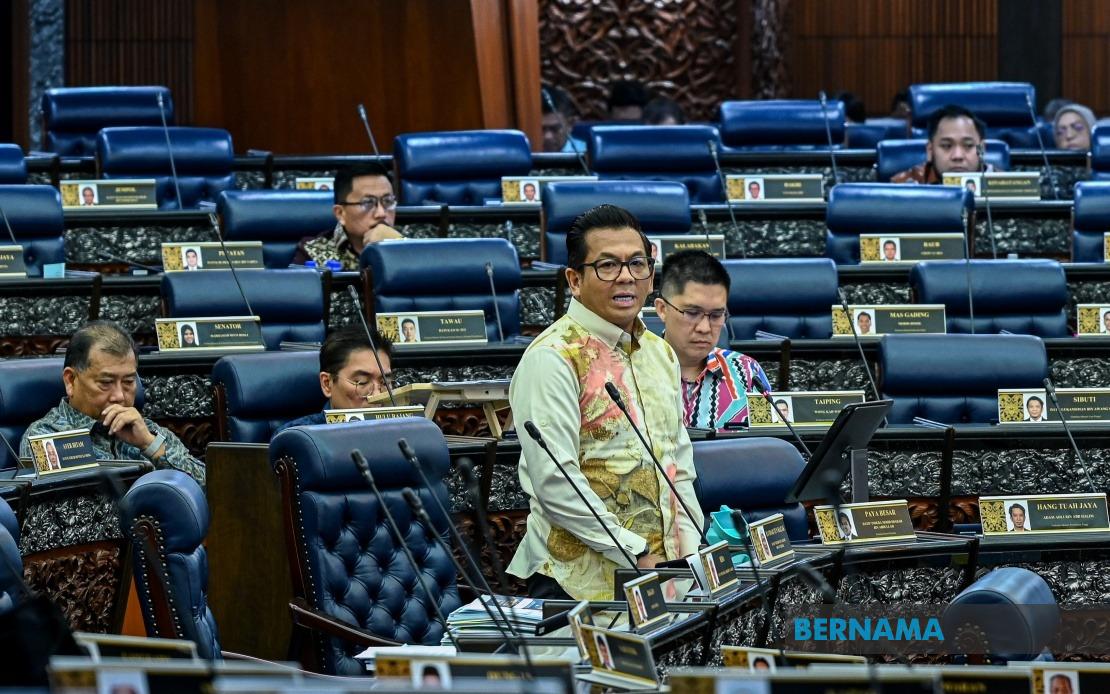
The Malaysian government is taking a data-driven approach to one of the nation's most persistent economic challenges: the stark difference in living costs between urban centres and rural communities. Deputy Economy Minister Datuk Mohd Shahar Abdullah revealed in parliament that policymakers are drawing on detailed household expenditure analysis from the Basic Living Expenditure (PAKW) framework to craft appropriate relief measures. This methodical approach recognises that a one-size-fits-all policy response cannot adequately address the complex, location-specific pressures facing Malaysian families across the country.
The PAKW framework, developed by the Department of Statistics Malaysia, represents a significant institutional effort to understand how Malaysians actually spend their money. Rather than relying on simplified national averages, the system captures the reality that household priorities, purchasing power, and available goods differ dramatically depending on geography. An urban resident in Kuala Lumpur faces vastly different expenses than someone living in a rural area, whether due to transportation costs, access to cheaper bulk goods, or the availability of affordable alternatives to essential services. By recognising these variations, the government positions itself to design interventions that genuinely reflect local realities rather than imposing blanket solutions that may work in cities but provide insufficient relief in remote areas.
To democratise access to this data, the government has made the PAKW calculator freely available to the public through the myPAKW.dosm.gov.my portal. This tool empowers individual Malaysians to monitor their own spending patterns against the PAKW benchmarks, fostering greater awareness of household finances. For those struggling with rising costs, the calculator offers a concrete reference point to understand whether their expenses are typical for their location or whether they face unusual pressures. This transparency also builds public understanding of why different regions might require different policy responses, potentially building political support for regionally tailored economic measures.
The disparities themselves are striking. Kuala Lumpur's PAKW value stands at RM5,639 monthly, reflecting the significantly higher cost of living in Malaysia's capital city. By contrast, Kelantan records a PAKW value of RM4,254, approximately 25 per cent lower, while Sabah sits at RM4,511. These figures underscore why a living wage adequate in Kelantan would leave urban workers, particularly those in Kuala Lumpur, struggling to meet their actual expenses. The gap reflects not merely differences in personal preference but structural economic realities: urban property costs, transportation distances, and market competition create different cost structures across regions. Understanding these patterns is foundational to any serious attempt at addressing cost-of-living pressures equitably.
The government's policy response extends beyond analysis to direct intervention in labour markets and income generation. Officials have emphasised training programmes designed to expand earning capacity across Malaysia's workforce, addressing both the lower and upper bounds of wage distribution. These initiatives sit within the broader framework of the Five-Year Malaysia Plans, which incorporate updates on poverty and living standards twice per planning cycle. This embedded approach ensures that wage-lifting strategies remain continuously calibrated against emerging economic realities rather than becoming static prescriptions that lose relevance as conditions change.
A key metric demonstrating this commitment is the evolution of the Poverty Line Income (PLI), which the government revises regularly to reflect changing economic conditions. The national PLI surged to RM2,705 in 2024, a dramatic increase from RM980 in 2016. This nearly threefold increase over eight years reflects both genuine improvements in living standards for some Malaysians and the cumulative impact of inflation across the economy. However, such headline figures obscure important regional variations, which is precisely why the PAKW framework's location-specific focus matters. A PLI set at the national level may prove inadequate for high-cost urban areas while potentially overstating the needs of lower-cost rural regions.
The parliamentary question that prompted this government response came from Wan Hassan Mohd Ramli of Perikatan Nasional, representing Dungun. His inquiry referenced a 2023–2025 economist field study aimed at developing solutions for inflation and price pressures, with explicit attention to urban-rural disparities. This suggests that cost-of-living concerns have gained sufficient political traction to warrant dedicated research budgets and cross-party parliamentary scrutiny. The fact that opposition members are pressing the government on this issue indicates that citizens across Malaysia perceive the cost-of-living challenge as urgent and inadequately addressed through existing measures.
For Southeast Asian observers, Malaysia's approach holds instructive lessons. The region encompasses enormous diversity in development levels, urbanisation patterns, and regional income distributions. Many neighbours grapple with similar urban-rural divides, often without sophisticated frameworks for measuring and addressing them systematically. Malaysia's investment in the PAKW infrastructure and the willingness to make data publicly accessible demonstrates how statistical capacity can inform better policymaking. However, the real test lies not in data collection but in whether the resulting interventions meaningfully improve household finances in underserved regions.
The effectiveness of this framework ultimately depends on implementation rigour. Having identified that Kelantan residents face substantially different cost pressures than Kuala Lumpur residents, the government must ensure that relief programmes, price controls, subsidies, or wage initiatives reflect these distinctions. Past experience in developing economies suggests that centrally designed programmes often fail to account for regional variation, inadvertently leaving rural areas underserved despite official recognition of their needs. The PAKW framework creates an opportunity to avoid this pitfall by providing evidence-based justification for differential policy application across regions.
Looking ahead, the sustained focus on both income generation and periodic review of living standards benchmarks suggests that policymakers recognise cost-of-living pressures as a structural rather than temporary challenge. Inflation, property price escalation, and wage stagnation in certain sectors mean that this issue will likely feature prominently in Malaysian politics for years to come. The government's decision to ground its response in detailed data rather than reactive subsidy announcements indicates a shift toward more systematic economic management. Whether this translates into perceptible relief for struggling households, particularly in rural and smaller urban centres, will determine public confidence in the government's capacity to address what many Malaysians increasingly see as the central economic concern affecting their daily lives.

