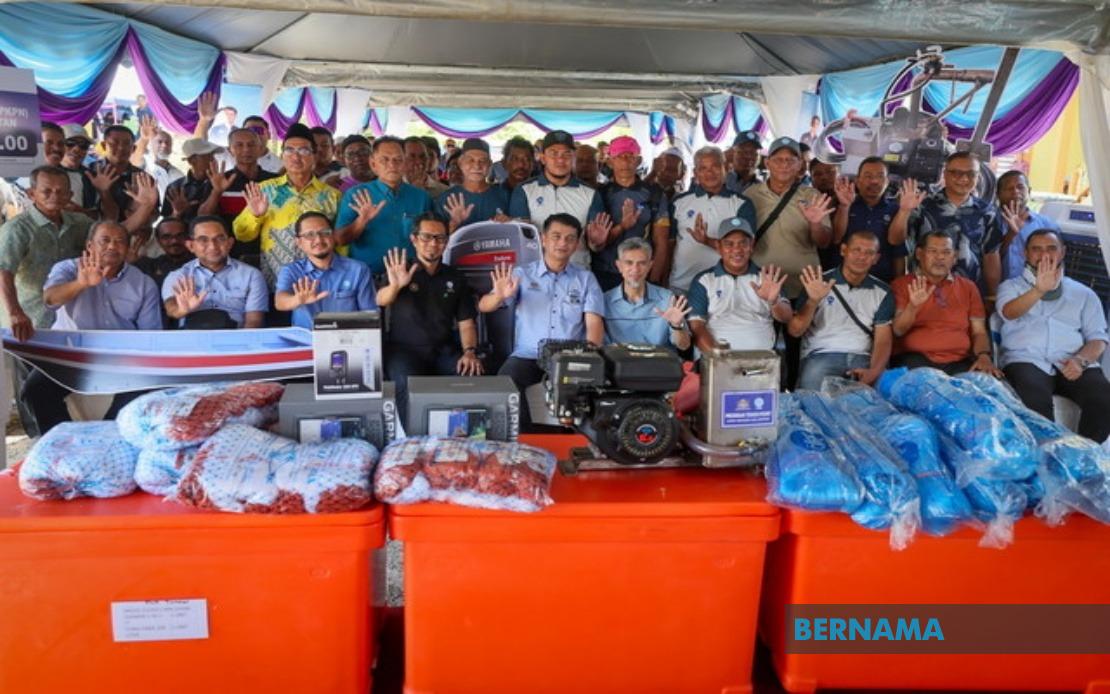
The government has set aside RM10 million in this fiscal year to support the Special Fishermen Housing Project (PKPN), a nationwide initiative designed to enhance living conditions and economic resilience within Malaysia's fishing communities. The programme reflects a broader policy commitment to address socio-economic disparities in one of the country's primary resource-dependent sectors. Muhammad Faiz Fadzil, chairman of the Fisheries Development Authority of Malaysia (LKIM), outlined the initiative at a gathering with Kelantan fishermen, underscoring the agency's role in administering funds and coordinating implementation across multiple states.
The RM10 million allocation divides into two distinct components, each addressing different aspects of housing need. Repair works constitute the larger portion, with over RM6.8 million directed toward restoring 344 fishermen's homes across the country, while construction of 36 new dwellings will consume more than RM3.1 million. This two-pronged approach reflects a pragmatic understanding that many fishing families occupy deteriorated structures, whilst others lack adequate housing altogether. The distinction matters because repair projects tend to proceed faster than new construction, yet both require careful resource management and community coordination.
Progress on housing repairs has reached approximately 80 per cent completion, with authorities anticipating full delivery by August or September. The construction of new houses, meanwhile, is expected to conclude within the current year, though this timeline acknowledges complications arising from land tenure issues, particularly the complexities of inherited properties in rural fishing communities. These delays highlight a persistent challenge in Malaysian rural development: securing clear title and resolving customary land claims before structural work can commence. Such administrative bottlenecks, whilst frustrating for beneficiaries, reflect the legal rigour required to ensure sustainable property ownership.
Funding allocations vary geographically to reflect regional construction costs and economic conditions. In Peninsular Malaysia, the government has budgeted RM84,000 per new housing unit, increasing to RM95,000 in Sabah and Sarawak, acknowledging the higher developmental costs in East Malaysia. Repair budgets offer up to RM20,000 per unit nationwide. Within Kelantan alone, RM388,000 has been earmarked for PKPN, illustrating the state's significant share of the national programme and reflecting Kelantan's substantial fishing population and historical dependence on marine resources.
Beyond housing improvements, LKIM is simultaneously orchestrating a strategic reorientation of the fishing sector. Muhammad Faiz articulated a critical concern: declining fisheries resources combined with escalating operational costs—particularly fuel expenses—threaten the traditional model's viability. Despite continued government fuel subsidies, the underlying economics have become unsustainable. This reality compels policy makers to encourage diversification into aquaculture, framing it not as abandonment of fishing heritage but as prudent economic adaptation.
The pivot toward aquaculture aligns with Malaysia's ambitious 2030 target, whereby aquaculture should contribute 40 per cent of national fish production. Achieving this goal requires substantial participation from existing fishermen, who possess both maritime knowledge and community standing necessary for successful sector transition. Fishermen represent the most logical constituency for aquaculture expansion, yet cultural attachments to traditional fishing and knowledge gaps regarding farming operations present real obstacles. The government's strategy explicitly seeks to overcome these barriers through targeted investment and incentive alignment.
Kelantan State Fishermen's Association (PENEKA) has received RM400,000 from LKIM to establish a tank-based prawn farming initiative, providing a concrete demonstration project for interested fishermen. This intervention generates multiple benefits: it offers alternative income streams, reduces pressure on wild fish stocks, and establishes technical expertise within communities that can be replicated elsewhere. Tank farming operations also align with urban food security concerns, as they generate reliable supply chains less dependent on seasonal fluctuations and geographic dispersion inherent in ocean fishing.
The aquaculture initiative carries particular significance for Southeast Asia, where regional competitors including Vietnam and Thailand have already achieved substantial aquaculture dominance. Malaysia's comparative lateness in this transition suggests both challenge and opportunity. By mobilising existing fishing communities and providing capital support, the government positions itself to capture productivity gains whilst maintaining social stability in rural coastal areas. Successful implementation in Kelantan could catalyse expansion to other maritime states including Terengganu, Pahang, Perlis, and Johor.
For Malaysian fishermen, these parallel initiatives represent both opportunity and necessity. Housing improvements directly alleviate living hardship whilst indirectly signal government commitment to sectoral welfare. Aquaculture diversification, whilst demanding new skills and capital investment, offers economic sustainability that traditional fishing can no longer guarantee. The complementary nature of housing support and livelihood transition suggests integrated policy thinking: improving residential conditions and stabilising income simultaneously may strengthen social cohesion and prevent rural-urban migration driven by economic desperation.
The programme's success hinges on effective implementation coordination between federal LKIM, state-level fisheries agencies, and community associations. Rural development initiatives frequently falter when bureaucratic processes obscure genuine need or when beneficiary selection becomes politicised. Transparent implementation mechanisms and beneficiary accountability will determine whether RM10 million generates proportionate social benefit. Given that Malaysia hosts some 150,000 registered fishermen facing mounting livelihood pressures, this investment represents meaningful but modest support requiring careful targeting and rigorous execution to maximise impact across dispersed coastal communities.

