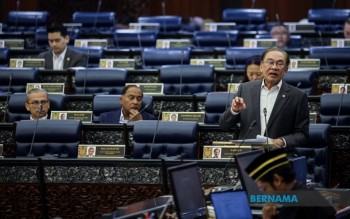
Prime Minister Datuk Seri Anwar Ibrahim has unveiled a new e-invoice amnesty scheme designed to lighten the regulatory load on Malaysia's business community, particularly the millions of small operators struggling to adapt to digital compliance requirements. Speaking in Parliament on July 7, Anwar, who also holds the Finance Minister portfolio, announced the e-Invoice Voluntary Declaration Programme will remain open until December 31, 2027, creating an extended window during which businesses can voluntarily declare updates, corrections, and revisions without facing financial penalties from the Inland Revenue Board of Malaysia. The initiative represents an unusually lenient approach for income tax matters, signalling the government's recognition that the digital transformation imperative must be balanced against economic realities facing small enterprises.
The amnesty programme specifically targets micro, small and medium enterprises (MSMEs), a sector that employs millions of Malaysians and generates substantial economic activity but often lacks the in-house expertise and resources to navigate complex tax administration systems. By removing the punitive element during the declaration window, the government is effectively acknowledging that non-compliance often stems from confusion or capacity constraints rather than deliberate tax evasion. This shift in enforcement philosophy could fundamentally reshape how businesses perceive their relationship with tax authorities, replacing adversarial dynamics with collaborative compliance. For cash-strapped operators already managing thin profit margins, the removal of penalties during corrections provides psychological reassurance that minor mistakes will not trigger cascading financial consequences that could threaten viability.
Complementing the amnesty framework, the government has simultaneously introduced accelerated capital allowance provisions that permit businesses to claim full capital deductions within a single financial year for legitimate expenses incurred while implementing e-invoice systems. This tax relief mechanism effectively subsidises the technological transition by allowing companies to recover implementation costs more rapidly than conventional depreciation schedules would permit. The combined package demonstrates a two-pronged strategy: lowering barriers to compliance whilst simultaneously reducing the net cost of achieving it. Such measures prove particularly significant for smaller enterprises that cannot amortise technology investments across diverse revenue streams or absorb upfront costs while awaiting traditional asset depreciation schedules.
The timing of this announcement reflects broader government policy priorities around MSME sustainability amid volatile global economic conditions. Businesses throughout Southeast Asia face compounding pressures from international supply chain disruptions, rising input costs, currency fluctuations, and shifting consumer behaviour patterns. Within this challenging context, domestic regulatory burdens become especially consequential. By streamlining e-invoice implementation requirements and offering financial incentives, the MADANI government is attempting to preserve business formation rates and prevent forced closures among marginal operators. The initiative implicitly acknowledges that overly aggressive tax compliance enforcement, while theoretically sound from revenue maximisation perspectives, can prove counterproductive when it accelerates business failure and reduces the overall tax base.
This programme builds upon earlier modifications to Malaysia's e-invoice framework announced in December 2025, when authorities raised the income exemption threshold from RM500,000 to RM1 million. That adjustment alone benefited more than one million taxpayers by exempting smaller operators from mandatory e-invoice requirements entirely, allowing them to maintain existing invoicing systems whilst focusing resources on core business operations. The new voluntary declaration programme now extends protections to businesses that do implement e-invoicing but discover errors, inconsistencies, or incomplete records requiring correction. Together, these layered interventions create a tiered compliance environment accommodating businesses at different technological maturity levels and financial capacities.
For Malaysian policymakers, the philosophical shift underlying these initiatives warrants careful examination. Traditional tax administration emphasizes strict compliance timelines and penalty structures that incentivise reporting accuracy through fear of financial consequences. The voluntary declaration approach inverts this logic, betting instead that transparent communication, simplified procedures, and financial inducements produce better compliance outcomes than enforcement-heavy regimes. This theory aligns with emerging international evidence suggesting that taxpayer cooperation improves when authorities demonstrate flexibility and acknowledge genuine implementation challenges. Countries including Singapore and Australia have experimented with similar amnesty programmes targeting digital tax compliance, recognising that transition periods require graduated enforcement approaches.
The implications extend beyond taxation mechanics into broader questions about regulatory design in developing economies. Malaysia, like other Southeast Asian nations, must balance revenue collection imperatives against economic development objectives. MSMEs contribute substantially to employment, innovation, and regional resilience, yet often operate with minimal administrative capacity. When regulatory burdens exceed organisational capabilities, businesses either fail to comply (generating enforcement costs and reduced revenue) or divert resources from productive activities toward compliance management (reducing their growth potential). The government's e-invoice programme suggests recognition that optimal policy balances these competing pressures rather than maximising either compliance rigour or revenue extraction independently.
Regional observers note that Malaysia's approach could influence neighbouring jurisdictions grappling with similar e-invoicing implementation challenges. Indonesia, Thailand, and the Philippines all contemplate or have implemented mandatory e-invoicing requirements affecting millions of small businesses. If Malaysia demonstrates that voluntary frameworks with extended timelines and penalty waivers generate higher compliance rates than aggressive implementation schedules, other governments may adopt comparable models. This potential spillover effect underscores how domestic policy innovations develop regional significance within integrated Southeast Asian economies where businesses operate across multiple jurisdictions and policy harmonisation offers collective efficiency gains.
The Ipoh Timor MP Lee Chuan How's parliamentary question that prompted this announcement also reflects growing legislative attention to MSME challenges. Opposition MPs increasingly use parliamentary forums to raise constituent concerns about regulatory burdens, suggesting emerging cross-party recognition that small business sustainability represents a legitimate governance priority. This consensus, though fragile, creates space for the government to pursue supportive policies that might otherwise face criticism as insufficiently rigorous or revenue-focused. Whether sustained MSME support survives budget pressures and competing fiscal priorities remains uncertain, but the current policy direction indicates at least temporary alignment between small business advocacy and executive priorities.
Looking forward, the government faces implementation challenges around communication and awareness. Many MSME operators, particularly those in rural or less digitally connected communities, may remain unaware of the amnesty programme or uncertain about procedures for voluntary declarations. Effective policy execution requires substantial outreach beyond parliamentary announcements, potentially involving business associations, accounting chambers, and community organisations that interface directly with small operators. The Inland Revenue Board's capacity to process voluntary declarations without creating bottlenecks that discourage participation will also determine practical effectiveness. If application procedures prove cumbersome or responses tardy, businesses may view the amnesty as theoretical rather than genuinely accessible.
The December 31, 2027 programme sunset date itself merits strategic consideration. By establishing a definitive end point, the government signals that this represents transitional support rather than permanent policy, theoretically incentivising rapid compliance during the amnesty window. However, this approach risks creating perverse incentives where businesses deliberately defer corrections until approaching the deadline, potentially overwhelming the Inland Revenue Board during the final months. Alternatively, businesses might conclude that compliance can be continually postponed provided they eventually participate before the deadline expires. Designing effective termination provisions requires careful calibration between providing genuine breathing room and maintaining incentives for timely action.
Ultimately, the e-invoice voluntary declaration programme represents a calculated government bet that economic growth and business sustainability objectives justify temporary enforcement flexibility regarding tax administration procedures. By combining amnesty protections with accelerated capital allowances and expanded exemption thresholds, the MADANI administration is constructing a comprehensive framework intended to reduce the friction costs associated with digital tax system adoption. Whether this approach generates durable improvements in compliance, tax revenue, and business vitality remains an empirical question answerable only through careful implementation and subsequent policy evaluation.

