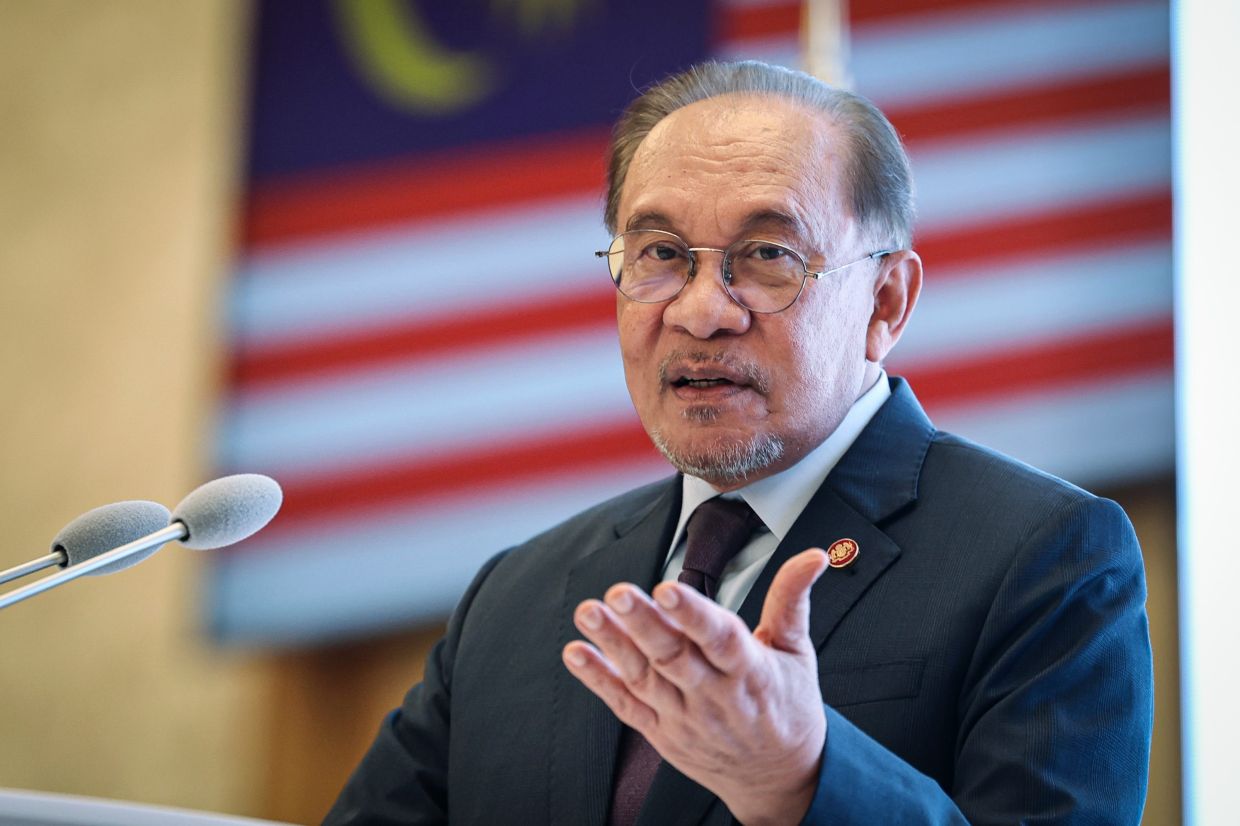
The Malaysian government is prepared to explore blending elements of the Goods and Services Tax with the existing Sales and Service Tax framework to create a tax system that is more equitable and progressive, according to Prime Minister Datuk Seri Anwar Ibrahim. Speaking during the closing session of the Budget 2027 engagement session in Putrajaya, Anwar, who also holds the Finance Minister portfolio, outlined the government's willingness to examine features from both taxation models. However, he made clear that Malaysia would maintain the SST as its foundational national tax structure, with any GST-derived components incorporated only if they meet strict criteria regarding fairness and implementation.
The prime minister drew a critical distinction between his government's approach and previous administrations' tax policies. While acknowledging that certain aspects of the GST framework might offer administrative efficiencies, Anwar stressed that any study would be conducted with a fundamental principle in mind: the protection of ordinary Malaysians from bearing an excessive collective tax burden. This stance reflects the government's Malaysia MADANI agenda, which emphasises inclusive growth and social welfare considerations in economic policymaking. The emphasis on combining systems rather than wholesale adoption suggests a pragmatic approach to taxation reform that seeks to balance revenue requirements with social equity.
Anwar's core objection to the GST centres on its nature as a broad-based consumption tax affecting virtually every citizen regardless of income level. He argued that such a universal taxation approach fundamentally conflicts with the government's commitment to protect vulnerable segments of society, particularly those already grappling with rising living costs. The prime minister repeatedly returned to this theme, noting that implementing a tax affecting the entire population would represent a departure from the government's social contract with citizens who have historically borne minimal direct tax burdens. His concern highlights an ongoing tension in taxation policy across Southeast Asia, where policymakers must balance fiscal needs against the political and social costs of measures that reduce disposable income for struggling households.
The government's position reflects lessons learned from the GST implementation period between 2015 and 2018, which generated substantial public backlash. The previous administration's imposition of a six percent GST created widespread discontent, with criticism intensifying during the final years as citizens linked the tax to mounting financial pressures. When the current government assumed office, abolishing the GST and returning to SST became a key campaign promise, positioning the move as pro-rakyat economic policy. That political history shapes the current administration's cautious approach to any taxation changes, ensuring that any future reforms maintain the perception of protecting ordinary citizens' purchasing power.
The SST, which taxes specific goods and services rather than broad consumption, represents a less comprehensive but more targeted taxation approach. By maintaining SST as the primary system while selectively incorporating GST elements, the government may be attempting to capture administrative improvements without replicating the regressive effects that made the previous GST unpopular. Such administrative features might include enhanced compliance mechanisms, clearer tax classifications, or simplified registration procedures that could improve tax collection without expanding the tax base to include previously untaxed sectors or lower-income consumer categories.
Anwar's announcement came during the Budget 2027 engagement session, a consultative process preceding the budget's tabling in Parliament on October 9. The presence of Finance Minister II Datuk Seri Amir Hamzah Azizan, Deputy Finance Minister Liew Chin Tong, Bank Negara Malaysia Governor Datuk Seri Abdul Rasheed Ghaffour, treasury officials, industry representatives, and economic scholars indicated the comprehensive nature of budget consultations. This inclusive stakeholder engagement suggests the government is seeking broad input before finalising taxation proposals, a consultative approach that contrasts with more top-down implementation methodologies used in previous administrations.
The Malaysian taxation debate carries regional significance. Several Southeast Asian economies are evaluating GST or similar value-added tax systems, and Malaysia's experience—both the 2015-2018 implementation and current deliberations—offers instructive lessons regarding public acceptance, social impact, and political feasibility. Indonesia, Thailand, and Vietnam are among regional peers managing complex taxation transitions, making Malaysia's approach to balancing fiscal sustainability with social protection relevant across the region.
The government's willingness to study hybrid approaches acknowledges that modern taxation systems need not be purely binary choices between competing models. Instead, carefully designed combinations of taxation elements can potentially achieve multiple objectives: maintaining revenue adequacy, improving administrative efficiency, and protecting lower-income citizens from disproportionate tax burdens. This nuanced approach reflects growing recognition among economists that tax system design involves balancing competing priorities rather than simply selecting between pre-existing templates.
However, the practical challenge of implementation remains substantial. Determining which GST elements merit incorporation, establishing boundaries to prevent scope creep, and ensuring that hybrid systems remain administratively manageable for both tax authorities and compliant businesses requires substantial technical expertise and careful legislative drafting. The government's decision to study the proposal suggests these detailed questions remain unresolved, indicating that any implementation is likely several months away following technical analysis and stakeholder consultation.
The timing of this announcement, concurrent with broader Budget 2027 preparations themed on Malaysia MADANI's vision of achieving progress while remaining grounded in community values, positions taxation reform within a larger narrative about equitable economic management. By framing any potential tax system changes as part of a comprehensive development philosophy rather than isolated fiscal measures, the government attempts to contextualize difficult economic decisions within a broader social agenda. This communicative strategy reflects awareness that taxation policy success depends not only on technical design but also on public understanding and acceptance of underlying rationales and fairness principles.

