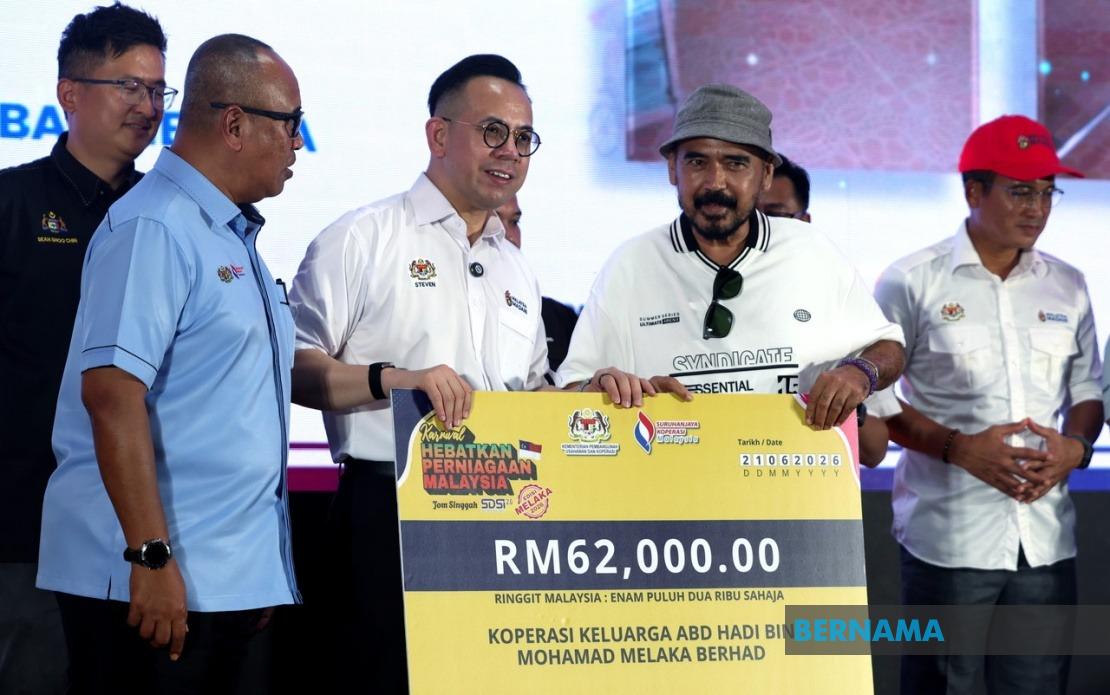
Malaysia's push to revitalise its entrepreneurial ecosystem gained significant momentum this month as the Empowering Malaysian Businesses Carnival (Karnival Hebatkan Perniagaan Malaysia 2026), commonly known as HPM 2026, wrapped up a three-day run in Melaka with impressive results. The initiative, held from June 19 to 21, successfully catalysed nearly RM8.45 million in combined business matching value and potential financing opportunities, signalling growing momentum behind government efforts to strengthen the nation's small and medium-sized enterprise sector.
The Ministry of Entrepreneur Development and Cooperatives (KUSKOP) reported that the carnival drew a substantial crowd of 70,000 visitors seeking to forge business connections, explore financing options, and discover market opportunities. Beyond mere attendance figures, the event generated tangible commercial activity, with entrepreneurs recording direct product sales totalling RM532,802.77 across the three-day period. This direct-to-consumer engagement demonstrates that the carnival functioned not solely as a networking platform but as an active marketplace where grassroots businesses could access customers and generate immediate revenue.
At the heart of the carnival's success lay its structured business matching programme, which facilitated 72 dedicated sessions connecting potential entrepreneurs with established business leaders and investors. These interactions yielded RM6.4 million in quantified business matching value, representing formal agreements, partnerships, and investment interest generated during the event. The participation of 25 entrepreneurs in these sessions underscores the carnival's effectiveness in bringing together parties with complementary business interests and growth aspirations.
Simultaneously, the financing component of the carnival proved equally compelling for Malaysia's microenterprises and SMEs. A dedicated financial interaction session attracted 55 micro, small and medium enterprises, collectively identifying RM2.05 million in potential financing opportunities. This figure is particularly significant for Malaysia's MSME sector, which has long struggled with capital accessibility—one of the four pillars of the government's ABCD strategic mission. By creating a structured environment where financial institutions could engage directly with enterprises seeking growth capital, the carnival addressed a critical pain point in Malaysia's entrepreneurial landscape.
The HPM 2026 initiative represents a coordinated approach to enterprise development emanating from KUSKOP Minister Steven Sim Chee Keong. Rather than functioning as a standalone event, the carnival operates as part of the broader Hebatkan Perniagaan Malaysia agenda, which translates as the Malaysian Business Excellence Movement. This umbrella initiative seeks to operationalise the ABCD framework—Accelerating Productivity, Bureaucracy Reduction, Capital Accessibility and Developing Market Access—which government planners view as essential to enhancing the global competitiveness of domestic enterprises.
The carnival model itself addresses a fundamental challenge facing Malaysian entrepreneurs: the fragmentation of business development support across multiple agencies and platforms. By consolidating access to financing, business matching, market intelligence, and peer networks into a single, geographically accessible event, HPM 2026 reduces the transaction costs and friction entrepreneurs typically encounter when seeking to expand. The Melaka carnival's success suggests that this integrated approach resonates with the target audience.
Looking beyond Melaka, the carnival series is expanding its geographic footprint. The third edition is scheduled for July 17 to 19 in Penang, hosted at the Penang Waterfront Convention Centre (PWCC). This progression into Penang carries strategic significance, as the northern state possesses a distinct economic profile—stronger manufacturing and high-tech sectors alongside significant tourism and services industries. Tailoring the carnival experience to regional economic strengths while maintaining the core ABCD framework will test the scalability and flexibility of the HPM model.
The RM8.45 million in generated business value should be contextualised within Malaysia's broader MSME ecosystem. According to government data, Malaysia hosts over 900,000 MSMEs contributing approximately 38 percent to gross domestic product. While the Melaka carnival's impact represents a meaningful albeit modest intervention at the national scale, its significance lies in demonstrating proof of concept for a delivery mechanism that combines government support, private sector engagement, and entrepreneur participation. If replicated successfully across the country's other regions, the HPM carnival model could channel billions of ringgit into enterprise development.
For Malaysian entrepreneurs and business owners, the Melaka results offer practical lessons about extracting value from such initiatives. The high attendance and direct sales figures suggest that preparedness matters—entrepreneurs who came equipped with marketing materials, sample products, and clear financing proposals likely secured disproportionate benefits. The distinction between those merely networking and those capturing concrete business outcomes at such events often hinges on preparation and clarity of purpose.
The initiative also reflects evolving government thinking about entrepreneurship support. Rather than relying primarily on grants, subsidies, or loan guarantees dispensed through bureaucratic channels, HPM 2026 emphasises facilitating market-based connections between entrepreneurs and investors. This philosophy aligns with international best practices in enterprise development, which increasingly favour market-driven mechanisms over top-down resource allocation. The financing figures suggest that commercial banks and non-bank financial institutions participating in the carnival identified genuine opportunities to deploy capital at acceptable risk levels.
For regional observers across Southeast Asia, the Malaysian carnival model merits attention. The region's SME sectors face remarkably similar challenges—limited access to finance, weak market linkages, productivity gaps relative to larger enterprises, and regulatory burdens that disproportionately affect smaller operators. The HPM carnival's integrated approach to addressing multiple constraints simultaneously offers a potential template for other Southeast Asian economies seeking to strengthen their entrepreneurial bases without dramatically expanding government budgets.
Looking ahead, the success metrics for future HPM carnivals will likely become more granular. Organisers may track not only immediate business matching values but also follow-up conversions—how many of the RM6.4 million in business matching value translated into actual sales, partnerships, or joint ventures within six to twelve months. Such longitudinal data would provide clearer evidence of the carnival's lasting economic impact beyond the excitement of the event itself.
The Melaka carnival demonstrates that Malaysia's entrepreneurial ecosystem retains significant latent capacity for growth. With the right platforms, access to capital, and peer engagement opportunities, thousands of small businesses stand ready to expand, innovate, and increase their contributions to the broader economy. As HPM 2026 moves to Penang and potentially beyond, the model's real test will be whether it can sustain this momentum and generate genuine, lasting economic impact for Malaysia's enterprise sector.

