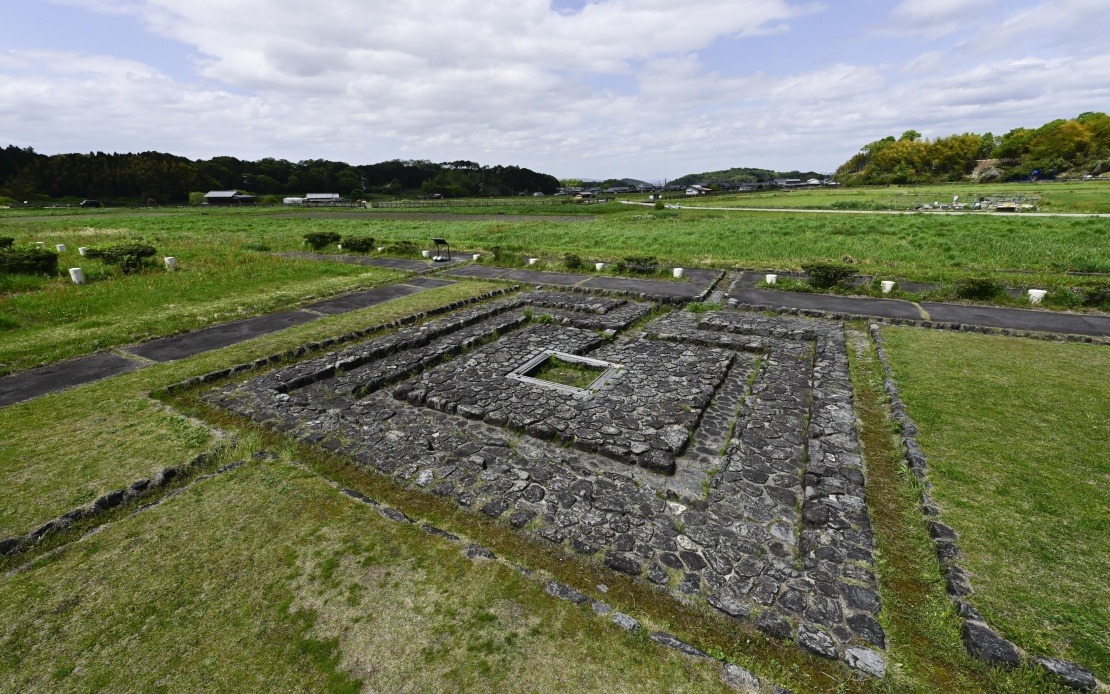
UNESCO's World Heritage Committee has formally inscribed a significant cluster of ancient Japanese archaeological sites onto the organisation's prestigious World Heritage List, a decision that elevates Japan's total designated sites to 27 and underscores the country's profound historical importance in East Asian civilisation. The designation, announced during the committee's meeting in Busan, South Korea, recognises the "Asuka-Fujiwara: Archaeological sites of Japan's Ancient Capitals and Related Properties" as possessing outstanding universal value worthy of international preservation and study.
The Asuka-Fujiwara complex comprises 19 distinct archaeological sites spanning the late sixth century through the early eighth century, a period of tremendous cultural and political transformation across East Asia. These ruins collectively document the emergence of Japan as a centralised state, capturing a critical juncture when the island nation was intensively absorbing influences from continental neighbours while forging its own distinctive political identity. The sites themselves represent tangible evidence of Japan's evolution from fragmented regional powers into a unified realm with a structured bureaucracy, documented laws, and permanent administrative centres.
Among the most significant locations within the cluster are the remains of the Asuka Palace and Fujiwara Palace, both instrumental to early state consolidation and the establishment of Japan's first genuinely centralised capitals. These palatial complexes served as administrative and ceremonial hubs where the nascent imperial court exercised authority over expanding territories. The archaeological record reveals sophisticated urban planning, architectural innovations, and administrative systems that mirrored and adapted continental models, particularly those of China's contemporaneous dynasties.
Beyond the palaces, the designated sites include burial mounds and mortuary complexes that illuminate the elite structures and burial practices of Japan's formative centuries. The Takamatsuzuka mounded tomb stands out for its remarkably well-preserved interior murals, rendered in vivid pigments that have survived fourteen centuries largely intact. These artistic representations offer rare insights into early Japanese aesthetics, celestial beliefs, and foreign cultural influences that penetrated elite circles during this transformative period.
Equally compelling is the Kitora mounded tomb, which houses the oldest known astronomical chart in East Asia. This celestial record demonstrates the sophisticated astronomical knowledge circulating among Japan's ruling classes and their engagement with broader Asian scientific traditions. The presence of such advanced observational records indicates that early Japanese elites were not mere recipients of continental knowledge but active participants in shared intellectual frameworks spanning East Asia.
The archaeological ensemble also encompasses numerous Buddhist temple remains, reflecting the profound religious transformations accompanying Japan's political centralisation. Buddhism arrived in Japan via the Korean Peninsula and China during the sixth century, and the temple ruins document how this foreign religion became integrated into state ideology and elite culture. The patronage of Buddhist institutions by imperial courts became a defining feature of Japanese governance, and these ruins preserve evidence of that critical fusion between religion and politics.
UNESCO's advisory body had recommended inscribing these sites in June following comprehensive evaluation of their archaeological significance and preservation conditions. The formal decision represents international confirmation that the Asuka-Fujiwara sites authentically document the processes through which centralised states emerge, particularly within contexts of intensive cross-cultural interaction. For the broader East Asian region, including Malaysia and other Southeast Asian nations observing Japan's historical trajectory, the inscription highlights how archaeological evidence can illuminate the complex ways that societies balance indigenous development with external influences.
With 22 cultural and five natural World Heritage sites now designated, Japan ranks among the world's leading nations in UNESCO recognition. However, the Asuka-Fujiwara inscription carries particular significance because it addresses fundamental questions about state formation and cultural synthesis that extend beyond Japan's borders. The close interactions with China and the Korean Peninsula evident in the archaeological record demonstrate that early Japanese centralisation occurred within an integrated East Asian context rather than in isolation.
For Malaysia and Southeast Asia, Japan's continued investment in archaeological preservation and international recognition carries relevant lessons. The region possesses equally rich archaeological heritage spanning millennia of state formation, maritime trade networks, and cultural exchange. The Asuka-Fujiwara example illustrates how methodical excavation, scholarly interpretation, and international partnership can transform ancient ruins into globally appreciated cultural patrimony. As Southeast Asian nations increasingly seek World Heritage recognition for their own archaeological treasures, Japan's approach to documenting state formation through material evidence offers a comparative model worth studying.
The inscription process itself reflects evolving international standards for heritage conservation and the growing recognition that understanding historical state-building processes requires engagement with physical remains, not merely written chronicles. The Asuka-Fujiwara sites yield their historical significance precisely because they remain embedded in the landscape where centuries-old administrative decisions were made and elite cultures flourished. Their preservation allows contemporary and future generations to engage directly with the material foundations of Japanese civilisation, an opportunity increasingly valued in our globalised world where cultural heritage transcends national boundaries.

