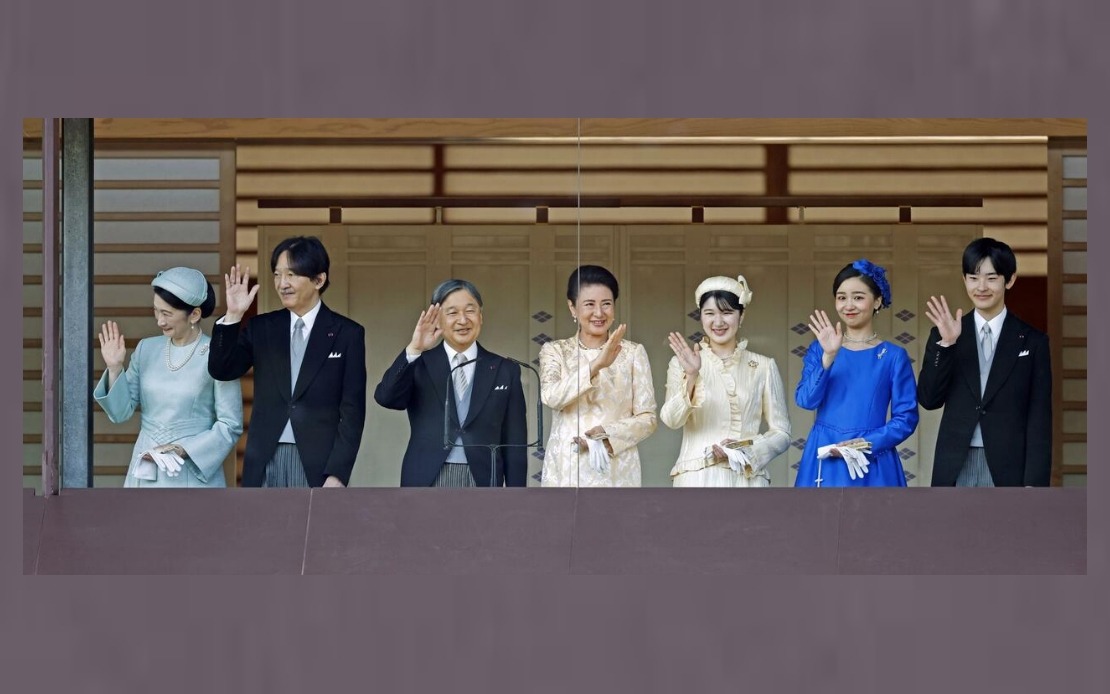
Japan's imperial household faces uncharted institutional waters following parliament's approval of sweeping amendments to the Imperial House Law, leaving those who serve the world's oldest hereditary monarchy grappling with profound questions about their roles and obligations. The legislative overhaul, enacted on Friday, represents the most significant restructuring of Japan's royal framework since 1947, yet it has simultaneously energised debate and generated apprehension throughout the palace bureaucracy and among ordinary citizens about where the changes will ultimately lead.
The reform package addresses a pressing demographic crisis within Japan's imperial circle. With the number of eligible royals now standing at just 16 members, Prime Minister Sanae Takaichi's conservative administration has prioritised reversing this alarming decline, which threatens the institution's long-term viability. The legislation introduces mechanisms previously considered taboo, permitting males aged 15 and above from eleven former imperial branch families—lineages that surrendered their royal status in 1947—to be formally adopted back into the imperial fold. Additionally, princesses will now retain their royal standing if they choose to marry commoners, a provision that loosens the historical strictures governing women in the imperial system.
Yet for the Imperial Household Agency officials tasked with supporting the monarchy's day-to-day operations, this transformation brings disquieting ambiguity. Senior agency representatives acknowledge cautious support for the initiative's underlying intent whilst simultaneously voicing substantial reservations about implementation and continuity. One official noted that while the pathway to stabilising imperial membership numbers now exists, the practical mechanics remain murky. Should adopted members eventually join the imperial family, the agency must seamlessly integrate them whilst ensuring they comprehend and embody the symbolic nature of Japan's constitutional monarchy and successfully cultivate public affection—a daunting mandate with no clear precedent.
Wider concerns about cultural and institutional coherence plague staff discussions. Imperial Household Agency personnel worry that adoptees may lack the deep understanding of what the symbolic imperial system demands, particularly regarding whether they could authentically perpetuate the wishes and values upheld by recent emperors. These anxieties reflect deeper uncertainties about whether hereditary legitimacy and institutional knowledge can be successfully transmitted through adoption rather than lineage. The comments of Asahiro Kuni, an 81-year-old member of the Kuninomiya branch family, suggest the reform's architects may face recruitment obstacles. Kuni bluntly questioned whether anyone would genuinely volunteer for adoption, characterising the prospect as lacking realism—a candid assessment that undermines official confidence.
The legislation has created particularly thorny dilemmas for the five currently unmarried female members of the imperial family, including Emperor Naruhito's daughter Princess Aiko and Crown Prince Fumihito's daughter Princess Kako. Under the amended law, these women gain the right to choose whether maintaining royal status outweighs the personal costs of marriage restrictions and public duty. Yet agency aides describe this ostensible liberty as a harsh bind. The choice to depart the imperial system means severing ties with centuries-old privilege and identity, whilst remaining means potentially forgoing ordinary romantic partnerships or facing marriages where spouses and offspring retain commoner status—a structural oddity that troubles palace staff and the women themselves.
Critics discern in these provisions evidence of a deliberate conservative strategy to perpetuate male-only imperial succession while appearing responsive to modern concerns. By creating paths for male adoption and female status retention—without opening the throne to female succession—the government technically expands flexibility whilst preserving patriarchal foundations. An aide to one female imperial family member articulated this tension candidly, observing that the government appears intent on foreclosing the possibility of female emperors or matrilineal succession, rendering the concessions to women largely ornamental.
Public sentiment, meanwhile, reveals fragmentation rather than consensus. Opinion polls consistently indicate substantial Japanese support for permitting a woman—ideally someone of Princess Aiko's generation—to eventually assume the throne. Yet the government has pursued this legislative path with minimal public consultation or educational outreach. Older citizens who encountered the imperial family during official visits, such as 76-year-old Shinichi Kokubun who met the emperor and empress during their April visit to earthquake-affected Fukushima, expressed measured optimism. Should adopted members prove capable of serving the people with the same dedication Emperor Naruhito demonstrates, Kokubun suggested, integration should proceed without friction.
Conversely, younger Japanese voices criticise the process itself as fundamentally undemocratic. Miyu Nakao, 22, challenged the government's unilateral decision-making, noting that her generation largely supports female succession based on available polling data. A 20-year-old university student in Osaka acknowledged widespread ignorance among peers about the Imperial House Law's provisions, attributing this knowledge gap to insufficient governmental explanation and public engagement. These observations underscore a generational divide in trust and legitimacy—older citizens disposed toward institutional deference encounter younger demographics demanding democratic participation in decisions affecting the nation's constitutional future.
The imperial family's ceremonial role reinforces these institutional complexities. Emperor Naruhito and Empress Masako, herself a former diplomat who navigated the transition into royal life, along with Princess Aiko, regularly undertake official visits to disaster-affected regions and foreign nations, embodying the emperor's constitutional function as state symbol. The successful integration of any adopted members would require equivalent capability and public acceptance, raising questions about whether genealogical outsiders could authentically perform these symbolic functions or merely execute them as technical duties.
Japan stands at a crossroads regarding its imperial future. The legislative revision addresses the urgent problem of dwindling royal membership but does so through measures that sidestep the more fundamental question of female succession that public opinion increasingly favours. This disconnect between elite preference and popular sentiment suggests that stability achieved through administrative adaptation may prove temporary rather than transformative. For Southeast Asian observers, Japan's struggle illuminates broader tensions between institutional conservatism and democratic modernisation within East Asia's hierarchical societies, where demographic change and evolving gender norms collide with traditions rooted in centuries of hereditary authority.

