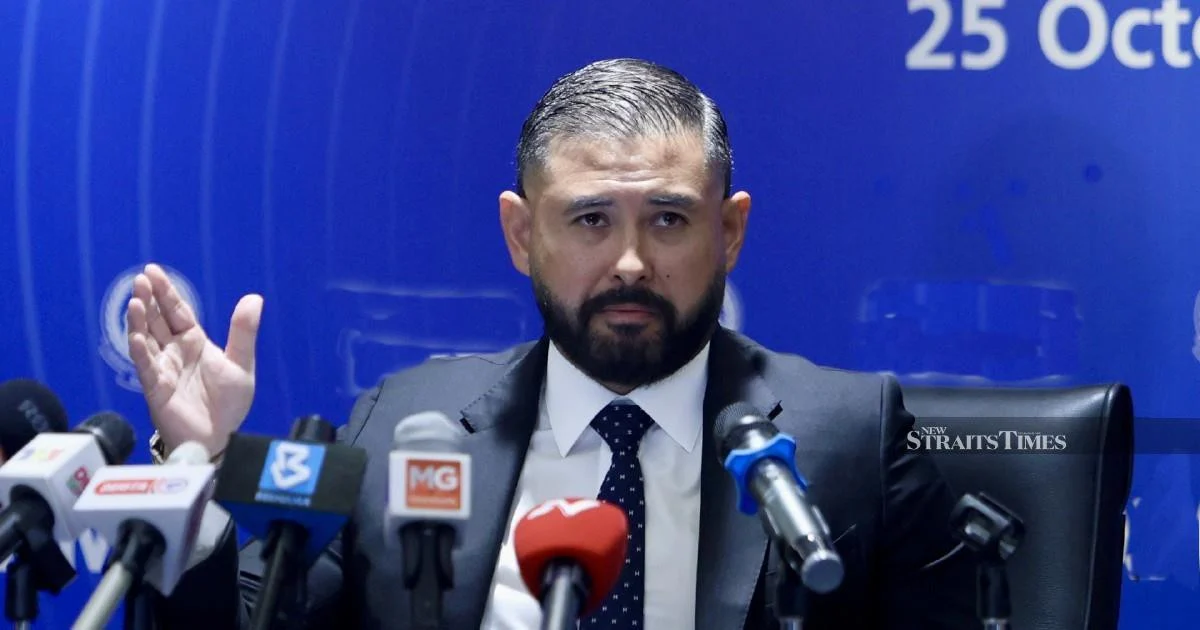
Johor's Regent Tunku Ismail Sultan Ibrahim has directly challenged the Prime Minister's recent characterization of the state's financial position, rejecting the narrative that Johor is a wealthy jurisdiction plagued by serious revenue leakages. Instead, the Regent has framed the issue as a structural problem rooted in how the federal government allocates and returns revenues to the state, suggesting that Putrajaya bears primary responsibility for any shortfall in Johor's coffers.
The dispute centres on fundamentally different interpretations of why Johor, despite its economic significance and natural resources, has not accumulated wealth proportional to its contribution to national revenue. The Prime Minister's previous remarks implied that the state government itself was the problem—that monies flowing into Johor were disappearing through inefficient administration or corruption. The Regent's rebuttal reframes this entirely, shifting accountability away from state-level mismanagement and toward federal fiscal policies and revenue-sharing mechanisms.
This tension reflects a longstanding friction point in Malaysian federalism. Johor, as one of Malaysia's most economically productive states, generates substantial tax revenue and benefits from significant natural resource extraction, including petroleum and other commodities. Yet the state's government frequently argues that it does not receive corresponding allocation from federal transfers and revenue-sharing arrangements. The Regent's intervention suggests growing frustration with this perceived imbalance and signals that Johor's leadership is willing to publicly contest the federal narrative on state finances.
The Regent's position carries particular weight in Johor's political dynamics. As the constitutional head of state, Tunku Ismail Sultan Ibrahim has demonstrated a willingness to speak on governance and administrative matters affecting the state, and his statements typically reflect the interests and grievances of the Johor government and business establishment. His direct contradiction of the Prime Minister's characterization indicates that this is not merely a technical disagreement over accounting but a substantive dispute over resource distribution and federal-state relations.
Understanding the mechanics of Malaysia's revenue system is essential context. While states benefit from certain taxes and licenses within their jurisdiction, the federal government retains control over major revenue sources—income tax, corporate tax, and customs duties. States receive federal allocations through the annual budget process, which remains largely opaque and subject to political considerations. For a resource-rich state like Johor, this arrangement has long been a source of grievance, as revenues from petroleum and other natural resources largely accrue to federal coffers rather than the producing state.
The Regent's pushback also occurs against a backdrop of broader scrutiny of Malaysian governance and accountability. Public discourse around where money goes and how it is managed has intensified, particularly following the recovery efforts from various corruption cases and fiscal irregularities at different government levels. By asserting that Johor is not the problem, the Regent is attempting to redirect attention toward federal mechanisms and decision-making processes.
From an economic perspective, the dispute has implications for how Johor can invest in infrastructure, services, and development. If the state government operates under revenue constraints due to federal allocation policies, this affects its capacity to undertake ambitious projects, maintain public facilities, and respond to constituent needs. The Regent's argument, therefore, carries practical implications for economic development and public investment in one of Malaysia's key economic regions.
The timing of this exchange also matters. Johor's political leadership has been navigating shifts at the federal level, and disputes over resource allocation often intensify during periods of government transition or political uncertainty. By publicly articulating Johor's position, the Regent is signalling that the state will not passively accept federal characterizations of its situation and is prepared to defend its interests through direct, high-level communication.
This disagreement also reflects a broader pattern in Malaysian politics where state governments increasingly assert their constitutional rights and challenge federal dominance. While Johor has traditionally had significant political influence at the national level, its leadership appears determined to ensure that this influence translates into equitable fiscal treatment. The Regent's intervention suggests that future discussions on federal-state financial relations will likely be more contentious and publicly articulated than previously.
For Malaysian and Southeast Asian observers, this dispute highlights the ongoing tensions inherent in federal systems where resource distribution remains politically sensitive. Unlike some federal arrangements where resource-producing states retain greater control over revenues from natural resources within their jurisdiction, Malaysia's framework concentrates such wealth at the centre. Johor's objections reflect frustrations shared by other producing states in the region and may eventually prompt broader discussion about federal fiscal reform.
The distinction the Regent has drawn—between internal leakages and external revenue retention—frames the issue as one of federal policy design rather than state-level incompetence. This rhetorical move is strategically important, as it positions Johor not as a state with a management problem but as one receiving inequitable treatment within the existing federal structure. How the federal government responds to this challenge will likely shape the tone of centre-state relations in the coming months.