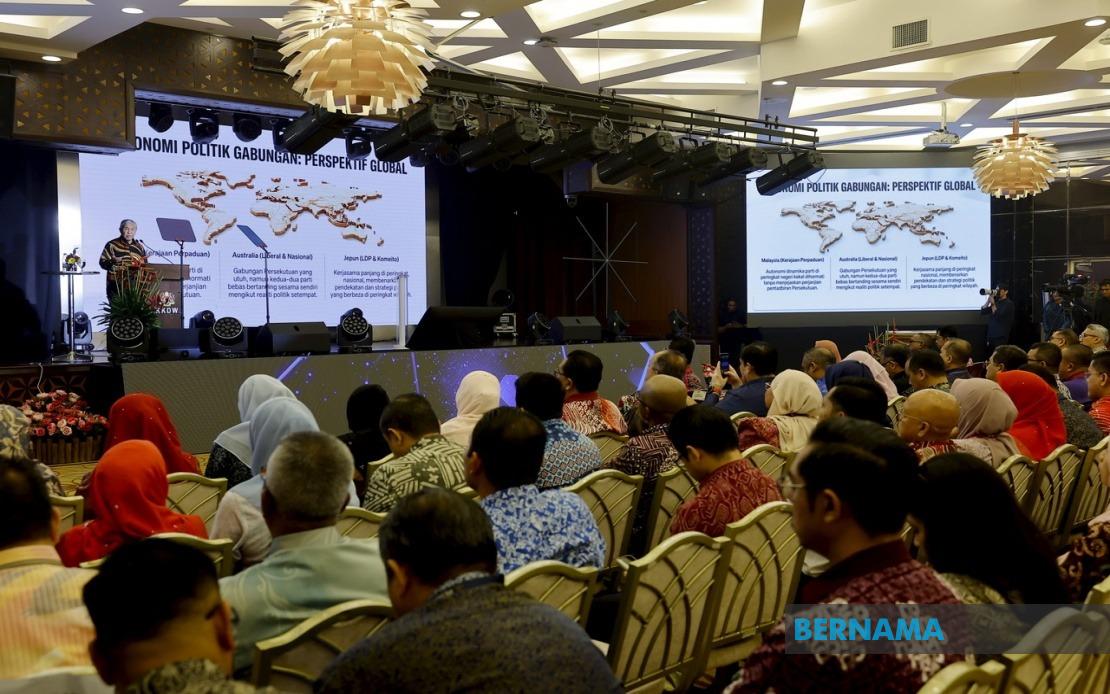
Malaysia's community development efforts are about to receive a significant boost in early childhood special education. Deputy Prime Minister Datuk Seri Dr Ahmad Zahid Hamidi announced an ambitious expansion of the Tabika Tunas Istimewa Programme, committing the Community Development Department (KEMAS) to establishing dedicated special needs kindergarten facilities in every district across the country by 2027. The initiative reflects a growing national focus on inclusive education and accessibility for children with special requirements, addressing a long-standing gap in rural and suburban provision.
The expansion represents a substantial scaling-up of current operations. KEMAS currently runs 19 special needs kindergarten classes nationwide, and the department plans to add up to 132 additional classes through a combination of new facility openings and infrastructure upgrades. This would bring the total to 151 classes, fundamentally transforming the landscape of early intervention services available to families in underserved areas. The geographical distribution targets are significant, given Malaysia's diverse settlement patterns and the previous concentration of such services in urban centres. By ensuring representation at the district level, the programme would eliminate travel barriers for many families whose children require specialised educational support.
Affordability remains a cornerstone of the initiative's design. Monthly fees will be capped at RM100, a pricing structure intended to prevent financial barriers from limiting access. This fixed fee approach is particularly important for rural and lower-income families who might otherwise forego early intervention services for their children. The subsidy implicit in this pricing structure suggests government recognition that market forces alone cannot deliver equitable access to specialised education. For Malaysian families managing special needs, predictable costs enable better financial planning and facilitate earlier engagement with developmental support systems that can significantly improve long-term outcomes.
Ahmad Zahid, who also serves as Rural and Regional Development Minister, positioned the expansion within a broader rural development philosophy. He emphasised that government performance should ultimately be measured by tangible improvements in citizens' lives and quality-of-life indicators. This framing shifts the conversation from infrastructure metrics to human impact, suggesting that future rural development initiatives will increasingly prioritise direct welfare benefits over construction achievements alone. The special needs kindergarten expansion embodies this philosophy by targeting a vulnerable population often overlooked in development planning.
The minister articulated a development approach centred on identifying transformative opportunities that can generate new economic possibilities and raise incomes in rural communities. This suggests the special needs programme sits within a larger strategic framework examining how rural development can be restructured for greater effectiveness. By improving educational outcomes for children with special needs, the government may be investing in long-term productivity and reduced dependence on social support systems. Early intervention in childhood development has demonstrated returns across health, employment, and social integration metrics in international research.
Beyond the kindergarten initiative, Ahmad Zahid outlined complementary rural development strategies. Regional Development Authorities (LKW) have been assigned performance targets requiring a Return on Assets between four and six per cent. This financial discipline requirement suggests closer scrutiny of how government-owned assets generate value. The authorities have been given 100 days to develop Asset Activation Plans, indicating urgency in optimising existing infrastructure rather than constantly creating new facilities. For Malaysia, this represents a potential shift toward more efficient deployment of development resources.
The Rural Economic Council Executive Committee (MEXCLUB) has adopted measures to strengthen the Sustainable Village Programme through a dedicated task force approach. By focusing on cooperative governance, product branding, market access, and strategic networking, the initiative addresses structural barriers that often limit the commercial viability of rural enterprises. Many rural cooperatives struggle with management capacity and market connectivity rather than production capability. Targeted assistance in these areas could unlock significant economic potential in agricultural and artisanal sectors concentrated in non-urban regions.
For Malaysian families with children requiring special education services, the expansion carries immediate practical significance. Currently, accessing quality early childhood intervention often requires urban relocation or substantial travel commitments. The district-level distribution would bring services geographically closer to where most Malaysians live. Early intervention during critical developmental windows significantly improves outcomes across speech, mobility, cognitive, and social dimensions. Delays in accessing such services often compound developmental challenges and limit later educational and employment prospects.
The programme also reflects evolving thinking about inclusive development. Rather than viewing special needs populations as separate recipients of charity, the initiative integrates them into mainstream early childhood systems. This normalisation of special education provision within standard community development infrastructure represents progress toward comprehensive social inclusion. The RM100 monthly fee structure further signals government commitment to treating special needs access as a public good rather than a premium private service.
Regionally, Malaysia's expansion of special needs early education may influence peer nations grappling with similar inclusion challenges. ASEAN countries face comparable geographic and economic barriers in delivering equitable early intervention services. If the KEMAS expansion succeeds in achieving universal district-level coverage by 2027, it would demonstrate a replicable model for expanding specialised services in developing economies with dispersed populations and limited urban concentration of expertise.
Implementation success will depend on sustained resource allocation beyond 2027 and genuine district-level commitment to programme quality. Building physical infrastructure alone proves insufficient without qualified staff, pedagogical resources, and ongoing supervision. The 132 additional classes represent substantial training and employment creation for special education professionals, suggesting coordinated workforce development planning should accompany facility expansion.
The initiative also suggests policy evolution regarding what government considers essential public provision. By guaranteeing special needs kindergarten access at controlled fees throughout Malaysia, policymakers are establishing early childhood special education as a universal entitlement rather than privilege. This principle, once established, typically expands to encompass primary and secondary education. The long-term fiscal and equity implications remain substantial, but represent conscious prioritisation of inclusive development as a national objective.

