The Ministry of Domestic Trade and Cost of Living (KPDN) has committed to thoroughly reviewing recommendations from Parliament's Public Accounts Committee concerning the governance of cooking oil price controls and subsidy distribution, particularly focusing on measures to eliminate wastage and strengthen administrative safeguards across the supply chain. Minister Datuk Armizan Mohd Ali's response to the committee's formal report, tabled in the Dewan Rakyat on July 16, signals mounting pressure to resolve inefficiencies that have long plagued Malaysia's cooking oil subsidy programme and underscores the government's determination to transform a traditionally opaque system into one underpinned by technological oversight and rigorous accountability.
At the heart of the ministry's reform agenda lies the accelerated deployment of eCOSS, or the Cooking Oil Stabilisation Scheme System, a digital platform originally conceived in 2023 to engineer precision in subsidy delivery and neutralise systemic fraud. The rollout strategy unfolds across two coordinated phases: first, the gradual embedding of the technological framework throughout the entire supply apparatus from refinery to retailer, and second, the expansion of user-facing digital tools, particularly the eCOSS Mobile Application, which commenced pilot operations in May 2025. This phased methodology reflects the government's acknowledgment that wholesale transformation of entrenched operational practices requires careful sequencing and stakeholder adaptation rather than abrupt overhaul.
The eCOSS infrastructure addresses a fundamental structural vulnerability that has rendered Malaysia's subsidy apparatus susceptible to manipulation and diversion. By replacing paper-based record-keeping with digitised transaction logs and automated compliance monitoring, the system aims to eliminate opportunities for falsification and theft along the supply chain. Minister Armizan characterised the transition as a risk-management imperative, framing technological modernisation not merely as administrative convenience but as a strategic intervention necessary to preserve the integrity of targeted assistance reaching genuinely eligible recipients. The system's design reflects lessons learned from decades of subsidy programmes that, while well-intentioned, developed significant leakage points where supplies destined for domestic consumers were diverted to informal markets or foreign buyers.
A crucial enhancement involves the planned integration of Malaysia's forthcoming identity card generation, issued by the National Registration Department, into the purchasing authentication mechanism. Under this arrangement, consumers will utilise QR code scanning to verify eligibility at the point of sale, effectively creating a biometric-linked transaction record. This technological evolution serves dual purposes: it enables the ministry to segregate subsidised purchasing patterns by citizenship status, thereby preventing foreign nationals from claiming benefits intended for Malaysian residents, whilst simultaneously generating granular data on subsidy distribution that permits real-time monitoring of compliance. The measure reflects growing recognition that universal price caps, despite their superficial equity, inadvertently subsidise non-residents and divert resources from the domestic population they were designed to support.
The PAC investigation uncovered concerning patterns regarding the concentration of cooking oil refining capacity among foreign-owned enterprises, a structural imbalance that the committee deemed incompatible with resilient domestic supply security and competitive market functioning. Rather than imposing immediate quota redistribution, KPDN is pursuing graduated intervention mechanisms intended to encourage repacking companies to source supplies from domestically owned refineries. These measures encompass quota reassignment requirements and structured business matchmaking between local refiners and repackers, acknowledging the practical constraint that abrupt disruption of established supply relationships could trigger shortages or price volatility. The gradual approach signals the ministry's recognition that market reformation requires incentivising behavioural change among commercial actors rather than relying on punitive regulation alone.
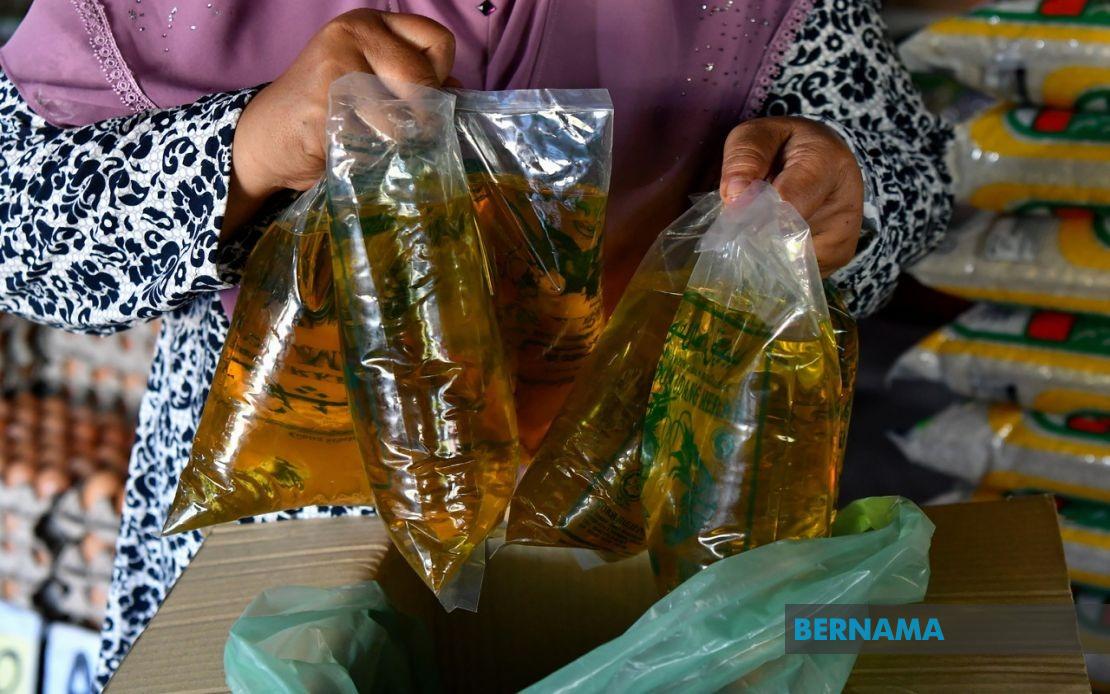
Under the enhanced framework, KPDN is implementing complementary enforcement provisions aimed at preventing leakage through retail channels typically exploited by subsidy arbitrage. The prohibition on selling one-kilogramme packets of subsidised cooking oil to non-citizens addresses a specific vulnerability: smaller package sizes traditionally favoured by foreign workers and visitors represented a significant aggregate diversion pathway that regulation had previously overlooked. Concurrently, the integration of eCOSS with the Sumbangan Asas Rahmah (SARA) system, the government's comprehensive assistance programme, enables cross-system verification that prevents duplicative subsidy claims and ensures internal consistency across social safety net mechanisms. These parallel initiatives demonstrate that subsidy leakage typically requires multi-dimensional remediation rather than single-point interventions.
For Malaysian consumers, these developments carry mixed implications. The accelerated deployment of eCOSS potentially strengthens programme sustainability by reducing wastage, theoretically permitting the government to maintain or expand subsidy coverage despite fiscal pressures that might otherwise necessitate reductions. However, the enhanced authentication requirements introduce minor friction into routine purchasing transactions, as consumers must align their shopping patterns with digital system functionality and administrative schedules. Regional policymakers across Southeast Asia, many confronting similar subsidy administration challenges within constrained fiscal environments, will scrutinise Malaysia's technological approach as a potential template, particularly given the region's varied digital infrastructure maturity and varying institutional capacity to implement sophisticated monitoring systems.
Minister Armizan emphasised that the ministry's reform trajectory reflects multiple informational inputs, including internal compliance audits, the National Audit Department's July 2025 examination, and the PAC's parliamentary inquiry. This multi-source verification approach suggests that the identified deficiencies enjoy broad institutional recognition, potentially strengthening political consensus for implementing unpopular measures. The minister's explicit commitment to enforcement against refinery operators, repackers, wholesalers, retailers, and other supply chain participants signals intent to move beyond administrative restructuring towards active prosecution of violations, though the efficacy of such enforcement remains contingent upon investigative resources and prosecutorial capacity.
The cooking oil subsidy programme illustrates broader governance challenges confronting Malaysia's social protection architecture. Designed to shield lower-income households from global commodity price volatility, the scheme has evolved into a complex administrative apparatus encompassing multiple institutions, supply chains spanning several commercial actors, and myriad compliance obligations. The PAC investigation and subsequent ministerial response demonstrate that even in an era of sophisticated information technology, ensuring that public resources reach genuinely intended beneficiaries whilst preventing fraudulent claims and commercial diversion requires sustained political commitment and institutional vigilance. The eCOSS rollout represents an attempt to employ technology as a substitute for institutional weakness, yet technology alone cannot overcome fundamental governance deficits without concurrent strengthening of enforcement apparatus and organisational accountability.
Looking forward, the success of KPDN's reform agenda will prove measurable through both operational metrics—leakage reduction, transaction processing efficiency, system uptime—and outcomes affecting actual subsidy beneficiaries. Monitoring whether the targeted assistance component of the enhanced scheme genuinely reaches lower-income households at sustainable cost will ultimately determine whether the technological and administrative interventions represent meaningful governance improvement or merely procedural complication. The ministry's openness to continued stakeholder feedback and parliamentary oversight suggests recognition that subsidy administration remains inherently contentious and demands ongoing calibration as economic conditions, population demographics, and global commodity markets evolve.

