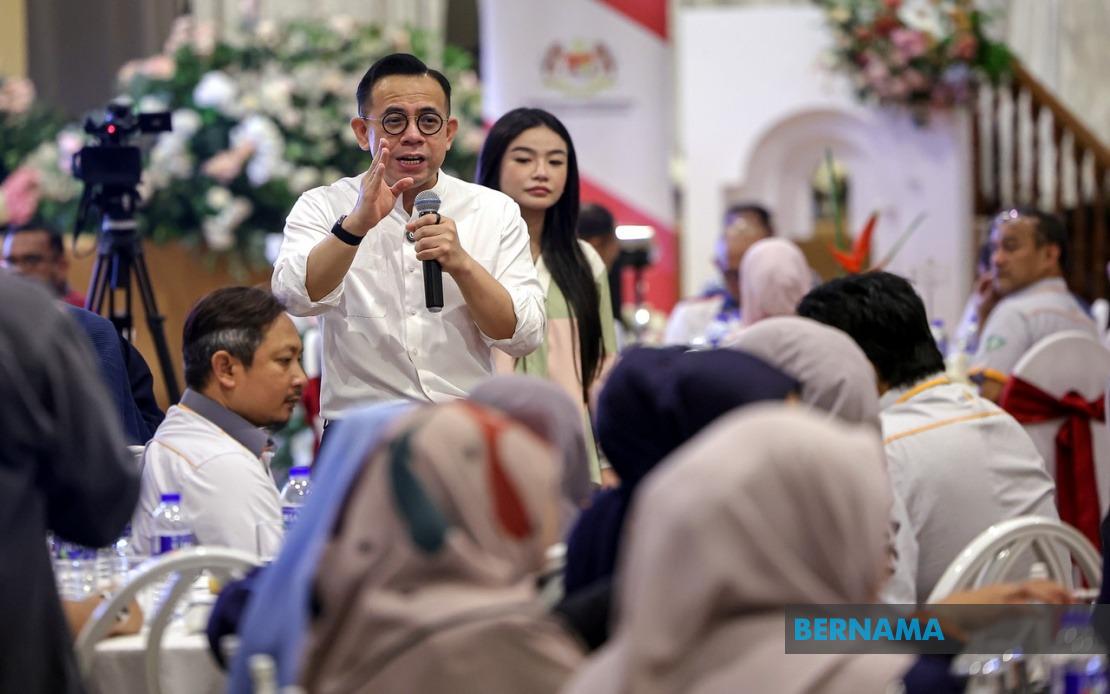
The Ministry of Entrepreneur Development and Cooperatives (KUSKOP) has mobilised nearly RM7 billion in funding during the opening six months of 2026, channelling support to over 213,000 micro, small and medium enterprises across Malaysia. The disbursements mark a significant milestone in the Government's commitment to sustain entrepreneurial activity throughout the nation during a period of persistent global economic uncertainty. Minister Steven Sim disclosed these figures during a gathering of KUSKOP staff and partner agencies in Seremban, emphasising that the initiative reflects sustained institutional focus on strengthening Malaysia's fragmented business ecosystem.
The Power Up 10K programme operates as the overarching framework for these allocations, with funding distributed through multiple specialised support channels and financing instruments tailored to different entrepreneurial needs. The initiative has been designed with an ambitious annual target of RM15 billion in total disbursements, positioning 2026 as a landmark year for entrepreneurial financing at the federal level. This trajectory suggests KUSKOP expects to reach the second half-year target of approximately RM8 billion, contingent on maintaining current deployment velocity and ensuring effective uptake across all demographic and sectoral categories of eligible applicants.
Within Negeri Sembilan specifically, the Power Up programme has channelled RM345 million to more than 6,600 local entrepreneurs during the same period. This state-level performance underscores how central government initiatives translate into tangible support for provincial business communities. The Negeri Sembilan figures reveal an average disbursement per enterprise of approximately RM52,000, suggesting that funding is reaching businesses at the micro and small-enterprise tier rather than concentrating exclusively among larger operations. Sim characterised this distribution pattern as evidence that grassroots support mechanisms are functioning effectively, validating the Government's investment in decentralised delivery infrastructure.
Beyond raw disbursement numbers, KUSKOP has adopted a broader strategic reorientation to enhance how its constituent agencies interact with the entrepreneurial constituency. The ministry is repositioning all subordinate bodies as proactive frontline services rather than passive repositories of information awaiting entrepreneur inquiries. This philosophical shift acknowledges persistent awareness gaps within Malaysia's business community regarding available support schemes, a longstanding structural challenge in connecting potential beneficiaries with applicable programmes. By tasking agencies with accelerated outreach and promotional responsibilities, KUSKOP aims to reduce the informational asymmetries that historically prevent qualifying enterprises from accessing available resources.
A cornerstone of this new operational direction involves expanding the pool of business development resources accessible to entrepreneurs while simultaneously streamlining the efficiency of public service delivery mechanisms. Sim placed particular emphasis on minimising compliance costs imposed through regulatory frameworks and local government requirements. The underlying logic reflects recognition that whilst external economic pressures—such as oil price volatility—remain beyond governmental control, the burden of domestic compliance represents a discretionary cost burden that policymakers can meaningfully address. By reducing unnecessary regulatory friction, the Government seeks to preserve entrepreneurial capital that might otherwise be consumed through administrative overhead.
The minister's remarks regarding competitive acceleration among state-level agencies signal an expectation that regional KUSKOP offices and affiliated bodies will intensify their performance in fund disbursement velocity. Rather than maintaining passive administrative postures, these entities are being encouraged to engage in vigorous competition designed to expand service coverage and reach previously unengaged entrepreneur cohorts. This competitive framework operates on the assumption that performance pressure generates institutional dynamism, compelling agencies to innovate in outreach methodologies and streamline internal processing procedures.
Sim explicitly urged state agencies to abandon reactive engagement models in favour of proactive market development strategies. Rather than waiting for entrepreneurs to identify available schemes and submit applications independently, KUSKOP representatives should mount intensive roadshow campaigns, leverage digital platforms including social media channels, and conduct comprehensive physical outreach operations ensuring potential beneficiaries understand what support mechanisms exist and where to access them. This prescriptive guidance reflects awareness that simple programme availability does not automatically translate into utilisation; effective deployment requires sustained institutional effort to overcome informational barriers and build awareness among dispersed entrepreneurial populations.
For Malaysian and Southeast Asian business observers, the RM7 billion deployment represents meaningful evidence of governmental commitment to MSME support during a period when inflationary pressures, supply chain volatility, and geopolitical uncertainties create persistent headwinds for small enterprises. The scale of this deployment exceeds most regional peer initiatives, positioning Malaysia's support framework as comparatively comprehensive within ASEAN. However, the emphasis on compliance cost reduction and improved service delivery efficiency suggests the Government recognises that financial transfers alone prove insufficient; institutional performance quality and regulatory burden reduction constitute equally critical components of effective entrepreneurial support policy.
The Power Up 10K initiative's trajectory toward a RM15 billion annual disbursement target indicates this represents not an extraordinary pandemic-response initiative but rather a sustained commitment embedded within Malaysia's development strategy architecture. If KUSKOP maintains current deployment momentum and successfully reaches its full-year target, the programme will constitute one of the largest single-ministry entrepreneurial financing operations in recent Malaysian history. Success hinges critically on ensuring that funding reaches genuinely viable enterprises capable of generating sustainable economic activity rather than subsidising marginal operations or duplicating lending that commercial financial institutions would otherwise provide.
The targeting of over 213,000 enterprises nationwide reveals that KUSKOP has adopted an inclusive approach prioritising breadth of coverage across Malaysia's entrepreneurial base rather than concentrating resources among a narrower tier of larger or more politically connected businesses. This democratic distribution philosophy aligns with broader government objectives to ensure inclusive economic development patterns. Negeri Sembilan's performance metrics suggest that regional implementation capacity varies across states, implying that central coordination must account for varying institutional capabilities when projecting future disbursement schedules and designing accountability frameworks.
Looking forward, the success of these entrepreneurial support initiatives will be evaluated not merely through disbursement metrics but through tracking whether recipient enterprises subsequently demonstrate improved viability, revenue stability, and employment generation. KUSKOP should consider implementing systematic monitoring mechanisms to assess how Power Up funding translates into observable business performance improvements, thereby informing future programme design refinements. Additionally, understanding which enterprise categories and sectoral groups derive greatest benefit from available schemes would enable more precise targeting of future allocations toward demonstrably high-impact uses of public resources.

