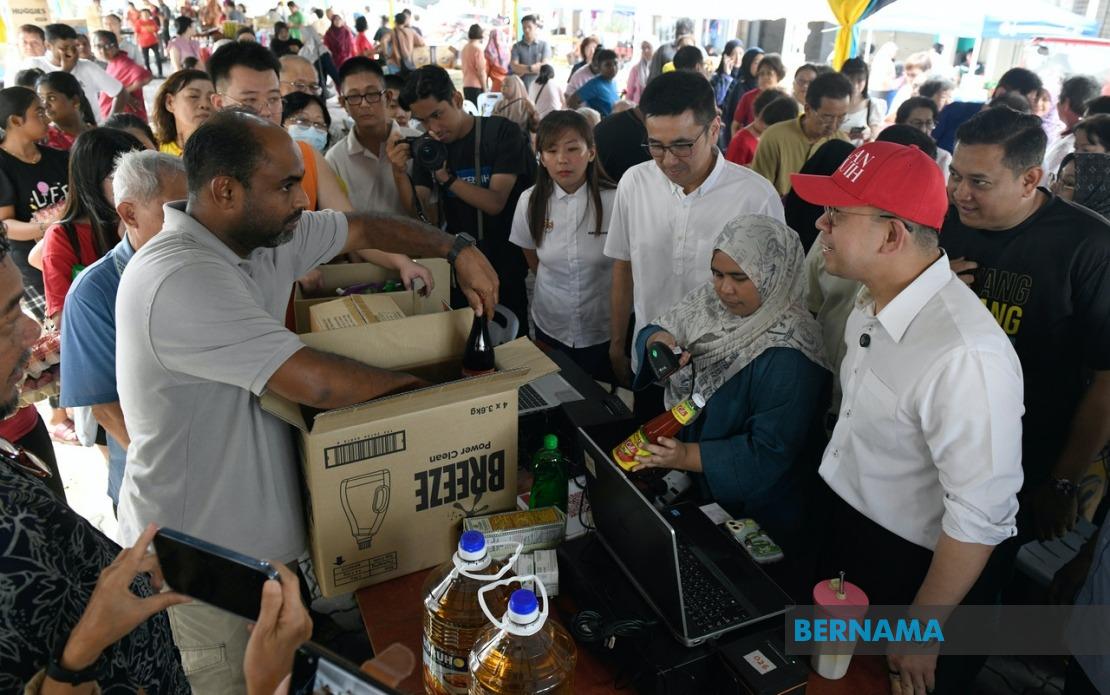
Malaysia's Ministry of Entrepreneur and Cooperatives Development (KUSKOP) is stepping up its commitment to strengthen micro, small and medium enterprises and cooperative networks across the wholesale and retail trade sector, recognising the lucrative expansion opportunities emerging within these segments. Speaking at the Jualan MADANI KUSKOP programme in the Jawi state constituency here today, Minister Steven Sim Chee Keong outlined how the ministry intends to deploy coordinated initiatives designed to nurture local entrepreneurs and enable them to capture a meaningful slice of the sector's expanding market.
Data released by the Department of Statistics Malaysia reveals compelling growth trajectories that underscore the commercial potential available to well-positioned small and medium-sized traders. The wholesale and retail trade sector recorded sales valued at nearly RM175 billion in April 2026, representing a robust year-on-year surge of 15.3 per cent. This acceleration reflects deepening domestic consumption patterns and signals confidence within Malaysia's consumer economy, even as headwinds from international trade tensions persist elsewhere globally. The cumulative effect of government price-stabilisation measures, rising worker incomes, and falling cost-of-living pressures has catalysed this upward momentum, creating conditions favourable for grassroots entrepreneurs to expand operations and establish competitive footing.
Sim, who represents Bukit Mertajam as a Member of Parliament, underscored that Malaysia's resilience in the face of global economic fragmentation represents a strategic advantage for local businesses. Although the nation operates an open economy inherently vulnerable to external shocks—including tariff disputes, trade confrontations, and geopolitical instability—coordinated action between government bodies, the private sector, and community stakeholders has insulated domestic commerce from severe disruption. This protective ecosystem has preserved momentum in local retail and wholesale activities, thereby sustaining demand channels that smaller operators depend upon for survival and growth. The minister framed KUSKOP's expanding programme portfolio as integral to deepening penetration of these opportunities among constituencies traditionally underrepresented in formal commercial networks.
The Jualan MADANI KUSKOP initiative exemplifies the ministry's operational philosophy of engaging entrepreneurs at ground level rather than relying solely on centralised bureaucratic structures. By directly convening MSMEs, cooperatives, and solo proprietors, the programme creates forums for knowledge exchange, market linkage, and capacity-building that address practical challenges small operators encounter when attempting to scale operations or diversify revenue streams. Such engagement generates intelligence about on-the-ground constraints—from access to affordable credit and logistics infrastructure to supplier networks and consumer preference data—that inform refinement of subsequent policy initiatives. The visibility of ministerial presence at such events also signals government endorsement of small-enterprise participation in the broader economy, potentially encouraging reluctant entrepreneurs to formalise operations or pursue registration with regulatory authorities.
For Malaysian small traders, the implications extend beyond immediate access to government-sponsored support schemes. The documented 15.3 per cent sectoral growth creates a tailwind that may offset competitive pressures emanating from larger retail chains and e-commerce platforms, which have captured significant market share over the past decade. Smaller operators positioned in locality-specific niches, equipped with personalised customer relationships and flexible responsiveness to localised demand, can exploit this expansion by diversifying product lines, extending trading hours, or investing in modest technology upgrades that enhance customer convenience without requiring prohibitive capital outlays. KUSKOP's programmes potentially furnish the catalytic support—whether financial, informational, or logistical—that permits otherwise capable entrepreneurs to realise such improvements.
Sim reiterated that equitable distribution of economic gains remains a foundational government objective, particularly regarding the role MSMEs and cooperatives play as wealth generators and employment providers throughout Malaysian communities. By concentrating ministerial effort on enabling small-business participation in high-growth sectors, policymakers simultaneously pursue multiple objectives: strengthening retail competition, preventing market concentration among large conglomerates, generating sustainable livelihoods across regions, and fortifying social stability by broadening stakeholder participation in prosperity narratives. The expansion of JMK-type initiatives across additional constituencies reflects recognition that geographic distribution of opportunity matters politically and economically, ensuring that growth benefits accrue beyond major urban centres where large retailers already command disproportionate resources.
The ministry's strategic emphasis on cooperatives as institutional vehicles for collective enterprise offers particular relevance in the Malaysian context, where cooperative membership remains prevalent, especially among rural and semi-urban populations. Cooperatives function as democratised organisations where member-owners share decision-making authority and profit distribution, distinguishing them from purely commercial entities oriented toward external shareholder returns. By channelling support through cooperative frameworks, KUSKOP leverages existing social bonds and trust relationships that facilitate collective purchasing power, shared storage and logistics infrastructure, and pooled marketing efforts—each of which amplifies bargaining position and operational efficiency relative to isolated individual traders.
Regional perspectives merit consideration as well. Southeast Asian economies face comparable pressures around inclusive growth, formalisation of informal-sector enterprises, and integration of peripheral communities into expanding urban and cross-border commercial networks. Malaysia's deliberate investment in MSME and cooperative support mechanisms provides a demonstrable model that neighbouring jurisdictions may adapt or learn from, potentially fostering regional exchange regarding best practices in small-business facilitation. Should KUSKOP's programmes generate measurable productivity gains, employment creation, or income increases among participating entrepreneurs, such evidence could inform policy discussions across the Association of Southeast Asian Nations regarding optimal approaches to balancing large-scale commercial activity with grassroots economic participation.
Looking forward, sustained momentum in the wholesale and retail sector will likely depend on maintaining the policy conditions that Sim referenced—namely, controlled inflation, reasonable wage growth, and strategic government intervention in critical supply chains. KUSKOP's continued presence in communities, combined with supportive regulatory environments and potential access to affordable financing, may determine whether the current growth phase translates into durable institutional strengthening of Malaysia's small-business ecosystem or represents merely a cyclical expansion subsequently undermined by external shocks or policy reversals. The ministry's commitment to ongoing grassroots engagement suggests confidence that current trajectory will persist, though vigilance regarding emerging competitive threats and changing consumer behaviours will remain essential.

