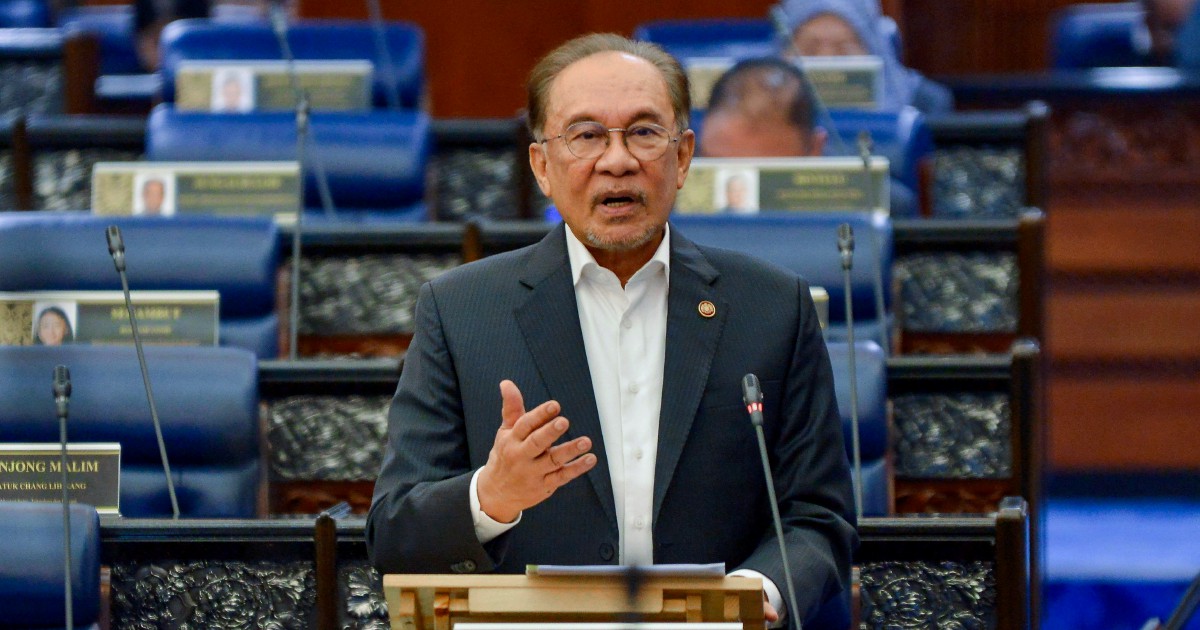
Malaysia's state pension system faces a significant financing gap, with the Retirement Fund Incorporated (KWAP) unable to generate sufficient investment returns to cover the government's swelling pension obligations. Prime Minister Datuk Seri Anwar Ibrahim highlighted this imbalance, noting that despite KWAP's RM12.9 billion in investment earnings, the figure falls substantially short of the nearly RM45 billion the government must allocate annually to pay civil service pensions.
The disparity underscores a structural challenge facing the nation's retirement systems as the civil service ages and longevity increases, placing mounting pressure on the federal budget. KWAP, which manages investments for the government's employees' pension scheme, has historically delivered respectable returns, yet the sheer scale of pension commitments—accumulated through decades of employment contracts and benefit promises—has outpaced even solid investment performance. This dynamic reflects a broader regional and global concern as ageing workforces strain public finances in increasingly mature economies.
The government's pension bill has expanded dramatically as the civil service has grown and retirement benefits have become more generous over successive administrations. Unlike countries that have shifted towards contributory or hybrid pension systems, Malaysia's government employees remain covered primarily through defined-benefit arrangements where the state guarantees fixed pension levels regardless of market returns. This arrangement, while providing security for retirees, creates a long-term fiscal obligation that grows each year as more employees retire and pensioners live longer.
Anwar's candid acknowledgement of this mismatch signals recognition within the Cabinet of the need to address unsustainable spending trajectories. The government has increasingly relied on general revenue to bridge the gap between pension payouts and dedicated fund earnings, effectively subsidising civil service retirements from money that might otherwise fund infrastructure, healthcare, or education. For taxpayers, this means a portion of income taxes goes directly towards funding pensions rather than being invested in productive national assets.
The situation reflects global pension trends where demographic shifts have created liabilities exceeding expected investment returns. In Southeast Asia, countries including Thailand, Indonesia, and the Philippines face similar pressures as populations age and life expectancy extends. Malaysia's problem is compounded by the constitutional commitment to protect civil servants' retirement benefits, limiting the government's ability to restructure terms without facing legal challenges or widespread opposition from public sector unions.
Investment returns, while respectable, cannot be the sole solution to this structural imbalance. Even if KWAP could increase returns to 8 or 9 percent annually—approaching or matching historical equity market performance—it would still cover only a portion of the RM45 billion commitment. Mathematical reality demands that either contribution rates must increase, benefit structures must adjust, or the proportion of general government revenue allocated to pensions must expand further, squeezing other budget categories.
Possible policy responses remain politically sensitive. Raising employee and employer contributions to the pension system could dampen private-sector competitiveness and reduce take-home pay for public workers already concerned about cost-of-living pressures. Adjusting retirement ages upward faces union opposition and social resistance, particularly among those engaged in physically demanding roles. Reducing future benefit accrual rates would break implicit promises made to current workers and retirees. For Malaysian policymakers, each option carries electoral and labour-relations consequences.
The challenge extends beyond simple budget mathematics. Malaysia's pension commitments reflect competing policy goals: the desire to attract talented civil servants through competitive compensation, the pledge to honour promises made to existing workers and retirees, and the imperative to maintain fiscal sustainability. As birth rates decline and retirement years lengthen, these objectives increasingly conflict. Without intervention, pension spending will consume an ever-larger share of the federal budget, crowding out investments in future growth and development.
The government's transparency about this gap, though uncomfortable, enables informed debate about potential solutions. Regional peers and international observers watch closely, as Malaysia's approach to pension reform could set precedents for other developing Asian economies grappling with similar pressures. Countries that confront these challenges early, implementing gradual reforms, typically avoid more disruptive overhauls later.
Malaysia's policymakers must balance immediate fiscal realities with long-term commitments. The RM12.9 billion in KWAP earnings represents genuine investment success, yet the underlying mathematics of paying RM45 billion annually reveals that investment performance alone cannot solve the problem. The gap illuminates a broader truth: ageing populations and fixed-benefit pension systems require comprehensive policy responses, not merely hope that markets will deliver outsized returns. Whether Malaysia moves proactively or reactively will shape retirement security for future generations and the nation's overall fiscal health.

