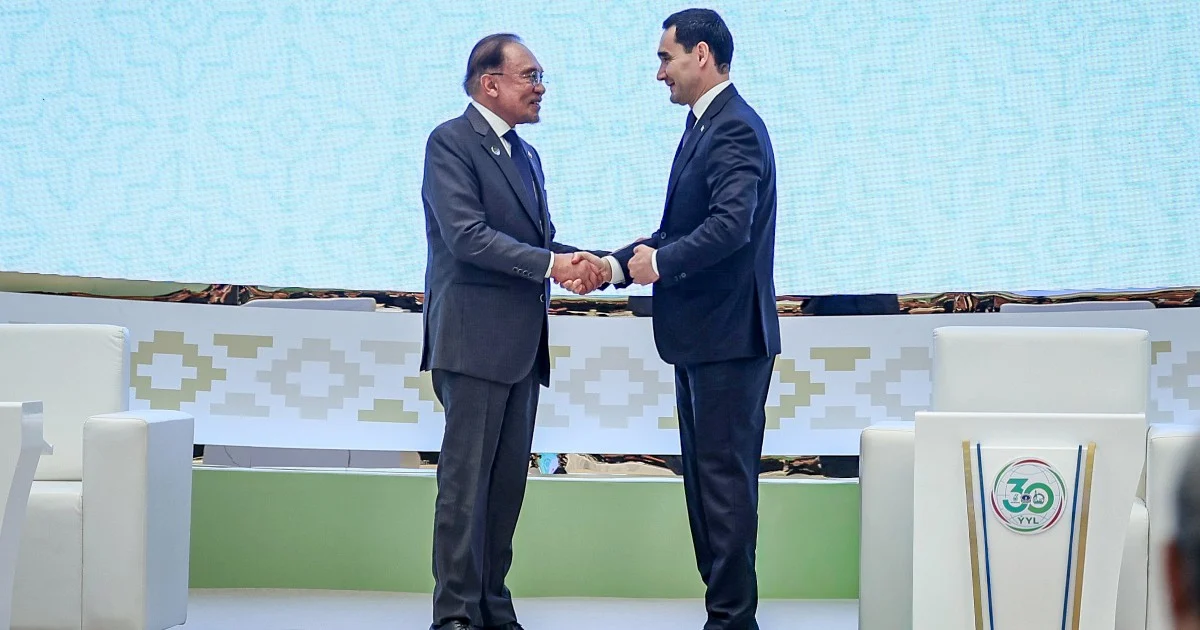
Malaysia and Turkmenistan have committed to broadening their economic and strategic partnership, with both nations identifying the energy sector as a priority area for collaboration. The agreement emerged following Prime Minister Datuk Seri Anwar Ibrahim's official visit to the Central Asian nation, marking a significant diplomatic engagement that underscores Malaysia's growing engagement with energy-rich nations beyond its traditional markets.
The visit represents a strategic pivot for Malaysia's foreign economic policy, particularly as the country seeks to diversify its energy partnerships and secure long-term supply relationships. Turkmenistan, one of the world's largest holders of natural gas reserves, represents an increasingly important partner for nations seeking to reduce dependence on traditional Middle Eastern suppliers. For Malaysia, which remains energy-intensive across its manufacturing and petrochemical sectors, establishing deeper ties with Turkmen authorities opens pathways to potentially more stable and diverse energy procurement arrangements.
Beyond the energy sector, both countries have outlined ambitious plans to expand cooperation across multiple economic domains. Trade and investment frameworks will be strengthened to facilitate increased commercial activity between Malaysian and Turkmen businesses, potentially opening new markets for Malaysian goods and services in Central Asia. The emphasis on bilateral commerce suggests both nations recognize untapped economic potential in their relationship, with Malaysia's expertise in financial services, technology, and manufacturing potentially offering valuable opportunities for Turkmenistan's economic diversification agenda.
Transportation collaboration emerged as another key pillar of the expanded partnership. Given Turkmenistan's geographical position as a bridge between Europe, Asia, and the Middle East, improved transportation links—whether through air connectivity, port facilities, or logistics infrastructure—could significantly enhance bilateral trade flows. Malaysia's established position as a regional logistics hub in Southeast Asia creates natural synergies with Turkmenistan's strategic location along historic Silk Road trading routes. Such collaboration might include commercial aviation agreements, shipping arrangements, or joint investment in transport infrastructure.
Educational exchanges form an integral component of the deepened relationship. Malaysia's universities, particularly those with strong engineering and technology programs, could attract more Turkmen students seeking quality higher education in the region. Conversely, Malaysian academic institutions might benefit from collaborative research initiatives with Turkmen universities, particularly in energy technology and resource management. These exchanges typically generate long-term professional networks that reinforce political and business relationships between nations.
Technology cooperation will likely focus on areas where Malaysia possesses competitive advantages, including digital innovation, renewable energy solutions, and industrial automation. As Turkmenistan navigates its own economic modernization, Malaysian technology companies and research institutions could play meaningful roles in facilitating knowledge transfer and capability development. This dimension of cooperation reflects broader Southeast Asian engagement with Central Asia, where technology-driven solutions address shared development challenges.
From a geopolitical perspective, Malaysia's engagement with Turkmenistan signals a broadening of the country's economic diplomacy beyond traditional Southeast Asian and Middle Eastern partners. Prime Minister Anwar Ibrahim has consistently advocated for strengthened South-South cooperation and diversified international partnerships, and this visit exemplifies that strategic orientation. Turkmenistan's non-aligned foreign policy stance aligns with Malaysia's independent approach to international relations, creating common ground for partnership.
The timing of the visit carries additional significance in the context of Malaysia's recent efforts to strengthen relationships with Central Asian nations. As global energy markets experience volatility and geopolitical competition intensifies, establishing partnerships with stable, resource-rich nations becomes increasingly valuable. Turkmenistan's vast natural gas reserves, among the world's fourth-largest, represent a potentially transformative resource for supporting Malaysia's industrial growth and energy security objectives over the coming decades.
For Malaysian businesses, the expanded framework creates opportunities to explore ventures in Turkmenistan's energy sector, potentially through joint ventures or technology partnerships. Malaysian engineering firms might bid on infrastructure projects, while energy companies could explore participation in upstream or downstream operations. Investment protections and dispute resolution mechanisms established through bilateral agreements will provide greater certainty for Malaysian enterprises exploring opportunities in this relatively unfamiliar market.
The partnership announcement also carries implications for Southeast Asian regional dynamics. As ASEAN nations individually pursue strategic partnerships with major powers and resource-rich regions, Malaysia's approach demonstrates how medium-sized countries can leverage diplomatic engagement to advance economic interests. The Turkmenistan visit contributes to Malaysia's broader strategy of positioning itself as a bridge between Southeast Asia, Central Asia, the Middle East, and beyond.
Looking forward, success in deepening Malaysia-Turkmenistan cooperation will depend on translating these high-level commitments into concrete commercial arrangements and institutional frameworks. Joint commissions, working groups, and regular ministerial dialogues will likely be established to monitor progress and resolve implementation challenges. The energy sector will undoubtedly command immediate attention, but the breadth of the partnership—spanning education, technology, and transportation—suggests both nations recognize the value of multifaceted engagement.
For Malaysian policymakers, the Turkmenistan engagement reflects confidence that regional leadership extends beyond immediate Southeast Asian concerns. By actively cultivating partnerships with Central Asian nations, Malaysia demonstrates strategic vision aligned with economic diversification and energy security imperatives that will shape national development over the next decade.