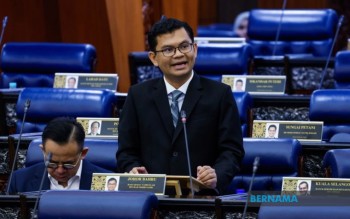
The Malaysian government is pursuing an ambitious 120-point strategy to shield the economy from persistent global supply chain disruptions, Economy Minister Akmal Nasrullah Mohd Nasir disclosed during parliamentary proceedings on June 29. The decisions, formulated by the National Economic Action Council (MTEN), represent a comprehensive approach designed to stabilise domestic markets while supporting vulnerable sectors and populations. According to the minister's briefing to Members of Parliament in the Dewan Rakyat, this multi-layered intervention framework reflects official acknowledgement that supply chain normalisation will require years rather than months to achieve.
The government has already completed 27 of its planned interventions, demonstrating measurable progress on the crisis response agenda. The remaining 93 decisions are currently under implementation across various agencies and departments, signalling sustained commitment to the recovery effort. This phased rollout approach allows authorities to monitor effectiveness of each intervention whilst adjusting tactics based on real-time economic data and emerging challenges. The breadth of the programme underscores the complexity of managing supply disruptions that span multiple sectors—from energy and raw materials to manufacturing inputs and consumer goods.
The scope of intervention extends beyond immediate crisis management to encompassing structural economic protection. Government measures specifically target micro, small and medium enterprises, which form the backbone of Malaysia's economy but lack the reserves and diversification of larger corporations to weather extended supply shocks. Simultaneously, the administration is implementing direct relief mechanisms intended to cushion household purchasing power and consumption patterns, recognising that demand-side stability is essential for economic recovery. These interventions also prioritise ensuring continuity of essential goods supply, acknowledging that shortages of critical items can trigger broader economic and social instability.
Official projections suggest that energy markets—a critical variable in global supply chains—will experience gradual stabilisation from the third quarter of 2026, though this timeline remains contingent on sustained geopolitical stability and restoration of major international trade routes. The minister cautioned that uncertainty surrounding energy pricing and availability will likely persist for another one to two years beyond that point, indicating a protracted adjustment period for businesses and consumers alike. This extended timeline explains the government's decision to sustain intervention measures throughout what could be a multi-year recovery phase rather than attempting temporary fixes.
Minister Akmal Nasrullah emphasised that the government's approach rests on realistic assessment rather than optimistic projections about swift global normalisation. Unlike approaches that assume rapid resolution of supply constraints, Malaysian policy makers are operating under the assumption that disruptions will remain a feature of the economic landscape for the foreseeable future. This pragmatic stance informs the decision to maintain continuous monitoring and adaptive intervention rather than withdrawing support prematurely. The government's willingness to acknowledge uncertainty about timelines whilst proceeding with structured responses distinguishes this approach from both complacency and panic-driven policy making.
The National Economic Action Council serves as the coordinating mechanism for tracking implementation progress and ensuring agencies work in concert rather than at cross-purposes. This institutional arrangement allows the government to maintain real-time visibility of how each intervention is performing and to identify gaps where additional measures may be required. Regular monitoring through MTEN also enables evidence-based adjustments to policy, ensuring that resources are allocated toward interventions demonstrating measurable impact rather than perpetuating ineffective measures simply because they exist on paper.
The minister acknowledged that prolonged supply disruptions pose genuine economic risks, including potential acceleration of inflation, disruption to manufacturing sectors dependent on imported inputs, and pressure on household incomes. However, he insisted these risks are being actively managed through coordinated government action rather than left to market forces alone. This risk management approach reflects understanding that whilst markets eventually correct themselves, the transition period can inflict substantial damage on vulnerable segments of the population and small businesses lacking buffer capacity.
Communication and transparency form integral components of the government's strategy. Officials have committed to regularly sharing information with the public, ensuring that businesses and households can make informed decisions rather than operating under information deficits. This commitment to transparent disclosure stands in contrast to approaches that attempt to minimise public awareness of economic challenges, which typically generates mistrust and undermines confidence more severely than honest acknowledgement of difficulties coupled with visible management efforts.
Stakeholder cooperation emerges as a critical success factor in the government's framing. The minister stressed that mitigating supply crisis impacts requires active participation from private sector firms, worker organisations, civil society groups, and international trading partners. This inclusive approach acknowledges that government intervention alone, however well-resourced and coordinated, cannot solve supply chain problems that originate in global markets and require coordination across multiple jurisdictions and economic actors. By emphasising shared responsibility, authorities are attempting to build consensus around accepting short-term costs for longer-term stability.
For Malaysia specifically, this supply chain strategy carries particular significance given the country's deep integration into regional and global production networks. Malaysian manufacturers serving as intermediate suppliers to downstream industries across Asia and beyond face pressure to maintain delivery schedules despite input constraints, creating cascading challenges throughout the manufacturing ecosystem. The government's interventions thus serve not merely to protect domestic consumers but to maintain Malaysia's reputation as a reliable supply chain partner within broader regional economic structures.
The strategic posture outlined by Minister Akmal Nasrullah seeks to balance vigilance against complacency, realism against defensiveness, and proactivity against reactive crisis management. This equilibrium approach aims to position Malaysia as managing challenges competently whilst maintaining business confidence and consumer morale. The long-term success of this strategy will ultimately depend on whether the government's 120-point plan demonstrates measurable effectiveness in stabilising prices, maintaining employment, and preserving productive capacity through what could be a challenging economic period extending into 2026 and beyond.

