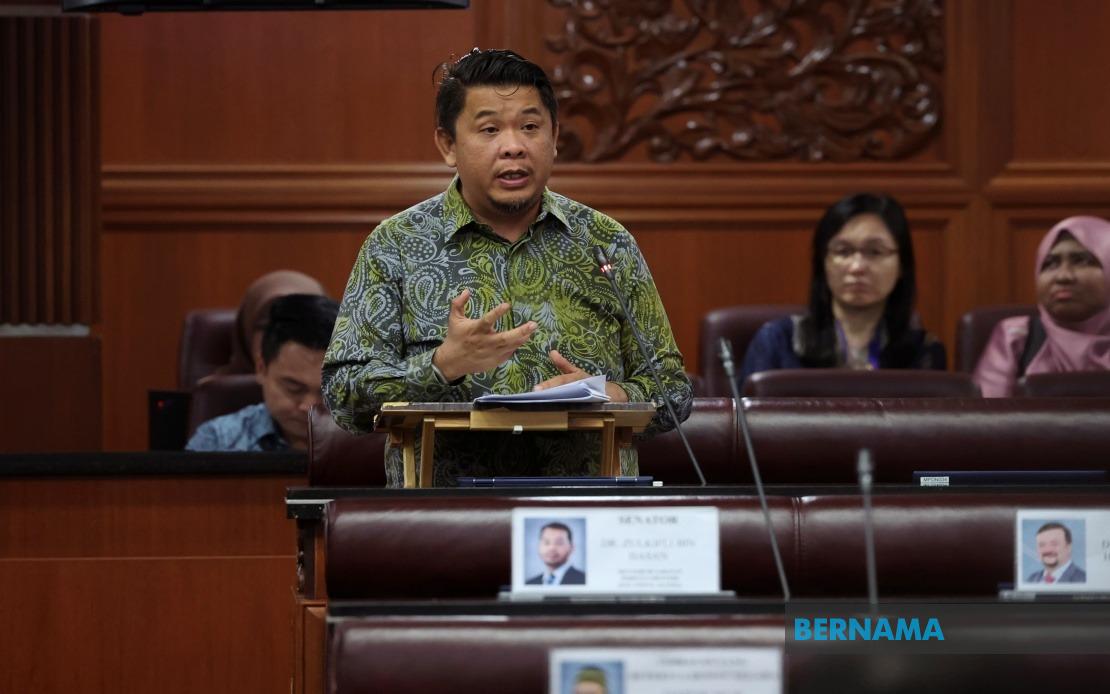
Malaysia's government has ordered the United Nations High Commissioner for Refugees to suspend all new refugee registration activities with immediate effect, according to Deputy Foreign Minister Datuk Lukanisman Awang Sauni. The directive marks a significant shift in how the country manages its refugee populations, moving towards greater governmental control over registration and documentation processes. The decision, approved by the Cabinet, signals an intention to centralise refugee administration under the proposed Refugee Registration Document (DPP) programme rather than relying on UNHCR's existing framework.
The restructuring initiative reflects growing concerns within Malaysian policymaking circles about managing refugee data without intermediaries. Through the new DPP system, government agencies will maintain direct oversight of registration records, enabling more robust coordination between enforcement bodies and improved identity verification protocols. This approach aims to establish a comprehensive database that tracks refugee populations according to national security and administrative standards, rather than depending on records maintained by international organisations. The shift addresses long-standing tensions between Malaysia's humanitarian obligations and its capacity to manage large displaced populations.
Lukanisman explained that the registration pause provides necessary breathing room for implementing the overhauled system. Future registrations under the DPP will follow stringent procedural requirements involving multiple enforcement agencies working in concert. These measures are designed to ensure only genuinely eligible individuals gain refugee status while simultaneously creating barriers against fraudulent applications and unauthorised entry. By tightening the registration gateway, the government aims to prevent further irregular migration patterns that have challenged Malaysia's border management capabilities in recent years.
The Rohingya refugee crisis forms the immediate backdrop for this policy recalibration. Myanmar's military coup and subsequent violence have forced over a million Rohingya to flee their homeland, with many seeking refuge in neighbouring countries including Malaysia. However, most Rohingya possess no official documentation from Myanmar, complicating efforts to verify identities and secure safe repatriation pathways. This documentation vacuum has created administrative headaches for Malaysian authorities attempting to distinguish between legitimate refugees and economic migrants claiming refugee status opportunistically.
Malaysia's non-signatory status to the 1951 Refugee Convention has long constrained its legal obligations toward refugee populations. Unlike countries bound by international refugee law, Malaysia operates within a more flexible framework that permits stricter immigration controls and resource allocation decisions. Lukanisman's statement emphasised this legal distinction, suggesting the government believes it can justify more restrictive policies than signatory nations. The DPP programme appears designed to maximise Malaysia's policy autonomy while maintaining a functioning asylum system that satisfies minimum humanitarian standards.
Domestic social cohesion concerns drive much of this administrative overhaul. Malaysia's decision-makers worry that uncontrolled refugee populations strain local communities, particularly in urban areas where refugees concentrate seeking employment and services. Competition for jobs, housing, and public resources has occasionally sparked tensions between refugee communities and Malaysian citizens. By implementing tighter registration and management protocols, the government signals commitment to protecting local economic and social interests alongside humanitarian considerations. This balancing act reflects broader Southeast Asian anxieties about refugee burden-sharing in a region lacking robust regional asylum frameworks.
Simultaneously, Malaysia continues pursuing multilateral diplomatic channels to address the Rohingya crisis at its source. Engagement with Myanmar's government and coordination with other ASEAN member states seeks to create conditions supporting voluntary repatriation and improving conditions in Myanmar itself. Lukanisman indicated that these broader strategic initiatives complement the domestic registration restructuring, suggesting Myanmar's willingness to accept returnees has improved. This diplomatic progress provides context for the UNHCR suspension, implying Malaysia views repatriation as increasingly feasible rather than simply managing permanent refugee populations indefinitely.
The government's plan to repatriate approximately 5,000 Myanmar nationals from immigration detention facilities demonstrates this commitment to reducing Malaysia's refugee burden. These detainees, held for immigration violations rather than refugee processing, represent a distinct category from registered UNHCR cases. Their return via naval transport symbolises the government's intention to return undocumented Myanmar nationals regardless of their vulnerability or claims to refugee status. This repatriation initiative, contingent on Myanmar's administrative readiness, suggests Naypyidaw has accepted responsibility for receiving its nationals back despite ongoing internal instability.
The DPP programme's implementation timeline remains unclear, though the registration suspension appears to take effect immediately. Uncertainty about how long the pause will last creates complications for asylum seekers seeking protection and humanitarian organisations providing services to refugee populations. UNHCR offices in Malaysia will need to advise clients about the changed landscape and revised procedures, potentially delaying processing for thousands of people with urgent protection needs. NGOs working with refugee communities must adapt operations to accommodate a government-led rather than UN-managed system.
This policy shift positions Malaysia among Southeast Asian states increasingly sceptical of expansive international refugee frameworks. Indonesia, Thailand, and other regional neighbours have similarly restricted UNHCR operations or pursued alternative national systems. Malaysia's approach reflects wider developing-country frustrations about burden-sharing disparities, whereby frontline nations hosting millions of refugees receive limited international financial support compared to wealthier countries accepting smaller numbers. The DPP initiative can thus be read as asserting national sovereignty over humanitarian governance while redirecting responsibility toward regional and multilateral mechanisms rather than UNHCR.
For Malaysian stakeholders—businesses, civil society, workers, and communities—the restructured system promises clearer refugee management but potentially greater restrictions on humanitarian access and protection. Government supervision offers consistency and security but may reduce flexibility for vulnerable people requiring urgent assistance. The coming months will reveal whether the DPP programme functions as promised or whether implementation challenges force pragmatic compromises with UNHCR and international partners.

