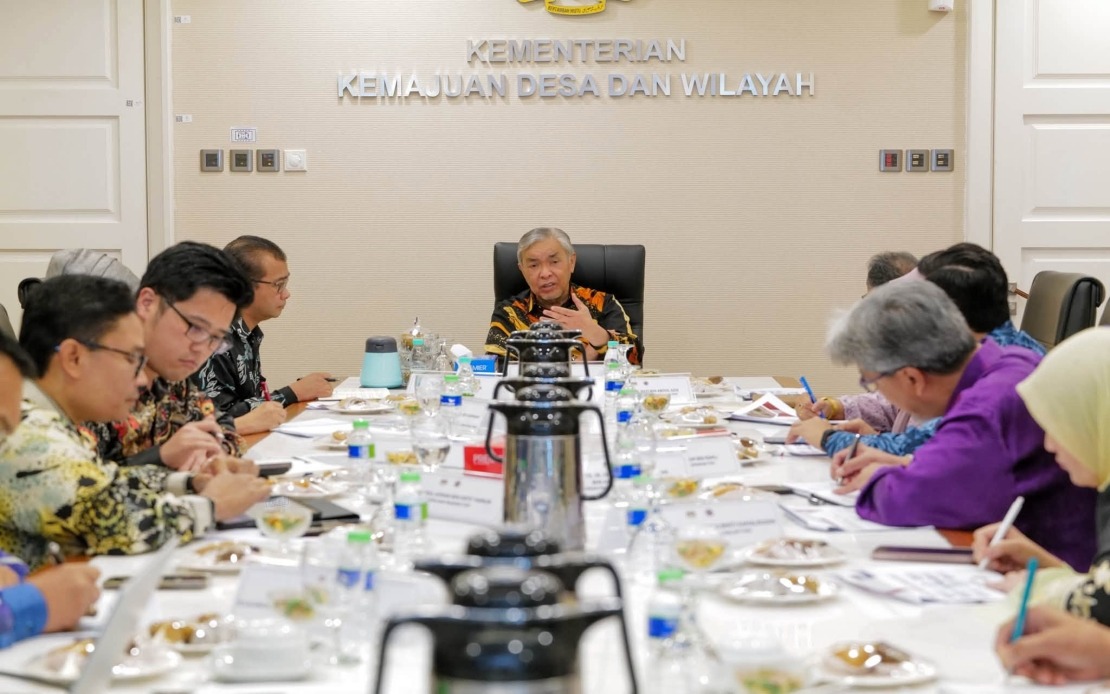
Malaysia is intensifying its push to overhaul technical and vocational education and training through the establishment of a dedicated Strategic TVET 2.0 Task Force spanning the decade to 2035, alongside a network of 10 specialised strategic committees. Deputy Prime Minister Datuk Seri Dr Ahmad Zahid Hamidi announced the initiative in Putrajaya on August 6, signalling the government's determination to place TVET at the centre of the country's human capital strategy.
The creation of these institutional structures represents a significant escalation in how Malaysia approaches technical education reform. Rather than relying on fragmented departmental initiatives, the task force and committees will operate as a coordinated machinery designed to translate policy into tangible outcomes. Ahmad Zahid, who chairs the National TVET Council, framed the move as essential to building an ecosystem that responds dynamically to what employers actually need, rather than what educational institutions traditionally provided. This distinction matters considerably for a nation competing in an increasingly technology-driven regional economy where skills gaps can quickly become competitive disadvantages.
Eminent professor Datuk Dr Siti Hamisah Tapsir, president and vice-chancellor emeritus of UCSI University, heads the overall task force, bringing academic credibility and institutional experience to the leadership role. Her appointment signals that the initiative draws on expertise beyond government bureaucracy, incorporating perspectives from Malaysia's higher education sector. This composition suggests the task force intends to bridge longstanding divisions between vocational training institutions and universities, a persistent challenge in Southeast Asian education systems where technical pathways have historically occupied lower status than academic tracks.
The 10 committees address distinct but interconnected dimensions of the TVET ecosystem. The TVET Governance and Institutional Reform Committee, led by Datuk Dr Asyraf Wajdi Dusuki, tackles structural issues within training institutions themselves—curriculum design, teaching standards, and institutional autonomy. The TVET Industry and Employers Committee, chaired by Datuk Khairul Azwan Harun, creates formal channels for private sector input into what skills training actually produces. This two-way dialogue proves crucial because training institutions often educate students for jobs that no longer exist or in methods disconnected from contemporary workplace practices. By embedding employers directly in governance, the structure acknowledges that relevance requires constant feedback loops.
Financial sustainability emerged as a distinct committee priority, reflecting realistic concerns about long-term programme funding. Ramelle Ashram Ramli chairs the TVET Financing and Sustainability Committee, tasked with identifying revenue models that do not depend entirely on government budgets. This focus gains particular importance given Malaysia's fiscal constraints and competing developmental priorities across healthcare, infrastructure, and social services. Sustainable financing could involve employer contributions, public-private partnerships, training levies, or graduate employment-linked funding mechanisms increasingly common in developed vocational systems.
A notable innovation appears in the dedicated Women Empowerment in TVET Committee, chaired by Datuk Dr Masilla Kamalrudin. This recognises that Malaysia's TVET sector has traditionally skewed heavily male, particularly in manufacturing and engineering trades where women remain significantly underrepresented. Targeted initiatives addressing recruitment barriers, workplace culture, and career progression for women could unlock substantial talent pools currently outside the system. Gender-diverse technical workforces also correlate with improved innovation and reduced skills shortages in developed economies.
The 2026-2035 timeline is intentionally extended, allowing for multi-year implementation cycles rather than annual budget cycles that can create instability. A decade-long horizon permits the system to see through changes in technological adoption, allow curriculum reforms to mature, and demonstrate results to sceptical stakeholders. However, such lengthy timelines also carry risks—economic conditions, technology disruption, or political priorities can shift substantially over ten years. The framework will require periodic review mechanisms to maintain relevance without becoming ossified.
For Malaysian workers and businesses, this restructuring carries tangible implications. A more responsive TVET system reduces the mismatch between graduate qualifications and employer requirements, theoretically lowering youth unemployment and underemployment in technical fields. Businesses gain access to better-trained workers for positions currently difficult to fill. International investors evaluating Malaysia as a manufacturing or technology hub will note governmental commitment to building skilled labour pipelines, potentially influencing location decisions in a region where talent availability increasingly determines competitiveness.
The initiative also positions Malaysia distinctively within Southeast Asia's skills landscape. While regional neighbours like Thailand and Indonesia grapple with similar TVET challenges, Malaysia's systematic institutional approach and high-level political backing provide comparative advantage. Countries implementing formal task force mechanisms with corporate governance structures often achieve faster consensus-building and more coordinated resource deployment than those relying on traditional ministry-led approaches.
However, structural establishment alone guarantees nothing. TVET transformation has repeatedly foundered in developing economies despite good intentions and reasonable frameworks. Success depends on sustained funding regardless of political cycles, genuine power-sharing between government and employers rather than nominal consultation, and willingness to move away from academic-focused metrics toward employment and earnings outcomes. The real test arrives not in announcement but implementation, where bureaucratic inertia, institutional resistance, and competing priorities often derail ambitious reform agendas.
Ahmad Zahid's framing emphasises TVET's role in addressing future economic challenges, a rhetorical shift toward future-orientation rather than remediation of current skills gaps. This suggests recognition that Malaysia cannot compete primarily on low-cost labour and must instead position itself as a location for higher-value manufacturing and service delivery. Such repositioning requires workers with technical depth, problem-solving capacity, and adaptability—precisely what well-designed TVET systems should produce. The Strategic TVET 2.0 Task Force represents an attempt to systematise what was previously ad-hoc, making the transformation process itself a variable the government believes it can manage and optimise.

