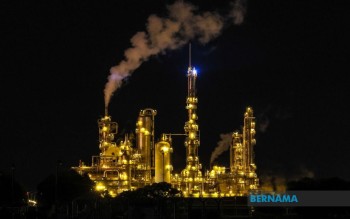
Malaysia should embark on a carefully calibrated journey towards establishing a national petroleum reserve, balancing the legitimate need for energy security against the government's competing fiscal obligations and constrained budgetary space. This assessment comes from Mohd Sedek Jantan, investment strategy director at IPPFA Sdn Bhd, who cautions against hastily replicating the expensive strategic reserve systems operated by developed economies. His comments arrive after Prime Minister Datuk Seri Anwar Ibrahim signalled that the government would examine the feasibility and design of such reserves as part of a broader effort to insulate Malaysia from energy supply shocks in an increasingly volatile geopolitical environment.
The economist's core argument rests on a fundamental truth often obscured in national security debates: Malaysia's economic circumstances differ markedly from those of wealthy industrial powers with vastly larger reserves and more substantial fiscal buffers. The United States and Japan maintain petroleum stockpiles calibrated to their own strategic vulnerabilities and financial capacity—frameworks that simply do not transplant neatly into the Malaysian context. Rather than aspiring to match the scale of these reserves, Mohd Sedek advocates for an approach tailored to Malaysia's specific energy risk profile, fiscal constraints, and development priorities. This distinction matters considerably in a regional context where several Southeast Asian nations face similar resource allocation dilemmas.
The crux of the challenge lies in what economists term opportunity cost. Every ringgit committed to petroleum storage represents funds unavailable for other pressing national needs: healthcare infrastructure, educational development, food security mechanisms, and social safety nets that directly affect millions of Malaysians. Mohd Sedek emphasises that policymakers cannot sidestep this reality through wishful thinking or rhetorical appeals to energy independence. Instead, any reserve initiative must withstand scrutiny through rigorous cost-benefit analysis, demonstrating conclusively that the benefits of preparedness justify the investments required. This analytical discipline proves especially important in an era of constrained public finances and competing claims on limited resources.
Yet the economist simultaneously warns against the opposite extreme—complacency rooted in the assumption that supply disruptions are manageable or unlikely. History and contemporary geopolitical tensions demonstrate otherwise. A major disruption to petroleum supplies, whether triggered by regional conflict, supply chain breakdown, or deliberate economic coercion, could impose economic costs vastly exceeding any amount spent establishing reasonable reserves. The calculus shifts when one accounts for the potential damage to industrial production, transportation networks, electricity generation, and broader economic stability during a protracted shortage. From this perspective, the investment in reserve capacity operates as insurance against catastrophic scenarios whose probability may be low but whose impact would be severe.
Mohd Sedek's recommended pathway forward centres on sequential, deliberately paced action beginning with comprehensive diagnostic work before any physical infrastructure emerges. The government should first commission a thorough risk assessment examining Malaysia's vulnerability profile across different supply disruption scenarios, considering factors such as dependency ratios, alternative sourcing options, and potential demand management strategies. This foundation then informs determination of an optimal reserve size—neither the maximum the treasury could theoretically afford nor the minimum that would prove useless in genuine crisis, but the mathematically justified amount. Equally important, policymakers must map out potential financing models and operational frameworks, asking whether reserves should be government-owned, privately managed, or structured through hybrid arrangements.
The economist particularly stresses the potential value of private sector partnerships in implementing whatever reserve system eventually emerges. Commercial entities operating petroleum infrastructure possess specialised expertise in storage technology, logistics, and cost management that government agencies might struggle to replicate. Strategic collaboration could yield operational efficiencies while distributing financial burdens across multiple parties, reducing immediate pressure on public coffers. Equally, ensuring any reserve system remains scalable and commercially sustainable prevents it from becoming a permanent fiscal albatross—a white elephant consuming ongoing subsidies and management attention. Design architecture matters; a well-conceived reserve could potentially generate revenue through judicious commercial leasing of storage capacity during normal times, offsetting some operational expenses.
This measured approach aligns with regional economic trends and Southeast Asian experiences with infrastructure development. The region has learned through sometimes painful experience that grand projects launched without adequate planning and financial preparation often become fiscal burdens rather than assets. Malaysia's own recent experience with various initiatives underscores the value of thorough preparation, transparent cost accounting, and realistic assessment of implementation capacity. By insisting on fundamental groundwork before committing substantial public resources, the government reduces risks of waste, cost overruns, and eventual abandonment of incomplete projects.
Moreover, embedding petroleum reserve policy within a broader economic security framework makes strategic sense. Energy security interconnects with food security, supply chain resilience, inflation management, and foreign exchange preservation. A comprehensive approach examining how reserves function alongside other stabilisation mechanisms—strategic food stocks, currency reserves, trade agreements, and diplomatic relationships—produces more coherent outcomes than isolated energy initiatives. This systems-level thinking proves particularly valuable for a nation whose economy depends heavily on international trade and whose energy sector has historically shaped geopolitical relationships.
The timeline dimension also deserves consideration. A phased implementation approach distributes costs across fiscal years, preventing the kind of budget shocks that could squeeze other essential services in any single year. Early phases might focus on establishing regulatory frameworks, conducting detailed technical studies, and identifying suitable storage locations. Subsequent phases would involve actual infrastructure development, beginning perhaps with modest capacity that can expand as experience accumulates and fiscal conditions permit. This gradualism builds in opportunity for course correction based on emerging evidence and changing circumstances.
For Malaysian policymakers, Mohd Sedek's message carries particular force because it validates both energy security concerns and fiscal realism. The government need not choose between protecting national interests and maintaining budgetary discipline; rather, intelligent policy design reconciles these objectives. Energy shocks represent genuine risks worthy of serious preparation, yet that preparation must fit Malaysia's financial reality and compete successfully against other national priorities through objective analysis. The coming months will prove telling: whether the government pursues the discipline of detailed assessment before commitment, or whether domestic political pressures and external geopolitical anxieties push toward hasty, inadequately planned action. The economist's counsel points clearly toward the former path.

