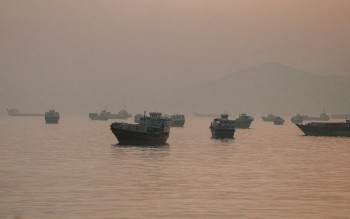
Malaysia's Economy Minister Akmal Nasrullah Mohd Nasir has issued a stark warning that the nation cannot afford to underestimate the ripple effects cascading from Iran's renewed blockade of the Strait of Hormuz, one of the world's most critical maritime chokepoints. The minister emphasised that government agencies, businesses, and ordinary Malaysians must adopt a vigilant posture and develop contingency plans to weather the economic turbulence ahead, rather than assuming that the continued passage of a handful of commercial vessels signals a return to normalcy. His comments came in response to escalating geopolitical tensions in West Asia following a series of United States strikes on Iran on July 8, which prompted Iran to reassert control over one of the planet's most strategically important waterways.
The Strait of Hormuz represents a chokepoint through which approximately one-third of the world's seaborne oil trade flows, making it indispensable to global energy markets and supply chains. For a resource-dependent economy like Malaysia, any prolonged disruption carries substantial consequences. The minister's decision to communicate this message directly via social media underscores the government's assessment that the threat warrants immediate public awareness. Rather than relying solely on traditional media channels, the choice to use TikTok reflects an understanding that younger demographics and businesses conducting digital commerce need accessible, digestible information about macroeconomic risks that could affect their livelihoods and purchasing power.
Akmal Nasrullah specifically highlighted the multifaceted nature of the economic challenge, identifying oil price volatility as the most immediate concern. Elevated crude oil costs translate directly into higher transportation expenses across the economy, from shipping goods domestically to exporting manufactured products to international markets. This price pressure proves particularly acute for Malaysia, given that energy costs permeate nearly every production process. Beyond petroleum itself, the minister noted that the crisis threatens to inflate the prices of globally traded raw materials, compounds shipping delays by forcing vessels to take lengthier alternative routes around Africa, and ultimately feeds into consumer-facing price increases for basic necessities including foodstuffs.
The supply chain dimension that Akmal Nasrullah emphasised deserves particular attention, as it reveals vulnerabilities that extend far beyond simple commodity price movements. He illustrated this concept through the example of plastic manufacturers, demonstrating how pressure on a single input supplier can create cascading disruptions throughout interconnected industrial ecosystems. A shortage or price spike in plastic production would reverberate across food packaging operations, electronics manufacturers relying on plastic components, automotive suppliers, medical device producers, agricultural processors, and export-oriented manufacturers. This systemic interconnectedness means that even companies with no direct relationship to the Middle East or petroleum products may discover their operations disrupted by supply chain fractures they did not anticipate.
Malaysia's manufacturing sector, which represents a significant pillar of the economy, faces particular vulnerability to such disruptions. The nation hosts numerous electronics and semiconductor plants serving global supply chains, many of which depend on precision components and raw materials sourced from multiple countries. A prolonged Hormuz closure would increase not only the cost of shipping these components but also introduce uncertainty into delivery schedules, potentially forcing manufacturers to hold larger inventory buffers or seek alternative suppliers at premium prices. These adjustments, while necessary for business continuity, compress profit margins and may ultimately translate into slower hiring, delayed expansion projects, or increased prices for consumers purchasing Malaysian-made goods.
The agriculture and food production sectors face distinctive challenges from Hormuz disruption. Malaysia imports substantial quantities of agricultural inputs, fertilisers, and animal feed, many of which transit international waters and depend on stable shipping costs. Simultaneously, Malaysian food exports destined for markets across Asia and beyond rely on predictable shipping schedules and affordable freight rates. Any prolonged closure would squeeze margins for food producers and potentially inflate prices for staple items on supermarket shelves, directly affecting household budgets across income groups. Akmal Nasrullah's specific mention of food supply and pricing pressures signals government awareness that this crisis transcends boardroom economics and touches the everyday concerns of ordinary Malaysians worried about grocery expenses.
The minister's emphasis on reducing dependence on external situations suggests the government recognises that Malaysia's long-term resilience requires strategic economic reorientation. This perspective aligns with broader regional discussions about supply chain diversification and nearshoring, whereby nations and companies relocate production closer to consumer markets to mitigate geopolitical risks. For Malaysia, this could represent an opportunity to position itself as a stable, alternative manufacturing hub for companies nervous about concentrating production capacity in regions exposed to Middle Eastern volatility. However, realising such strategic pivots requires substantial investment in infrastructure, workforce training, and policy frameworks—initiatives that typically unfold over years rather than months.
In the immediate term, businesses face pressure to strengthen supply chain visibility and develop contingency protocols. Companies operating in Malaysia should conduct comprehensive assessments of their sourcing networks, identify vulnerable suppliers or inputs, and explore alternative providers or routes where feasible. This defensive posture, while necessary, extracts real costs in terms of management time and potentially higher procurement expenses. Industries heavily dependent on just-in-time inventory systems, particularly electronics and automotive sectors, must grapple with the tension between efficiency and resilience—a trade-off that geopolitical uncertainty is forcing into sharper focus.
For consumers and the broader public, the minister's warning suggests preparing for potential price adjustments across various categories. Prudent households might consider reviewing utility expenses, exploring energy efficiency measures, and evaluating their exposure to imported goods that could face price increases. While panic buying and hoarding typically prove counterproductive, informed awareness allows individuals and families to make deliberate purchasing decisions rather than responding reactively to supply shortages or price spikes. Educational campaigns from government agencies and business associations could help disseminate practical guidance about navigating the period ahead.
The geopolitical dimension underlying this economic warning carries implications extending beyond immediate price mechanics. The Hormuz closure reflects deepening tensions between the United States and Iran, with potential for further military escalation or diplomatic developments that could either exacerbate or ameliorate the situation. Malaysia, as a regional power with interests in maintaining stable maritime commerce and avoiding entanglement in great power conflicts, faces a delicate balancing act. The government must simultaneously prepare its economy for prolonged disruption while pursuing diplomatic channels and regional cooperation mechanisms that might help de-escalate tensions or facilitate international agreement on maintaining maritime access.
Regionally, this situation presents both challenge and opportunity for Southeast Asia. Countries that can position themselves as reliable alternatives to affected supply chains, or that can offer competitive advantages in terms of labour costs, infrastructure, or political stability, may attract investment and manufacturing capacity relocating from more volatile regions. However, this requires conscious policy choices and investment in competitiveness. Malaysia competes with nations like Vietnam, Thailand, and Indonesia for such opportunities, making the need for swift, strategic action apparent.
The timing of Akmal Nasrullah's warning matters significantly. By alerting stakeholders now, the government signals that contingency planning should commence immediately rather than after disruptions materialise and scrambling becomes inevitable. Businesses with longer planning horizons can adjust procurement strategies, source alternative suppliers, or adjust pricing structures with greater deliberation. Financial institutions can evaluate client exposures and adjust risk assessments accordingly. Supply chain associations can coordinate member responses and share intelligence about available alternatives. The cumulative effect of these coordinated responses, undertaken now rather than under crisis pressure, substantially improves Malaysia's capacity to absorb and adapt to the shocks ahead.
Ultimately, the minister's message reflects a mature acknowledgement that Malaysia operates within a globalised economy characterised by geopolitical volatility, supply chain complexity, and price volatility that no single nation can insulate itself from entirely. Rather than pretending such challenges do not exist or reassuring the public that everything will proceed normally, Akmal Nasrullah chose transparency and preparedness. This approach, while potentially unsettling in the short term, serves Malaysia's long-term interests by encouraging proactive adaptation rather than passive suffering of preventable disruptions. The coming weeks and months will test whether businesses, policymakers, and the broader public can translate this warning into concrete preparatory actions that enhance resilience.

