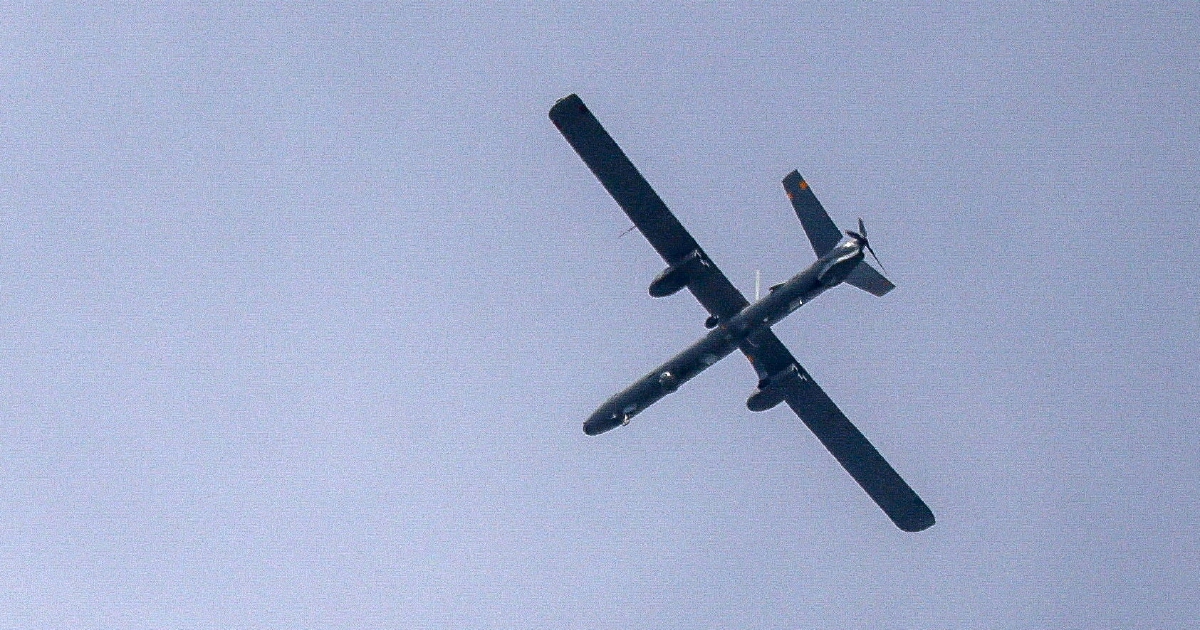
Prime Minister Datuk Seri Anwar Ibrahim has issued a clarion call for Malaysia to significantly quicken its pace in adopting and developing unmanned aerial vehicle technology, arguing that failure to do so risks compromising the nation's competitive standing on the world stage. Speaking at an event in Sepang, the Prime Minister emphasised that Malaysia cannot afford to lag behind in the rapidly evolving drone industry, which represents both a major economic opportunity and a strategic capability that modern economies increasingly rely upon.
The government's push for accelerated drone technology adoption reflects a broader recognition that innovation in aerospace and advanced manufacturing sectors offers substantial potential for Malaysia's economic diversification. Beyond traditional sectors such as palm oil and semiconductors, the unmanned aerial vehicle industry encompasses diverse applications spanning logistics, agriculture, surveillance, infrastructure inspection, and environmental monitoring. For a country that has long positioned itself as a regional technology hub, strategic investment in UAV development and manufacturing capacity could unlock new revenue streams and export opportunities across Southeast Asia and beyond.
Malaysia's existing aerospace ecosystem provides a foundation upon which drone capabilities can be built. The country hosts several regional aviation hubs and possesses technical expertise in related manufacturing disciplines. However, global competitors in drone technology—particularly China, the United States, and increasingly Europe—have already captured substantial market share and continue investing heavily in next-generation systems. Malaysia risks falling further behind unless it commits meaningful resources and regulatory frameworks that enable rapid innovation and commercialisation of homegrown UAV solutions.
The regulatory environment surrounding drones in Malaysia remains an important consideration in the government's acceleration agenda. Streamlining airspace regulations, establishing clear certification pathways for commercial drone operations, and creating special economic zones dedicated to UAV research and manufacturing could substantially reduce barriers to entry for local entrepreneurs and multinational firms considering establishing operations in Malaysia. The Civil Aviation Authority of Malaysia and other relevant agencies would need to balance safety and security concerns with the imperative to enable rapid market development.
Regional demand for drone technology continues climbing as Southeast Asian nations modernise their agricultural practices, infrastructure monitoring, and logistics networks. Malaysia, as a major regional economy with established manufacturing capabilities and a skilled workforce, is well-positioned to serve as a regional hub for drone design, assembly, and distribution. Indonesian, Thai, and Vietnamese companies increasingly seek reliable supply chains for advanced components and finished systems, representing a captive market that Malaysian firms could effectively penetrate through focused investment and development.
The agricultural sector presents a particularly compelling use case for accelerated drone adoption. Malaysian palm oil producers, facing international pressure over sustainability practices, could leverage precision agriculture technologies powered by UAV-mounted sensors and imaging systems to improve yields while reducing environmental impact. Similarly, Malaysian rice farmers and other agricultural producers could enhance productivity through crop monitoring, pest detection, and targeted pesticide application enabled by drone technology. This application alone could justify significant government support for domestic UAV innovation.
Defence and security applications also drive global demand for advanced drone systems. Malaysia's strategic location along critical maritime shipping lanes and its role in regional security arrangements mean that developing indigenous UAV capabilities for surveillance, coastal monitoring, and border security operations aligns with national security interests. Investing in domestic drone technology development reduces dependence on foreign suppliers and creates opportunities for technology transfer and skills development within government agencies and the defence industry.
However, realising Malaysia's drone technology ambitions requires sustained commitment from multiple stakeholders beyond government pronouncements. Universities and research institutions must develop specialised curricula in robotics, autonomous systems, and aerospace engineering to train the skilled workforce that drone manufacturers require. Private sector participation through venture capital funding, corporate research centres, and manufacturing partnerships remains essential for converting government policy into commercial reality. Regional collaboration with neighbouring countries and established technology hubs in Singapore and Taiwan could accelerate Malaysia's learning curve and facilitate faster market entry.
International partnerships and technology licensing arrangements offer pathways for Malaysian firms to acquire advanced capabilities while developing independent innovation capacity. Chinese drone manufacturers, already dominant globally, might establish Malaysian assembly or design facilities to serve regional markets, creating employment and technology spillovers. European and American companies seeking to reduce reliance on single-country manufacturing could similarly view Malaysia as an attractive location for UAV component production or final assembly operations.
The government's drone acceleration initiative also connects to broader digital transformation and Industry 4.0 objectives that Malaysia has pursued through its various development plans. Unmanned aerial vehicles represent a convergence point of artificial intelligence, advanced sensors, telecommunications infrastructure, and autonomous systems—technologies that underpin next-generation industrial productivity and economic competitiveness. Building excellence in drone technology thus becomes a cornerstone for broader technological advancement across multiple economic sectors.
Successfully implementing an accelerated drone adoption programme requires establishing clear targets, timelines, and performance metrics against which progress can be measured. The government should consider establishing a dedicated drone industry development council bringing together ministry officials, industry leaders, academic researchers, and regulatory authorities to coordinate policy implementation, remove bottlenecks, and ensure resources flow effectively toward priority projects. Such institutional coordination has proven effective in other technology sectors where Malaysia has achieved regional leadership.
The competitive window for Malaysia to establish significant drone industry presence remains open but is narrowing as other regional economies intensify their own efforts. Thailand and Vietnam have announced ambitious drone development programmes supported by government investment and special economic zones. The urgency conveyed by the Prime Minister's remarks reflects this recognition that delay risks permanently ceding market opportunity to more decisive competitors. Malaysia's path forward demands converting political commitment into concrete legislative action, regulatory reform, and fiscal resource allocation that enables the private sector to innovate rapidly and capture growing regional demand for unmanned aerial vehicle technology and services.

